If you read nothing else
- From US$356 per person for a 12-hour tour from Tromsø to Magic Skjervøy with an English-speaking instructor.[1]
- The full itinerary lasts 12 hours, so it fills most of your winter daylight hours.[1]
- Rated 4.71 from 1,211 reviews by travellers who booked through GetYourGuide.[1]
- Book immediately and defer payment, plus cancel without charge up to 24 hours beforehand to get everything back.[1]
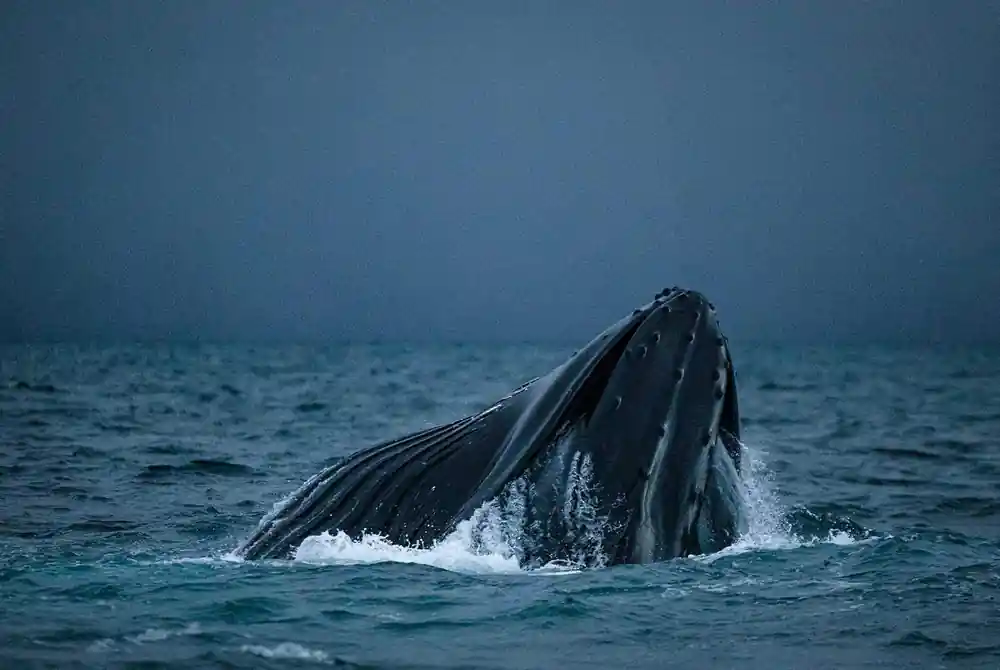
- The fjords north of Tromsø become a winter gathering spot for orcas and humpback whales feeding on herring.[2]
- Top choice Magic Skjervøy Whale Watching from US$356 Duration12 hours[1]Traveller rating4.71[1]Reviews1,211[1]Guide languageEnglish[1]CancellationFree up to 24 hours[1] Check availability
- Skjervøy RIB Whale Watching from US$338 Duration12 hours[3]Traveller rating4.78[3]Reviews1,281[3]Guide languageEnglish[3]CancellationFree up to 24 hours[3] See this tour
- Orca Whale Watching Heated Boat from US$391 Duration12 hours[4]Traveller rating4.73[4]Reviews261[4]Guide languageEnglish[4]CancellationFree up to 24 hours[4] See this tour
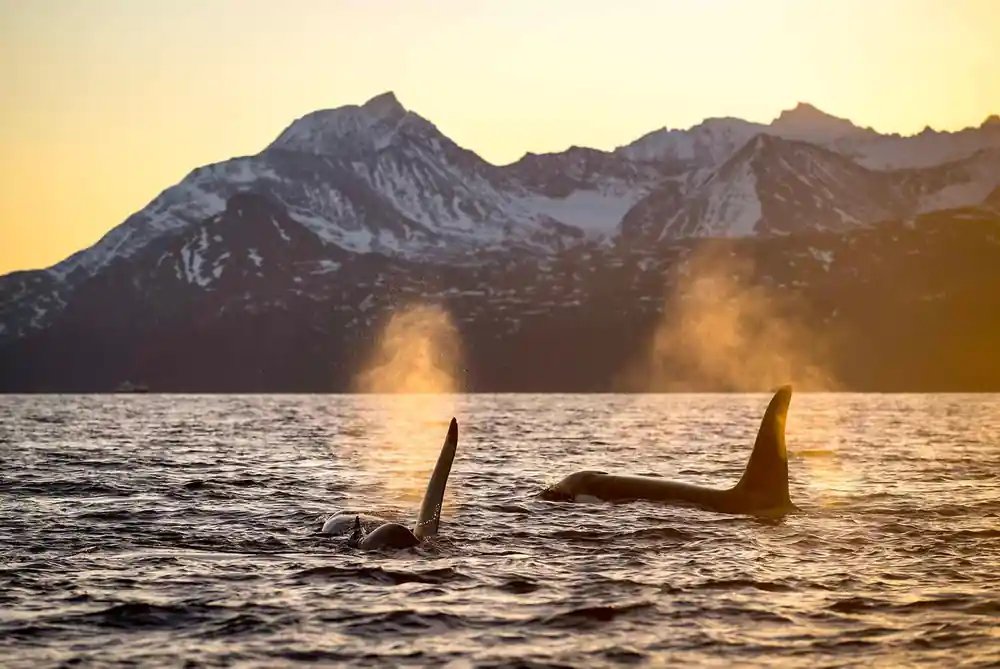
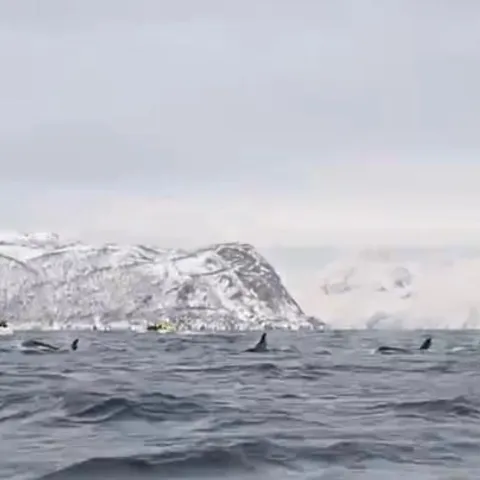
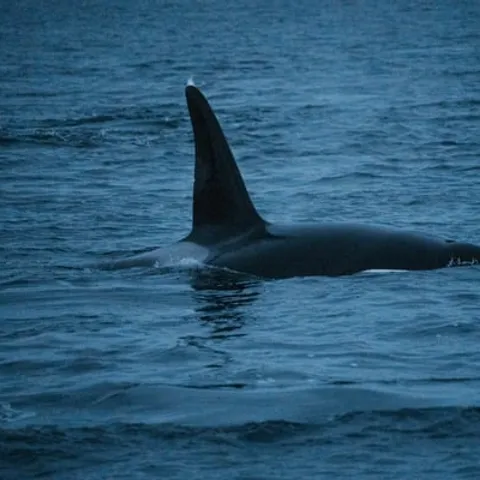
During the winter, orcas and humpback whales gather in the area to feed on herring.
A full Arctic day worth planning for
Ahead of the trip
- Pack warm layers, a hat and gloves
- Check daylight hours for the week you travel
- Reserve now and pay later to hold your place
- Read the cancellation policy before booking
On the day
- Set aside a full day for the round trip
- Listen to the English-speaking instructor
- Confirm your start time when you check availability
- Compare the from-price in US dollars
Why winter is whale season in Tromsø
Tromsø sits at the edge of the Arctic, and in winter its northern fjords become a gathering place for some of the ocean's most dramatic visitors. In winter, the area sees orcas and humpback whales gathering to feed on herring.[2] That migration of fish is the engine behind the whole spectacle, and it is seasonal rather than guaranteed.
In September/October, Norwegian spring-spawning herring heads northeast to the main wintering areas along the coast and inside the fjords of northern Norway.[5] By the time the fjords settle into winter darkness, the whales are already patrolling the same waters. The result is one of Europe's most exciting wildlife encounters, set against snow-covered peaks and dark Arctic water.
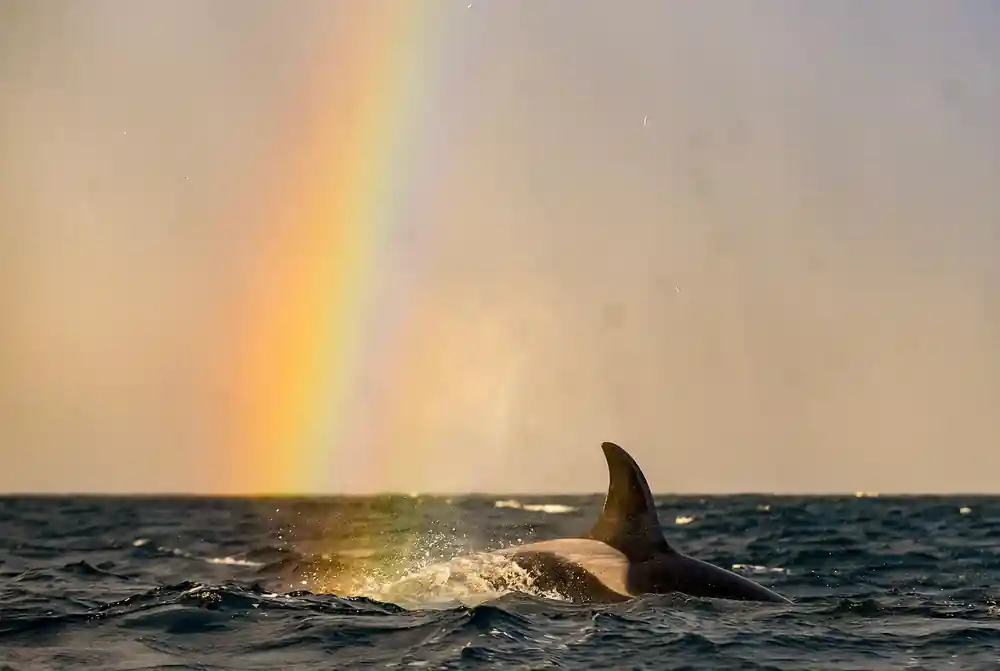
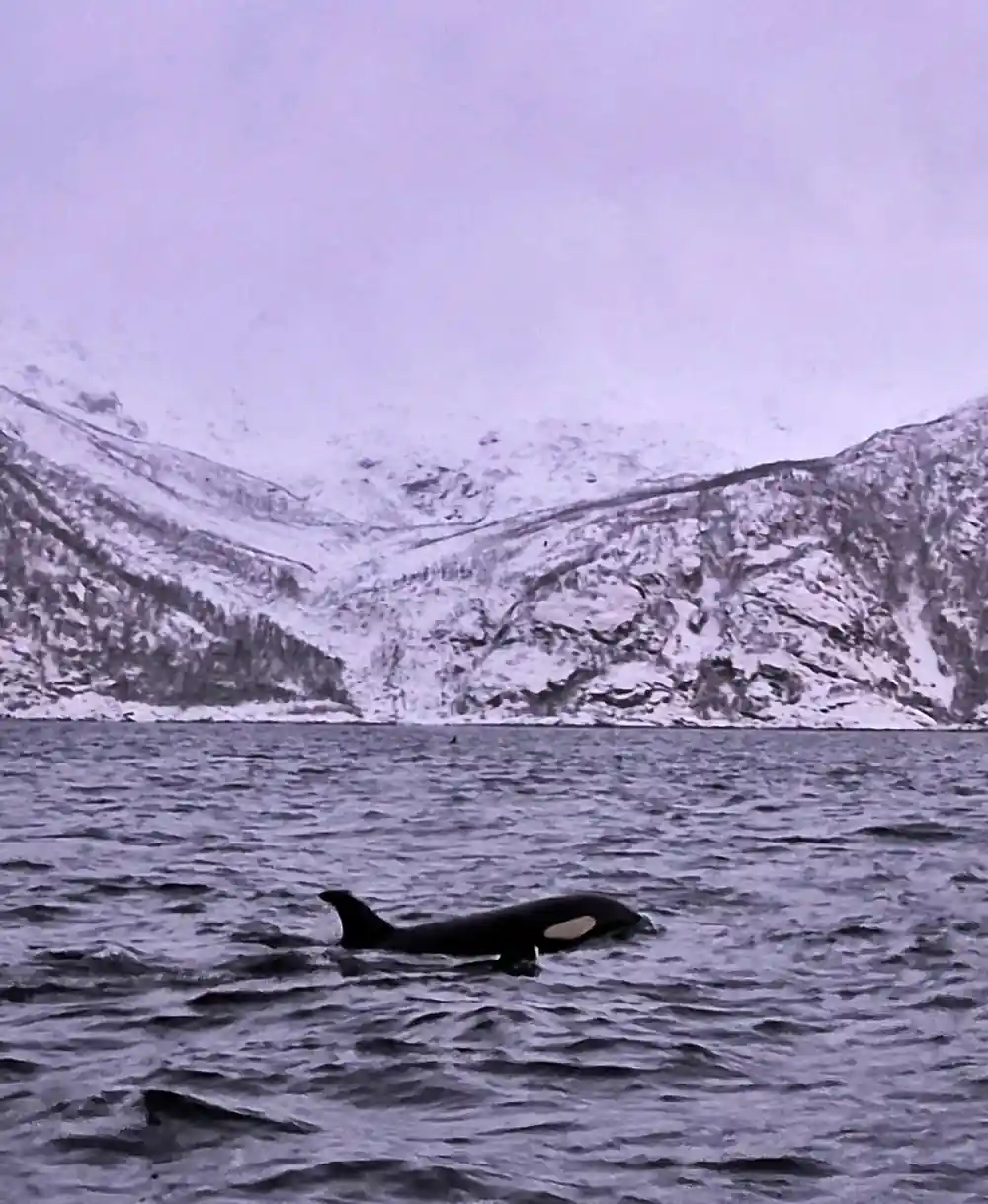
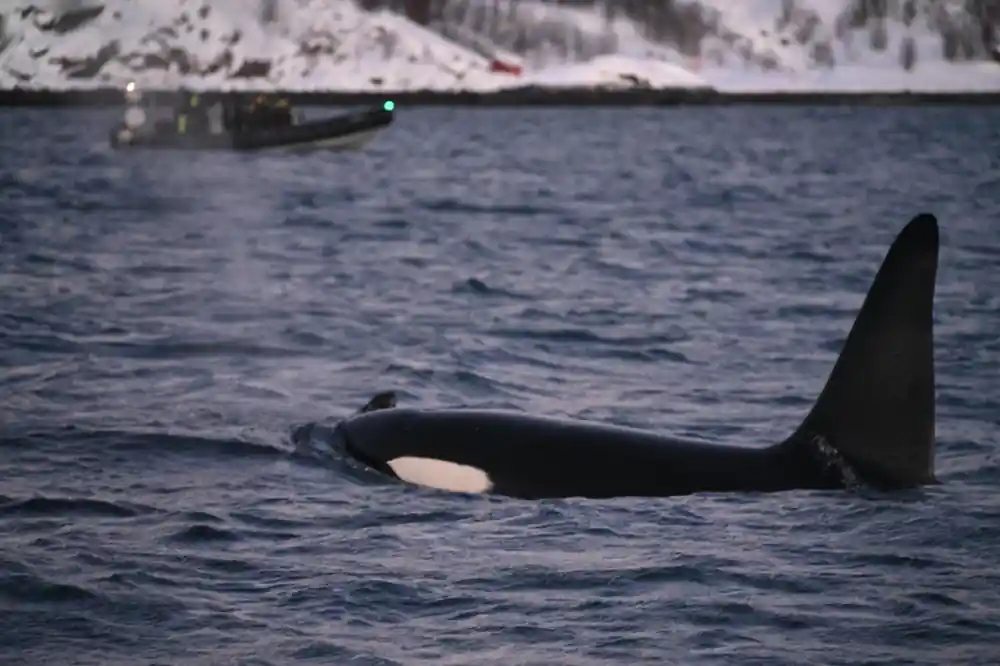
Male killer whales reach about 9 metres in length and females up to 8 metres, while adult weight varies from 4.5 to almost 7 tonnes.[6] Seeing that size appear beside a small boat explains why whale watchers travel so far north. The sight of a tall black fin slicing the surface is the image most people carry home.
The Magic Skjervøy tour from Tromsø
This site's featured tour is From Tromso: Whale Watching in Magic Skjervoy, a full-day excursion with a duration of 12 hours.[1] It is led by an English-speaking instructor and has a GetYourGuide rating of 4.71 from 1,211 reviews.[1]
The from-price is US$356.[1] That means the listing starts at this price on GetYourGuide, and you can reserve now and pay later.[1] Should your plans alter, cancel no later than 24 hours before and receive a full refund.[1]
Skjervøy is a community of scattered islands and fjords north of Tromsø, and the journey there is part of the appeal. The trip is a long day, so the reward is time on the water rather than a rushed visit. Travellers who book this tour are choosing depth over speed.
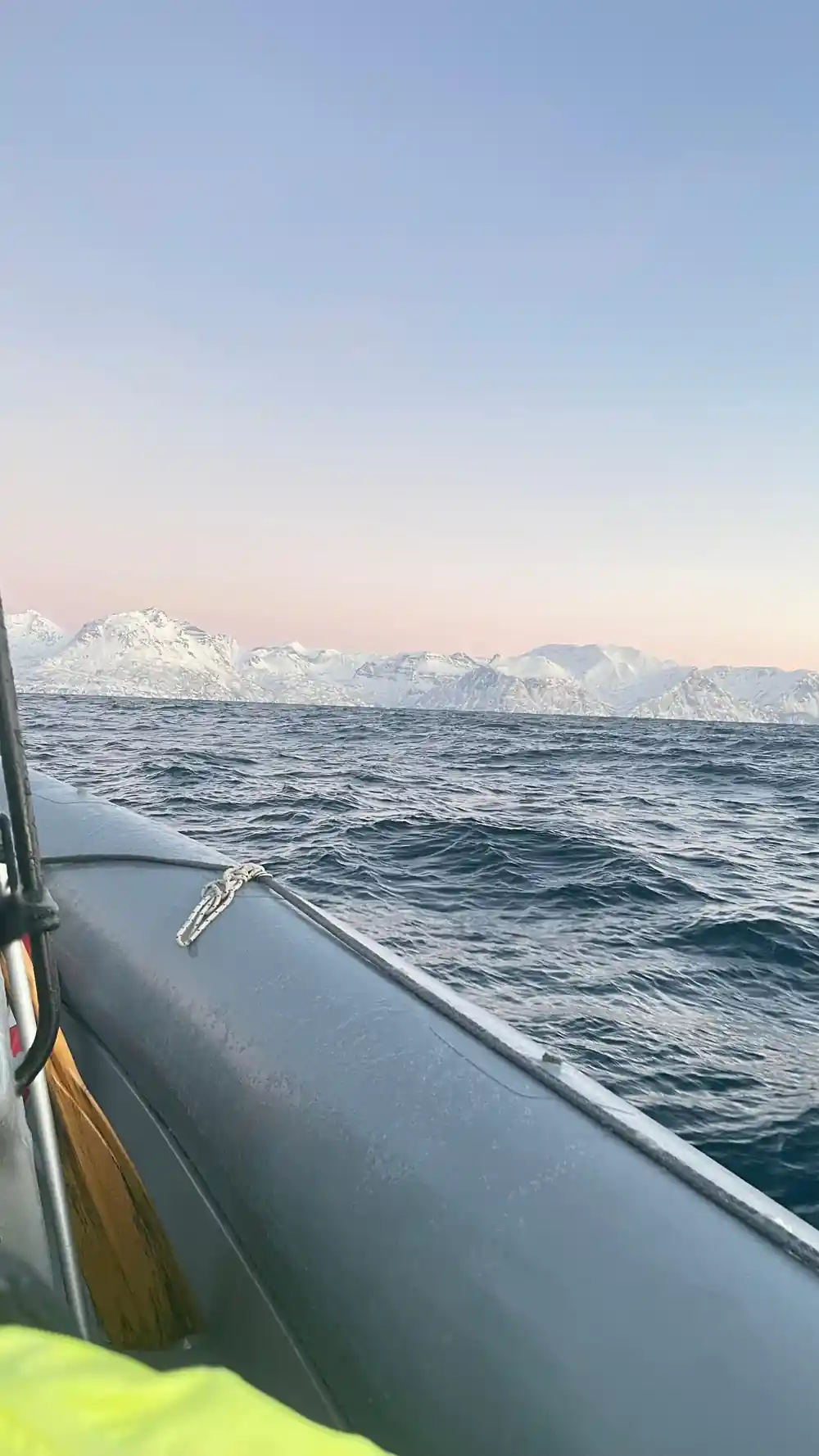
The tour's title says Magic Skjervøy, and on a clear day the magic is easy to understand. The Lyngen Alps rise on one side, the fjord opens ahead, and the water turns silver when a whale surfaces. No photograph fully prepares you for the scale of the place.
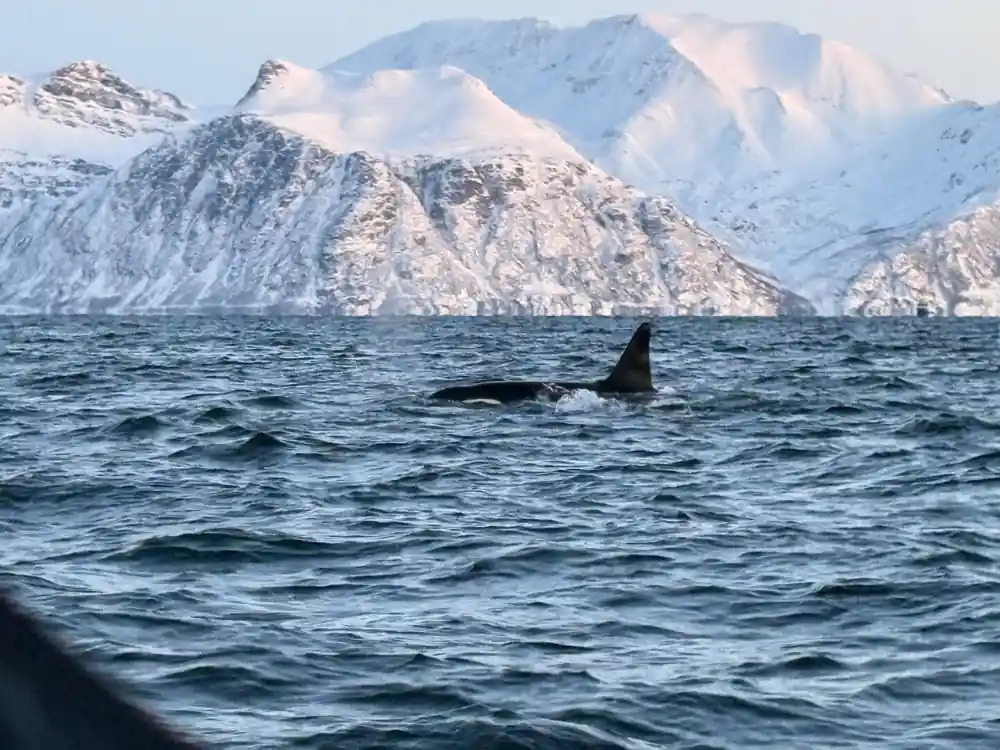
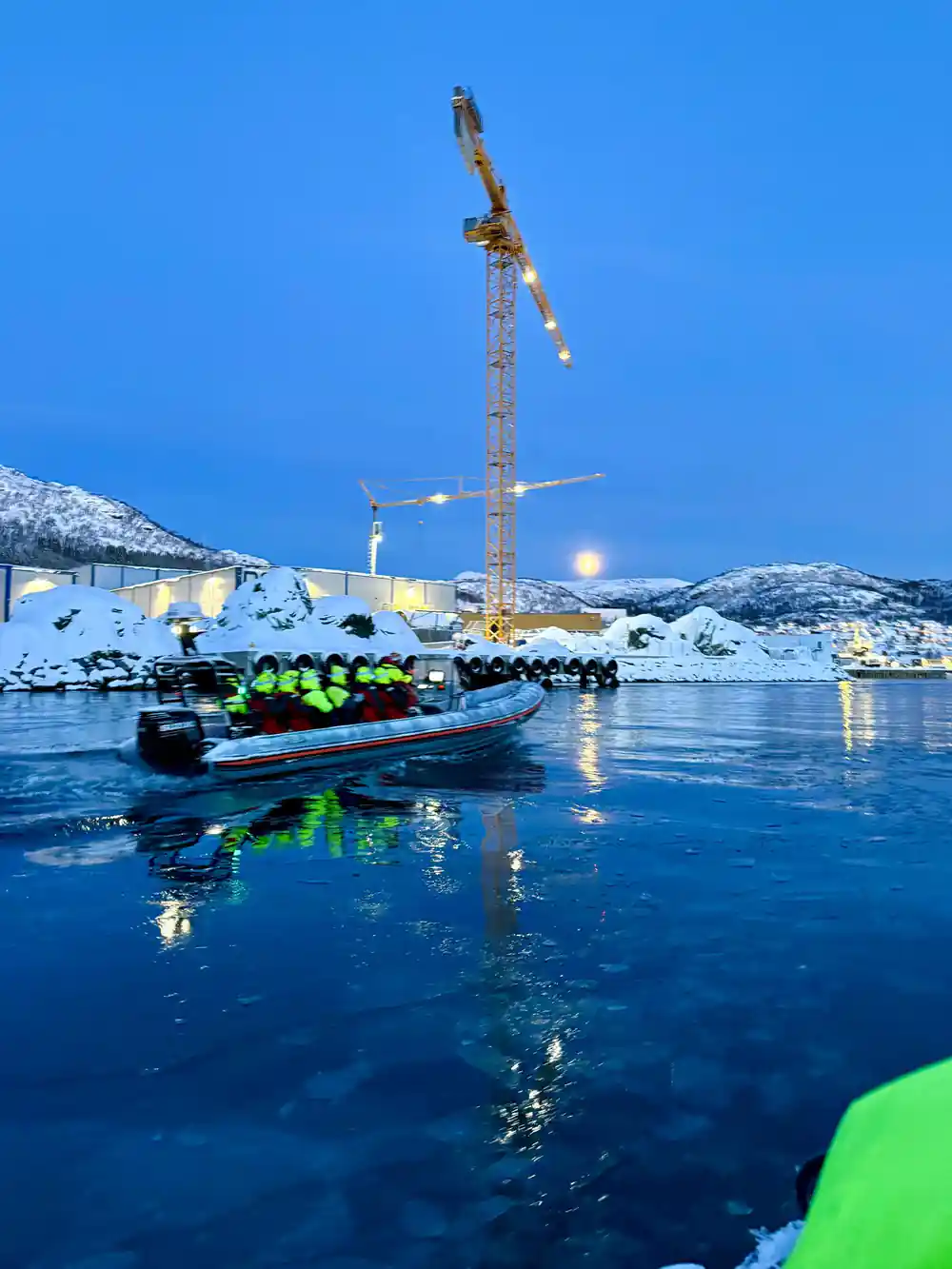
A RIB of passengers in thermal suits moves through a winter fjord.
What the Arctic day feels like
A winter departure from Tromsø often begins before the sun appears. In Tromsø, the polar night spans approximately 27 November through 15 January.[7] Even at midday, the light can be a long blue twilight, with snow-covered slopes glowing in the gloom. That is the atmosphere that makes Arctic whale watching feel like another world.
Average winter temperatures in Tromsø are around −4°C, and the wind on a boat makes the air feel sharper.[8] The crew hands out the right gear and keeps the search moving. When a pod is found, engines drop to idle and every passenger scans the water for blows, dorsal fins and the pale shapes moving below.
There is a code of respect on these waters. Whale-watching vessels must not stay closer than 0.2 nautical miles, or 370 metres, to a vessel engaged in fishing, a seine or fixed gear.[9] It keeps the whales safe, the fishermen safe and the experience honest.
A good skipper will reposition patiently when the whales sound and disappear. Some of the best memories come between sightings, when the only sound is the breeze and the occasional exhale of a whale. Travellers often describe the trip as both thrilling and calming.
Tromso killer whale watching price at a glance
If you are comparing the Tromso killer whale watching price, start with the from-price and then look at what the day actually includes. The Magic Skjervøy tour is offered from US$356.[1] Other full-day Skjervøy options from Tromsø are listed from US$338 for the RIB tour and from US$391 for a heated-boat trip.[3][4]
A lower price can still be excellent value, but the vessel type, the number of travellers and the route all influence the cost. The comparison table below keeps the main facts side by side so you can see the difference at a glance. Remember that a from-price is only a starting point, not a final bill.
For travellers who prefer a smaller group, a RIB safari at Skjervøy starts from US$251 with a maximum of 12 participants.[10] For a faster vessel, the high-speed catamaran tour starts from US$220.[11] Each listing has its own pace, comfort level and group size.
from US$356
A full-day journey to the winter whale grounds north of Tromsø with an English-speaking instructor.
Getting to the whale grounds
Skjervøy lies roughly 160 kilometres from Tromsø by the shorter route, a drive of about four hours depending on ferry connections, traffic and road conditions.[12] In winter, that journey can be slow. Organised tours bundle the logistics into the day.
If you arrive by plane, the journey from Tromsø Airport to downtown usually lasts around 10-20 minutes.[13] Arrive the night before if you can, or at least give yourself a buffer before the 12-hour tour begins.[1] A hurried connection is the easiest way to miss the boat.
The tour's 12-hour duration means it occupies most of your daylight, so plan a relaxed evening afterwards.[1] The drive back through the fjord landscape is part of the memory, especially as darkness falls and the glows reappear.
Winter roads in northern Norway can be icy and dramatic, so it is sensible to check the local weather before you travel. Ferries are part of the route and can affect timing.[12] An organised tour removes most of the guesswork and lets you spend the journey watching the scenery.
Packing and practicalities
Layers are the secret. Average winter temperatures in Tromsø are around −4°C, and the temperature on the water can feel lower.[8] Start with a thermal base layer, add an insulating fleece or down layer, and finish with a windproof and waterproof shell. A warm hat, gloves, scarf and thick socks make the difference.
Take a camera with a good zoom, plus spare batteries in a warm pocket. The cold drains batteries quickly, and whales appear on their own schedule. A dry bag protects your gear from spray, and binoculars help you spot blows from a distance.
The booking terms give you room to be flexible. Book now and settle the payment later, with cancellation allowed up to 24 hours before departure for a complete refund.[1] That is useful when the Arctic forecast is uncertain and you want to keep your options open.
The operator's English-speaking instructor is there to answer questions and keep the day safe.[1] If you are new to whales, ask about their behaviour and the fjord's history; the answers will enrich the day. Travel is always better when you understand what you are seeing.
Planning around the season
Whale watching in this part of Norway is a winter story with a biological rhythm. From September/October, herring shift to primary overwintering spots along the coast and within northern Norway's fjords, and whales trail the prey.[2][5]
The same dark skies that bring whales can also bring auroras. The northern lights may be visible in the Tromsø region from late August to early April, whenever the sky is dark and sufficiently clear.[14] A winter whale-watching day will not chase the lights, but you may catch them later that same evening.
A summer visit brings a completely different pace, with Tromsø's midnight sun typically running from about 20 May to 22 July.[15] The long light makes the fjords unforgettable in another way.
Whale-watching tour from-prices
Values are from GetYourGuide listings:[1],[3],[4],[10],[16],[11].
Whale-watching from-prices in USD
Adult from-prices in USD are from these GetYourGuide listings:[1],[3],[4],[17].
When to plan your Tromsø whale-watching trip
How to plan your trip
See availability
Pick a winter date for Magic Skjervøy and confirm the 12-hour start time when you check availability.[1]
Dress in layers
Tromsø winter temperatures average around −4°C, so pack a thermal base, warm mid layer, windproof shell, hat and gloves.[8]
Plan your arrival
The airport transfer to Tromsø city centre takes about 10-20 minutes, so leave a comfortable buffer before departure.[13]
Keep expectations open
Whales are wild and follow the herring, so sightings depend on weather, light and the movement of the fish.[5]
Use flexible booking
Reserve now, pay later, and if your plans change, a full refund is available with cancellation up to 24 hours before.[1]
Ready to spend a full day searching for whales in the Arctic fjords?
from US$357Reserve now & pay later