If you read nothing else
- Spend 12 hours travelling from Tromsø to the winter fjords where orcas and humpbacks gather to feed on herring.[1][2]
- An English-speaking instructor stays with the group, helping you spot and understand the whales.[1]
- Book now and pay later; cancellation is free until 24 hours before, with a full refund.[1]
- Starting at US$356 per person, a tour lasting 12 hours lets you cancel free of charge up to 24 hours ahead.[1]
- Herring arrive in September/October; orcas and humpbacks gather through winter to feed.[2][3]
- Top choice Magic Skjervøy Whale Watching from US$356 Duration12 hours[1]Rating4.71 from 1,211 reviews[1]GuideInstructor: English[1] Check availability
- Skjervøy RIB Whale Watching from US$338 Duration12 hours[4]Rating4.78 from 1,281 reviews[4]GuideLive tour guide: English[4] See this tour
- Skjervøy RIB Boat Tour from US$391 Duration12 hours[5]Rating4.56 from 307 reviews[5]GuideLive tour guide: English[5] See this tour
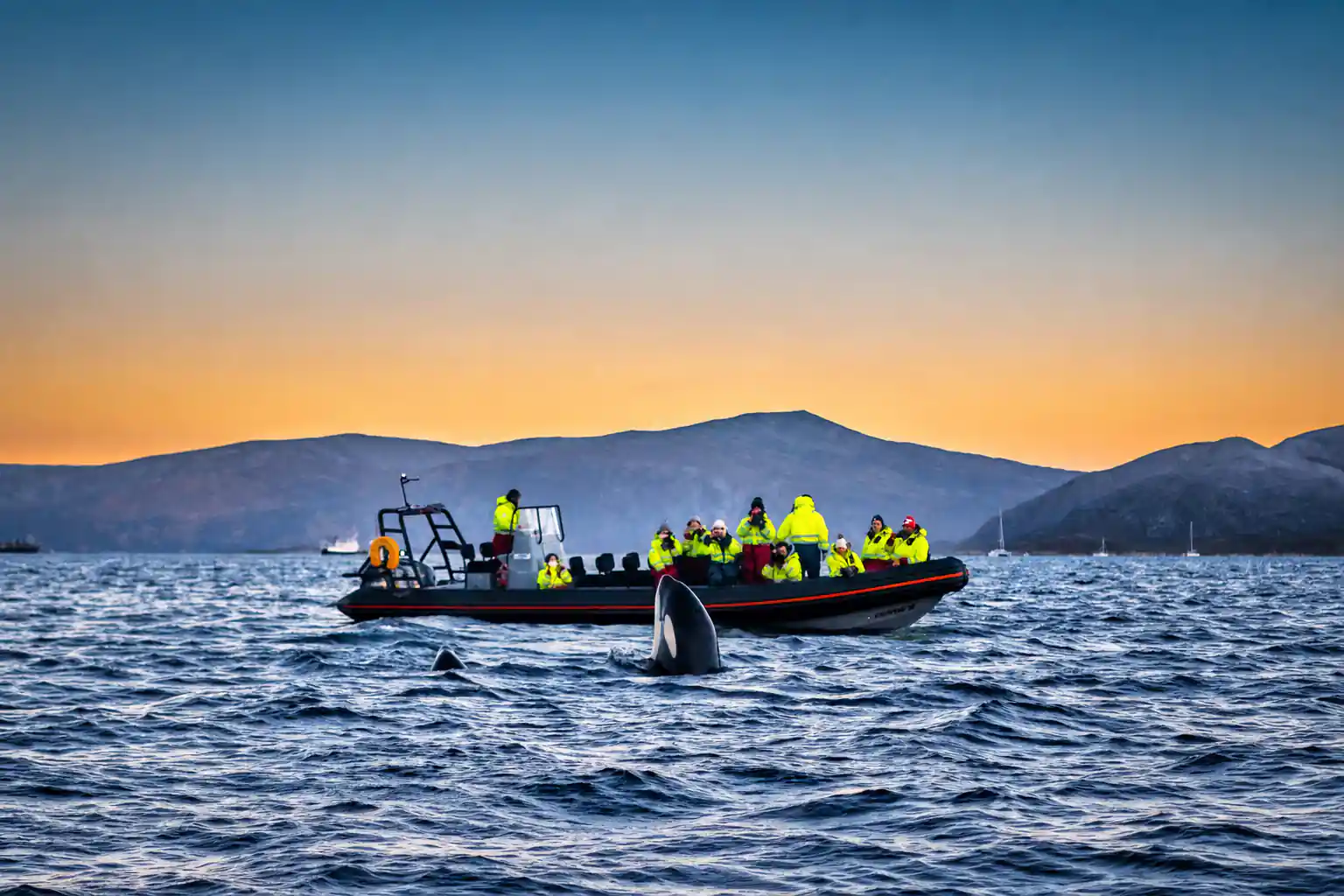
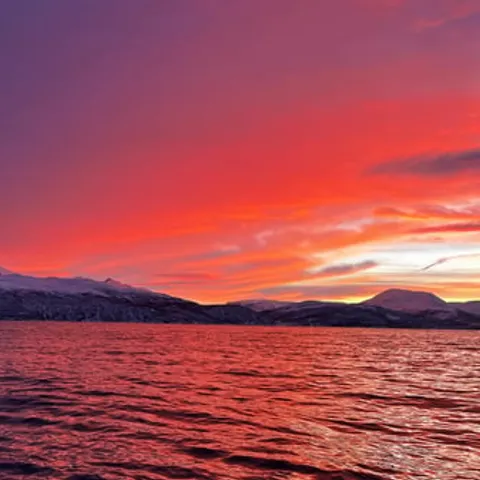
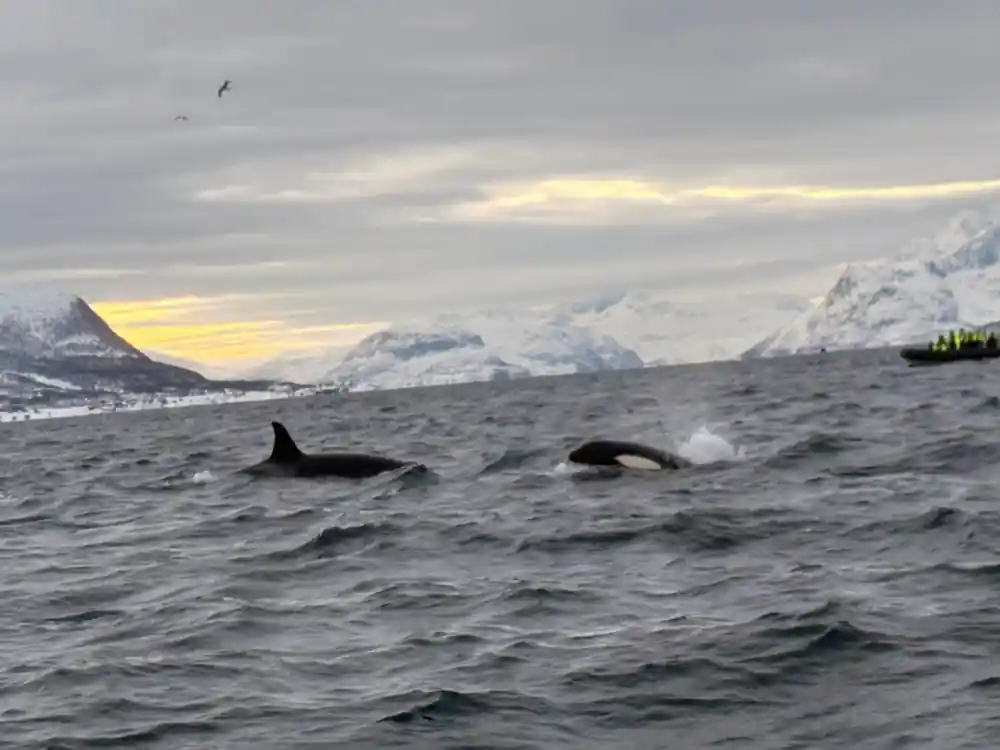
During the winter, orcas and humpback whales gather in the area to feed on herring.
A full Arctic day in whale country
Know before you go
Skjervøy killer whale country in winter
Skjervøy is a scatter of islands and skerries north of Tromsø, reached through Arctic Norway's snowy coastal landscape. During winter, this sea becomes a feeding ground where killer whales and humpbacks assemble to prey on herring.[2] You are not watching a show; you are watching wild animals follow their food, and the whole fjord system feels alive with the possibility of a blow on the horizon.
The food chain begins with Norwegian spring-spawning herring; in September/October it migrates northeastward to its main wintering areas along the coast and in northern Norway's fjords.[3] Where the herring concentrate, the whales follow. The tour from Tromsø to Magic Skjervøy lasts 12 hours and is built around that movement.[1] It gives you time to reach the fjords, search the water, and let the guides do their work without rushing.
An English-speaking instructor leads the tour; you can reserve now, pay later, and cancel free up to 24 hours beforehand.[1] That makes it easy to plan around a winter weather forecast. If you are new to the Arctic, a long day on the water is a great way to understand why people keep coming back.
Killer Whale and Orca Are the Same Animal
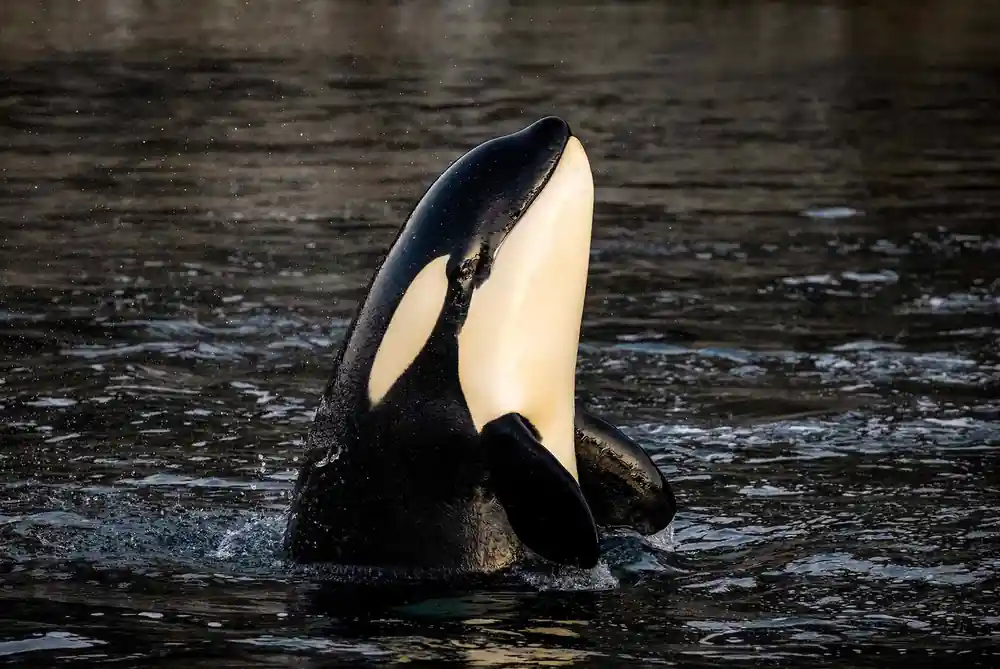
Killer whale and orca are two common names for the same species, Orcinus orca. People use them interchangeably, and you will hear both on the boat. The black-and-white markings, tall dorsal fin and rounded head make them easy to recognise once you know what to look for, even in flat winter light. Orcas have been recorded in every ocean, but seeing them against snow and dark water is an Arctic memory all its own.
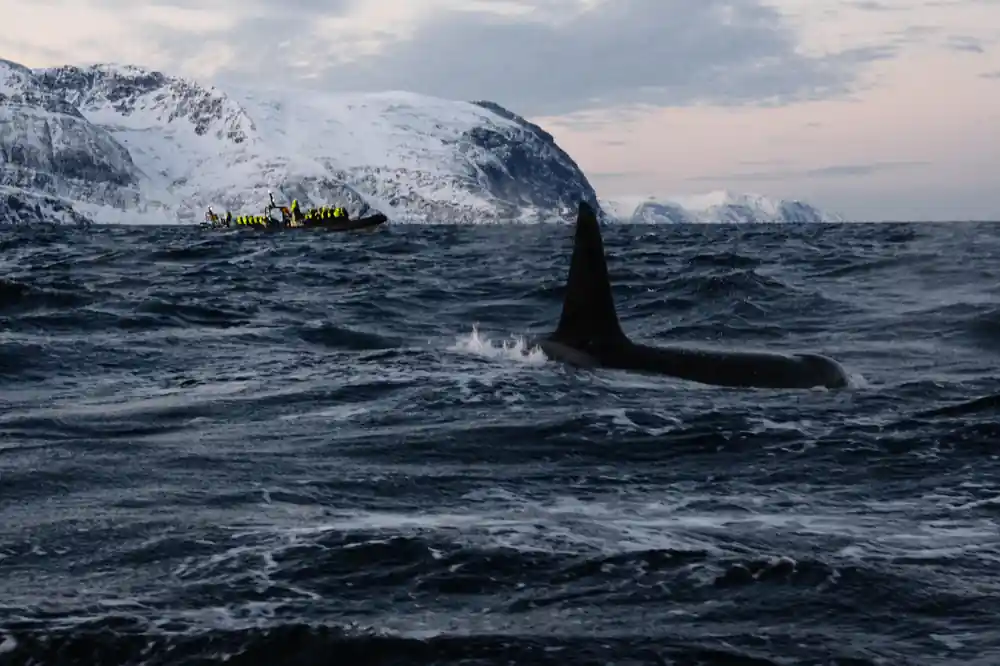
The species is big: male killer whales reach about 9 metres in length and females up to 8 metres, while adult weight varies from 4.5 to almost 7 tonnes.[9] Those dimensions are impressive even at a distance. When a tall dorsal fin slices the water, everyone on board knows they are looking at a top predator. A hunting group moves with purpose, and the surface often shows the ripple of a tail just before a dive.
The English-speaking instructor on this tour helps you move from seeing a fin to reading a pod.[1] You learn to notice breathing rhythms, direction changes and the flashes of white that reveal an orca's eye patch. That local knowledge turns a distant sighting into an encounter you remember for years. Travelers who have never been on a whale tour will find the pace easy to follow.
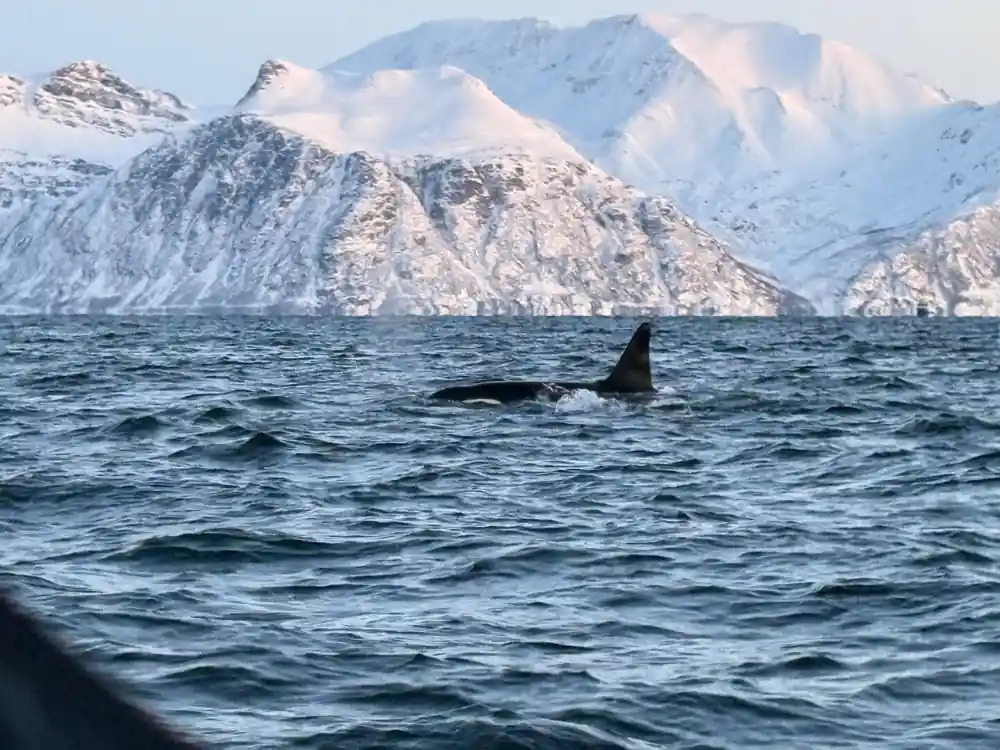
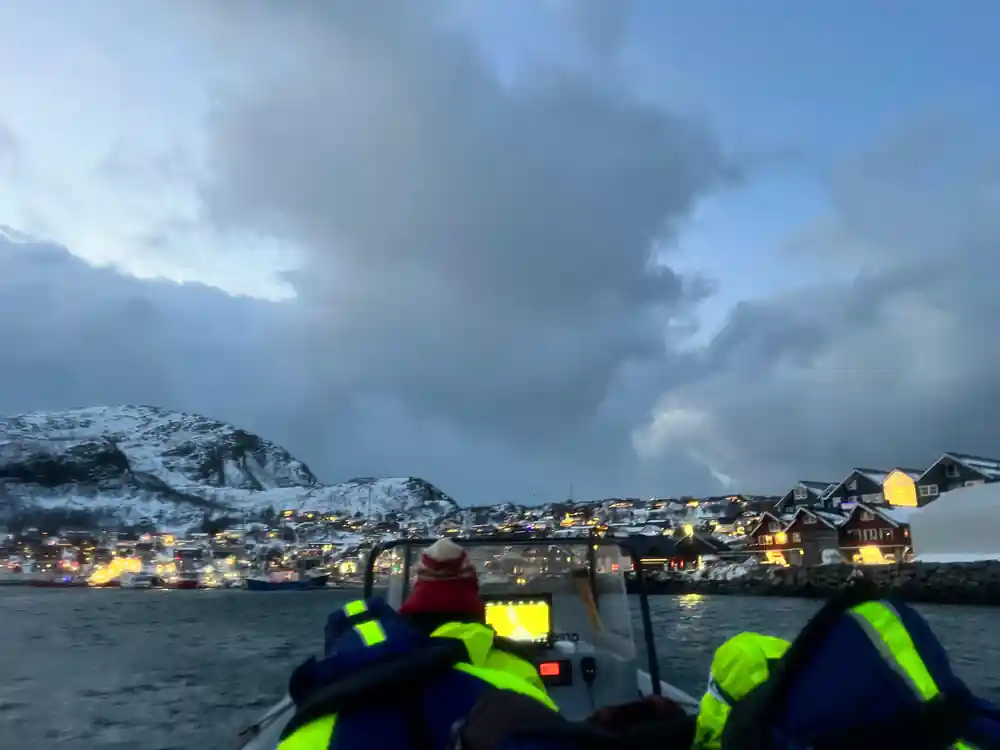
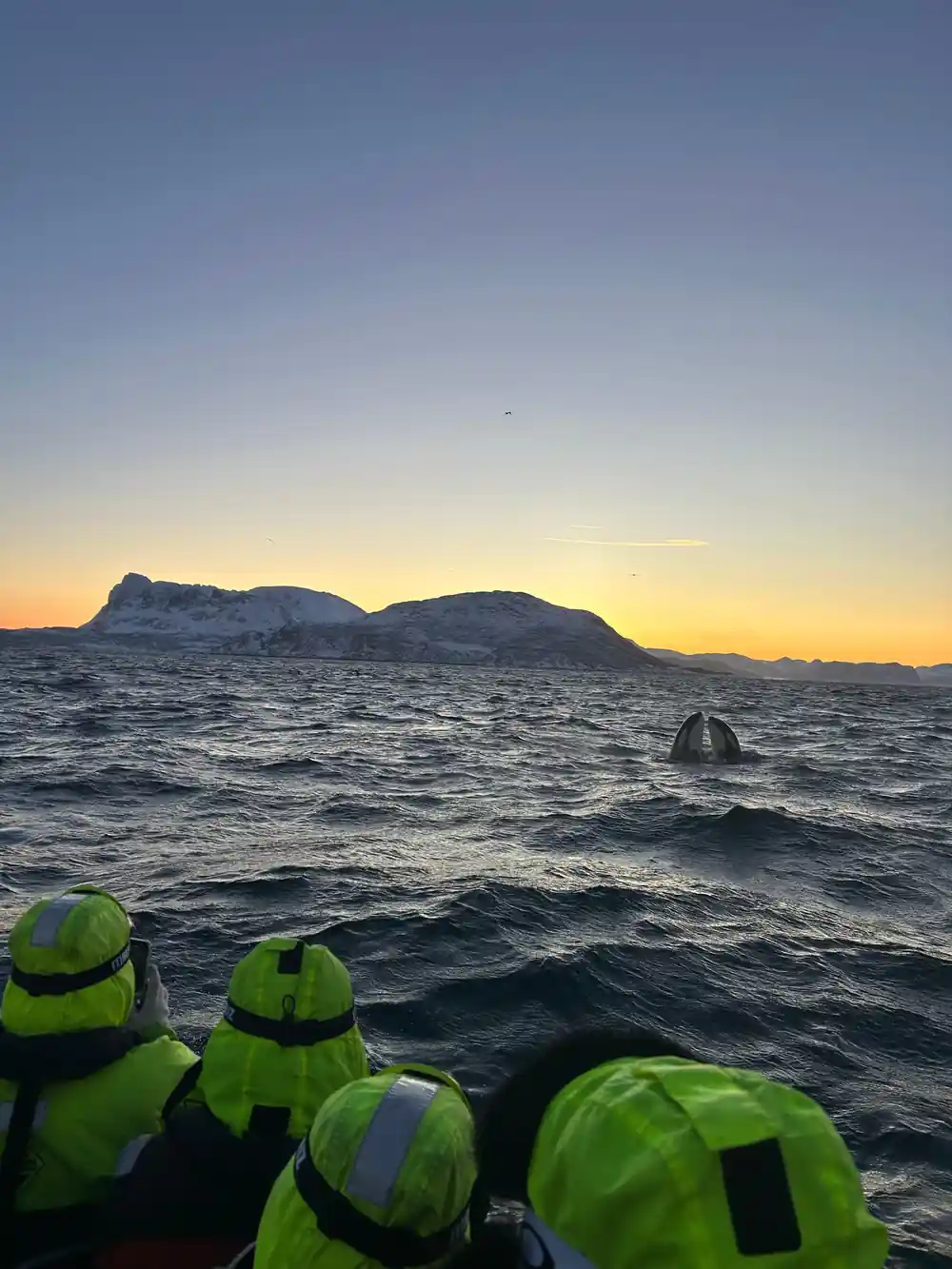
Passengers in thermal suits watch the winter fjords for orcas and humpbacks.
Why the Fjords Fill With Whales in Winter
Herring is the draw. During September/October, the northeastward migration of Norwegian spring-spawning herring takes it to wintering areas along northern Norway's coast and fjords.[3] Orcas and humpback whales gather there to feed on herring during the winter.[2] The whales are not scattered randomly; they are where the fish are, and Skjervøy sits inside that seasonal world. The relationship between fish and whales is the reason the region draws photographers from around the world.
The route from Tromsø to Skjervøy by car is around 160 kilometres and takes about four hours on the shorter route, depending on ferry connections, traffic and road conditions.[10] That transfer is part of the adventure, with fjord views, island ferries and snowy mountains rolling past. A full day of 12 hours means you have time to travel, board a boat, search, and still get back to Tromsø the same day.[1] Road transfers in winter can be affected by weather, so build in a buffer if you are flying home the same day.
In Tromsø, the polar night lasts roughly 27 November through 15 January, so daylight is scarce during the deep winter.[7] Average winter temperatures hover around −4°C.[6] That is real Arctic winter weather, so dress in warm layers, bring a thermal base, and let the tour's schedule work for you. The light changes quickly, and a pale sun on the horizon can turn the whole fjord pink.
Telling One Animal From the Other
Orcas are unmistakable: black bodies, white belly, white eye patch and a tall curved dorsal fin. Males are larger, reaching about 9 metres, while females top out around 8 metres; adult weight spans 4.5 to almost 7 tonnes.[9] Humpbacks are built differently, with a smaller dorsal fin, a knobby head and very long pectoral fins. Humpbacks are also enormous, though they look different in the water.
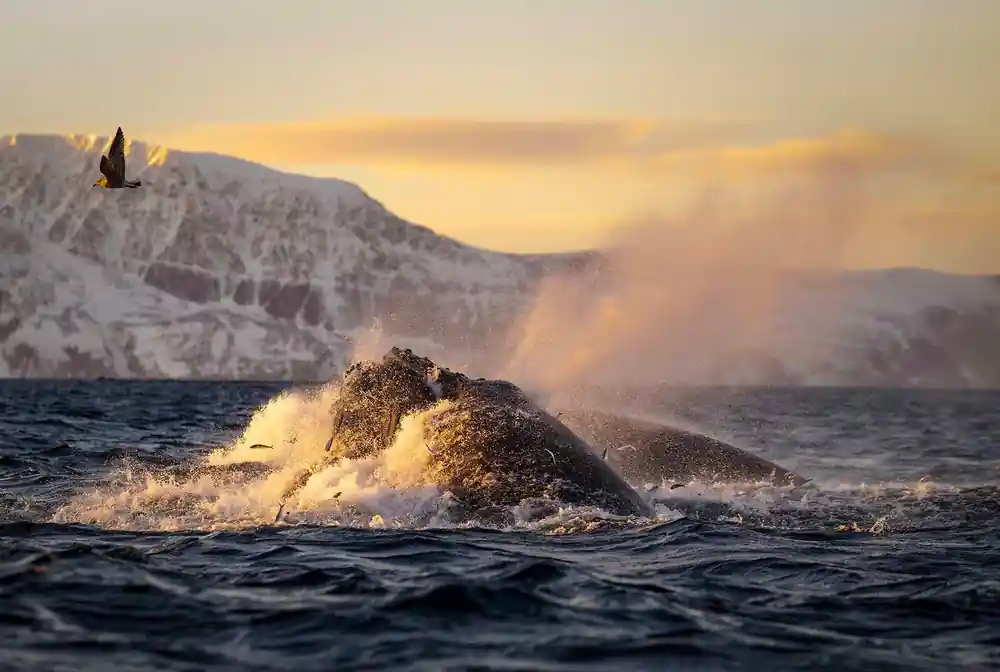
When a humpback dives, it often arches its back and lifts its tail fluke, giving photographers a signature shot. Orcas more often surface in a group, with fins cutting the surface in a line. Both species appear in the same fjords, sometimes within minutes of each other, so keep looking after the first sighting. Some travellers find that learning to identify fins becomes an addictive game.
The instructor on the Magic Skjervøy tour narrates in English, so you know whether you are watching an orca or a humpback.[1] It helps to bring binoculars, but the guides are good at putting the boat where the action is. Asking questions is easy, and the small details, like the shape of a blow, become clear with a little practice. You do not need to be a biologist to enjoy it, but a little knowledge sharpens the excitement.
from US$356
A 12-hour journey connects Tromsø with Skjervøy's winter fjords; an English-speaking instructor is included, and cancellations are free until 24 hours before.[1]
What a Pod Looks Like From the Water
From the deck, a pod is a ribbon of movement: black fins rising, misty blows, sometimes a breach. The whales may travel in tight family groups, and calves stay close to their mothers. No two sightings look the same, and the waiting is part of the thrill. The boat's motion adds rhythm to the wait, and the cold keeps you alert.
The tour from Tromsø lasts 12 hours, which allows for long stretches of scanning and patient waiting.[1] When the instructor in English calls out a sighting, everyone moves to the rail at once.[1] The atmosphere goes quiet, then excited, as the boat adjusts position for a better view. Even without whales, the fjord scenery earns the trip.
Keep your camera at the ready and your phone charged. The light in winter is low and soft, so a steady hand helps. If the weather turns, free cancellation until 24 hours before gives you flexibility, and the reserve-now-pay-later option keeps booking simple.[1] If you have a zoom lens, practice focusing before the boat leaves, so you are ready when the action starts.
The Birds That Find the Whales First
Seabirds are the whale watcher's early warning system. Gulls and kittiwakes gather where herring are pushed toward the surface, and their noise can point to feeding activity below. Learn to watch the birds and you will often find the whales, especially when the action is far from the boat. Some birds stay with a feeding patch for hours, so a distant flock can still be worth a second look.
On the drive between Tromsø and Skjervøy, the shorter route covers about 160 kilometres and takes around four hours by car, depending on ferry connections, traffic and road conditions.[10] That drive is also a birdwatching route, with fjords, islands and snowy peaks around every bend, so keep your eyes open even before the boat leaves. Pack a thermos if you have one; warm drinks make the waiting time more comfortable.
Once on the water, watch for flocks diving repeatedly. Where the birds are busy, herring are near the surface, and where herring gather, orcas and humpbacks are likely to be close by.[2] The day lasts 12 hours, so you have time to follow those clues and still enjoy the scenery.[1] The same clues work on land, where eagles often perch near open water.
What a Sighting Is Actually Like
A sighting often starts with a shout from the guide: a dark fin, a blow, a flash of white. The boat slows and everyone scans the same patch of sea. Then the whales surface again, closer than you expected, and the cold air fills with the sound of breathing. When the whales are close, the size of an orca's dorsal fin is astonishing.
In winter, the area attracts orcas and humpbacks that come to feed on herring.[2] They are focused on fish, not on boats, and there are rules to keep it that way: whale-watching vessels must not stay closer than 0.2 nautical miles (370 metres) to a vessel engaged in fishing, a seine or fixed gear.[8] The whole day is a reminder that these fjords are working waters. Respect for fishing boats is part of the local etiquette, and everyone on board understands why.
After a day on the fjords, you return to Tromsø with a new sense of the Arctic. If you're there from late August until early April, the northern lights can be seen on nights when the sky is dark and clear enough.[11] That makes Skjervøy whale watching part of a larger winter adventure, one you will be planning again before the return flight. Winter trips in Tromsø can be paired with other activities, from dog sledding to city sightseeing.
Whale watching tours from Tromsø: from prices
US$356[1], US$338[4], US$251[12], US$391[13], US$210[14], US$220[15].
Choose your whale watching tour
US$356[1], US$338[4], US$391[13].
When to go
How to plan your trip
Book a winter date
Whales gather during winter, so choose a date after the herring have arrived.[2][3]
Dress in layers
Winter temperatures average roughly −4°C, so bring warm layers, a hat, gloves, and a thermal base.[6]
Plan a long day
The tour runs 12 hours, so leave the rest of the day free.[1]
Take the road north
The shorter route from Tromsø to Skjervøy is about 160 kilometres and around four hours by car.[10]
Scan for blows
Watch for orcas and humpbacks feeding among the herring, and follow the birds.[2][3]
Book your Skjervøy killer whale adventure from Tromsø
from US$357Reserve now & pay later