If you read nothing else
- A 12-hour journey from Tromsø with an English-speaking instructor brings you into the fjords where orcas gather.[1][2]
- In winter, the fjords north of Tromsø draw orcas and humpback whales that feed on herring.[2]
- The shorter car route from Tromsø to Skjervøy is approximately 160 kilometres and takes around four hours, depending on ferry connections, traffic and road conditions.[3]
- Book now and pay later; cancel 24 hours or more beforehand for a full refund.[1]
- Whale-watching vessels must not stay closer than 0.2 nautical miles (370 metres) to a vessel engaged in fishing, a seine or fixed gear.[4]
- Top choice Magic Skjervøy Whale Watching from US$356 Rating4.71[1]Duration12 hours[1]LanguageEnglish Check availability
- Skjervøy RIB Whale Watching from US$338 Rating4.78[5]Duration12 hours[5]LanguageEnglish See this tour
- Skjervøy RIB Boat Tour from US$391 Rating4.56[6]Duration12 hours[6]LanguageEnglish See this tour
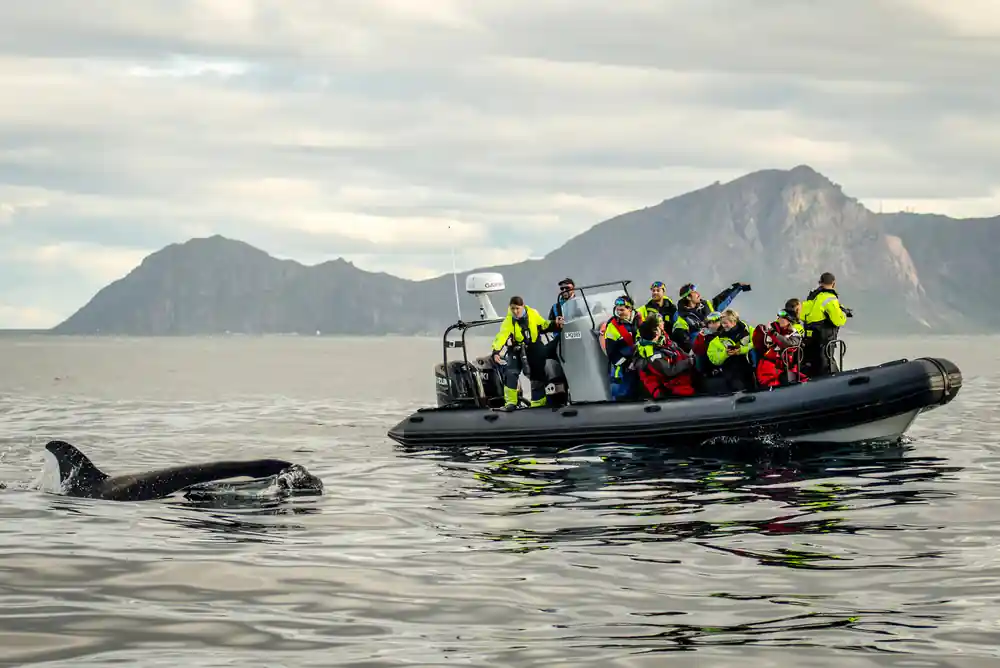
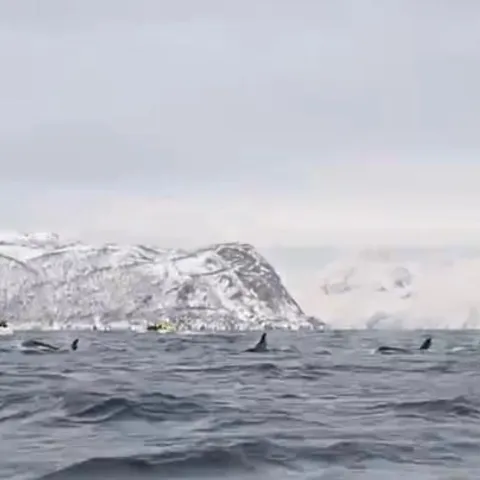
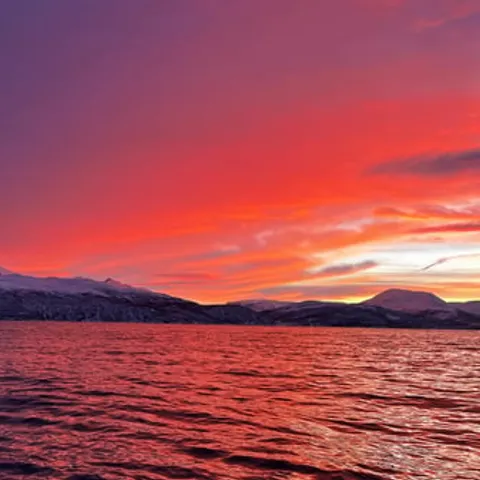
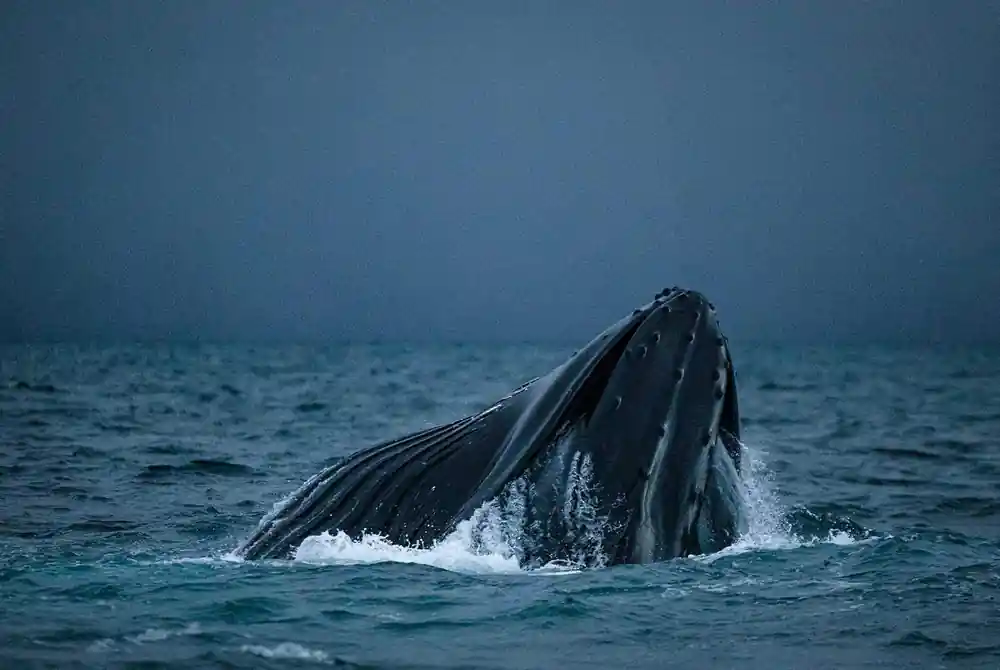
During the winter, orcas and humpback whales gather in the area to feed on herring.
A long Arctic day for travellers who want the full RIB experience
Plan your day
- Reserve now and pay later
- Full-day excursion from Tromsø
- English-speaking instructor on board
- Travel north to winter fjords
What to know
- Dress in layers for Arctic cold
- Winter daylight is short in the far north
- Respectful distance rules are followed
- Free cancellation for flexibility
The Different Ways to See Whales From Tromso
Whale watching from Tromsø is a winter pursuit. In winter, the area sees orcas and humpback whales gathering to feed on herring.[2] Norwegian spring-spawning herring migrates northeast in September/October to main wintering areas along the coast and fjords of northern Norway.[7] In practical terms, the day starts in Tromsø and travels north towards those fjords. The tour from this site sets aside 12 hours for the round trip.[1]
Not all whale trips are the same. Some use larger covered boats with steady decks, while RIBs keep passengers low and close to the water. Both can bring you into the same winter herring grounds. The choice is about your comfort, your tolerance for cold wind and how much time you want to spend travelling. The tour from this site is a RIB-style expedition built around an English-speaking instructor.[1] It is not a sightseeing cruise; it is a day for travellers who want the ocean in their face.
What a Large, Covered Boat Gives You
A covered boat is the easier way to spend several hours on the sea. You get shelter from wind and spray, a stable platform for cameras and a calmer environment for anyone unsettled by rough water. If you have young children, limited mobility or simply prefer warmth, this style of trip is worth considering. It trades some of the sensation of being on the water for comfort and convenience. You can move around, take a seat inside and still watch the fjord from a protected deck. For many people, that makes the difference between an enjoyable day and an overwhelming one.
Covered boats still reach the same wintering areas where whales feed. Several operators run longer days from Tromsø, and one well-reviewed option uses a hybrid-electric boat.[8] A larger vessel often needs more time to cover the distance to the northern fjords. Factor the full schedule into your decision. If you are weighing boat types, think about how long you can sit and wait, and how much of the day you want to be outside. There is no perfect boat, only the one that fits your energy and your expectations.
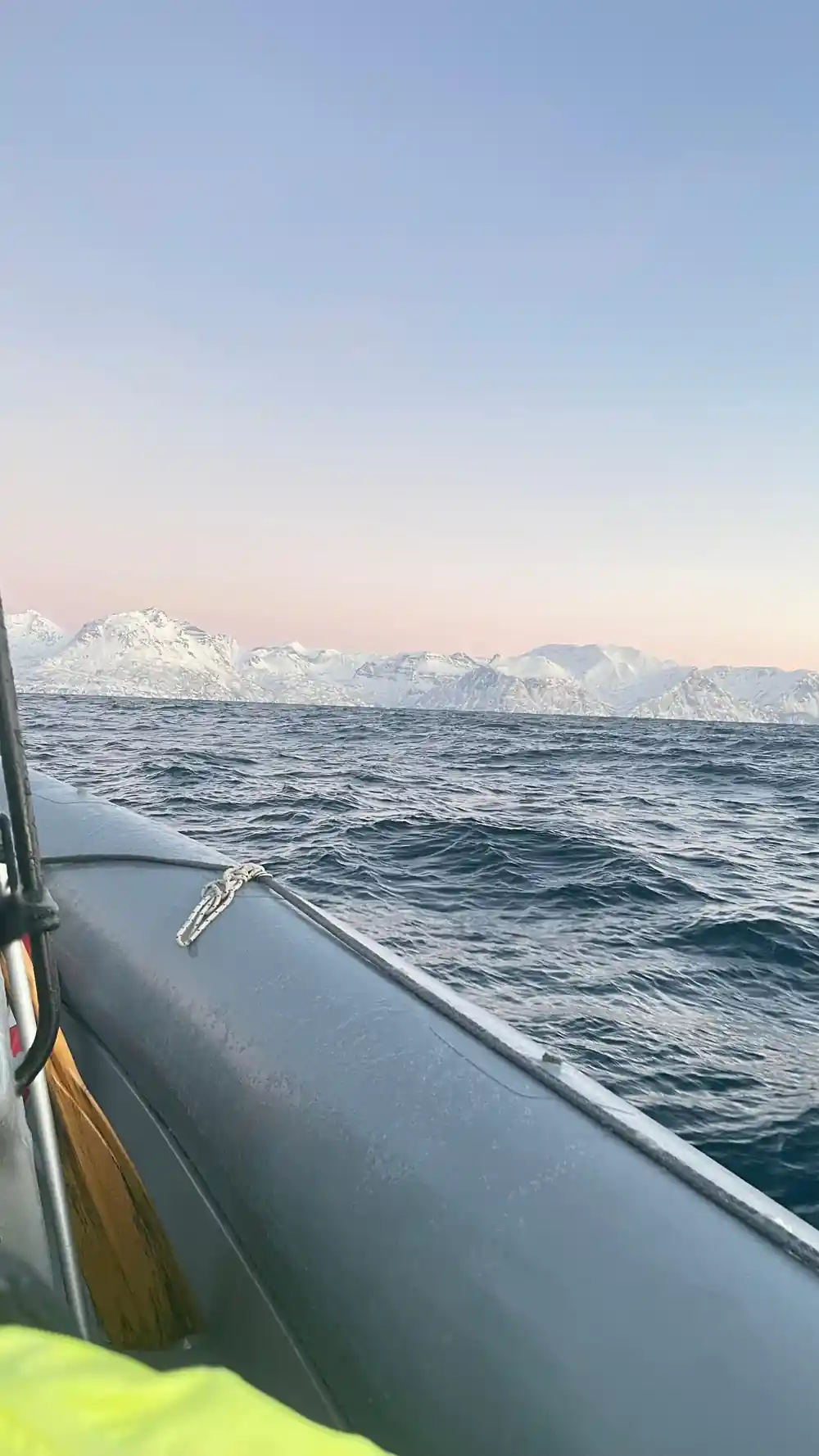
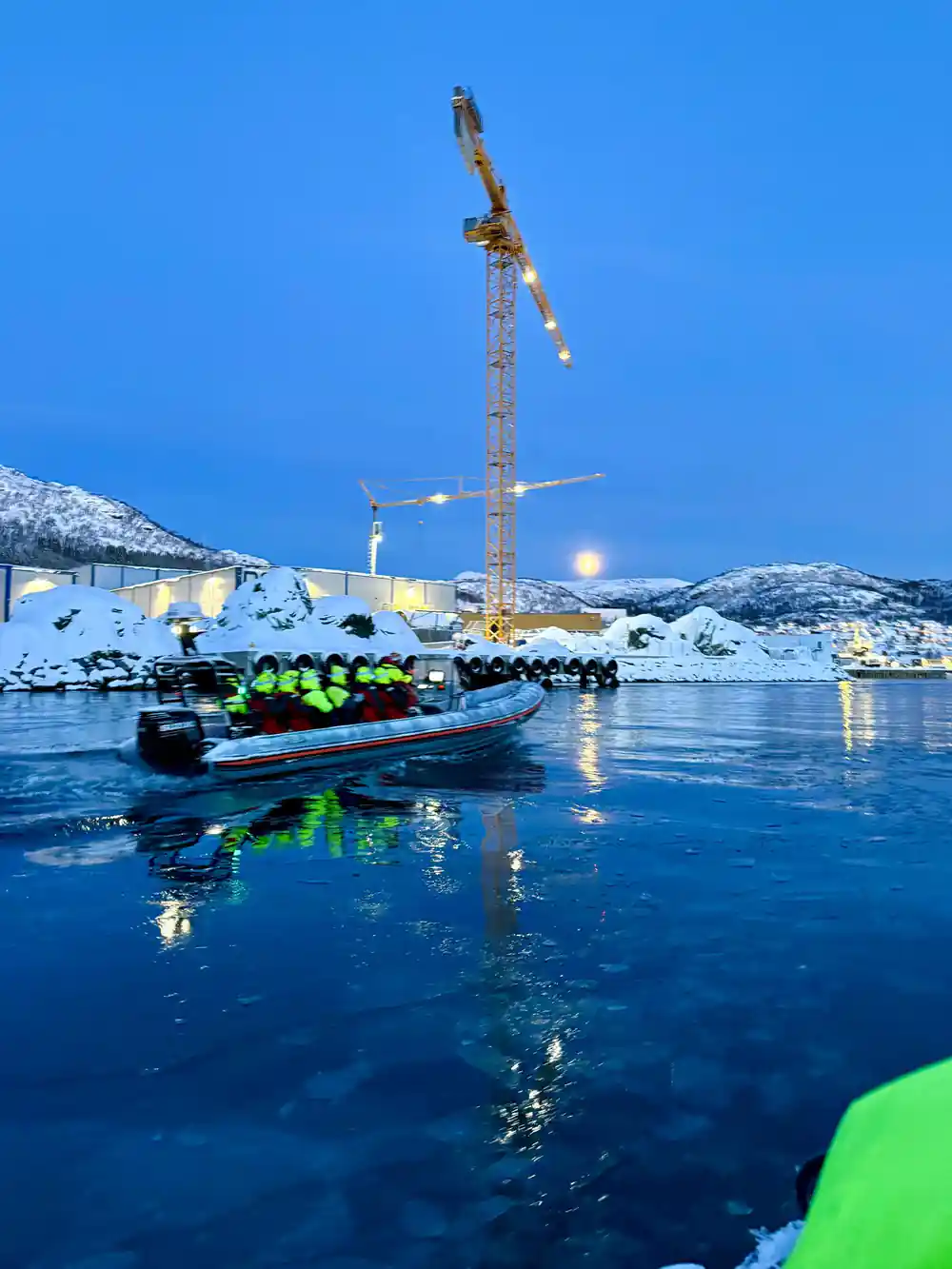
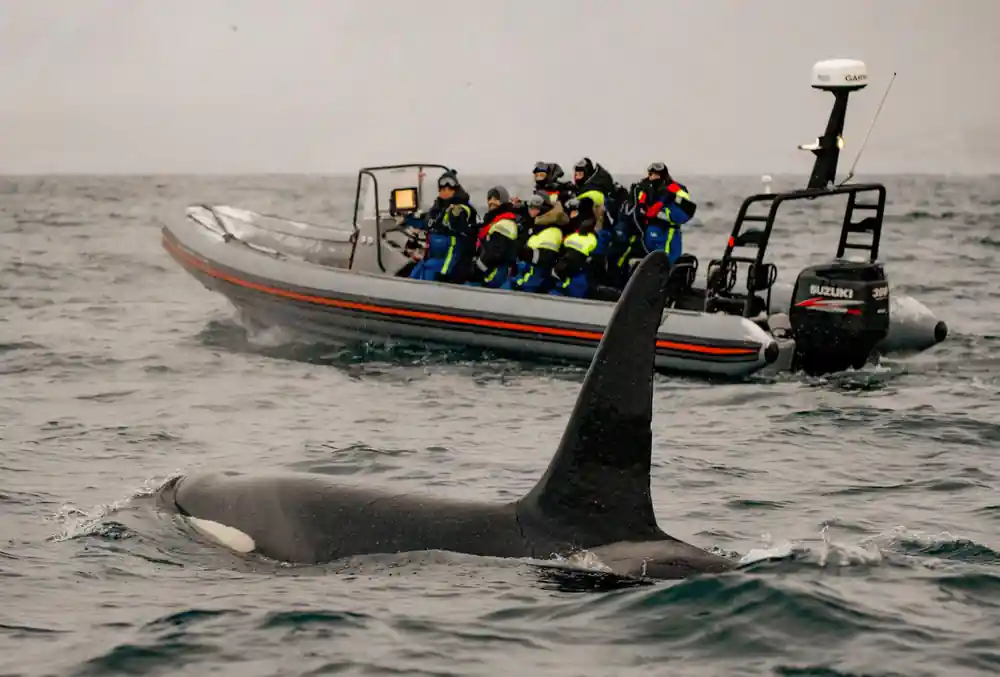
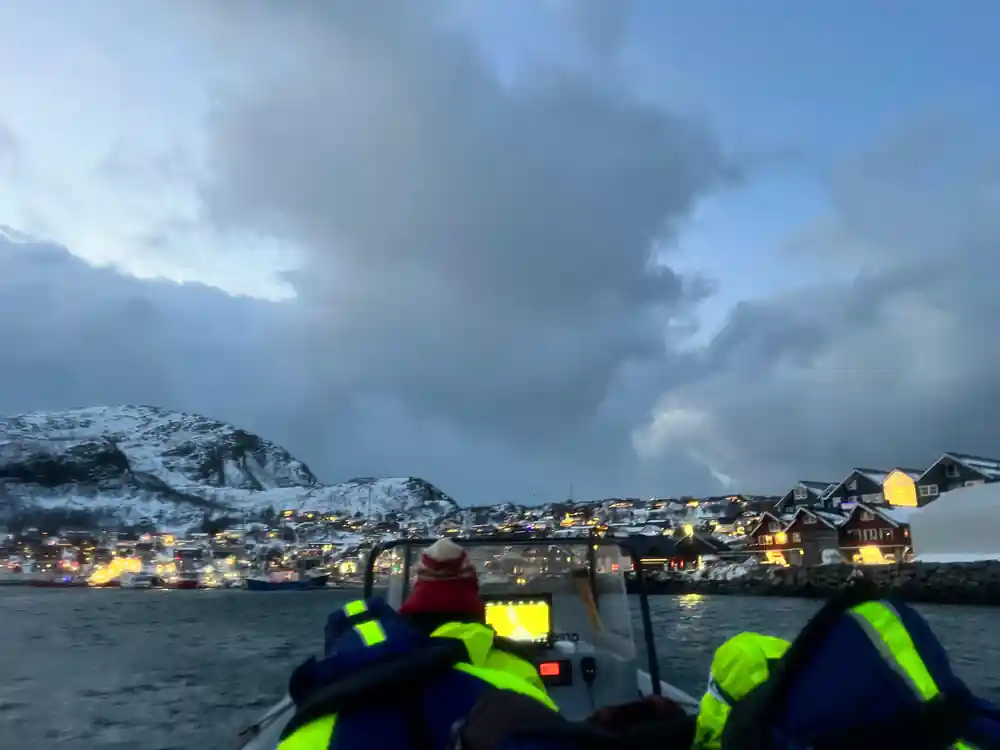
Passengers in thermal suits scan a winter fjord from the RIB during the Magic Skjervøy whale trip.
What a Small, Open Boat Gives You Instead
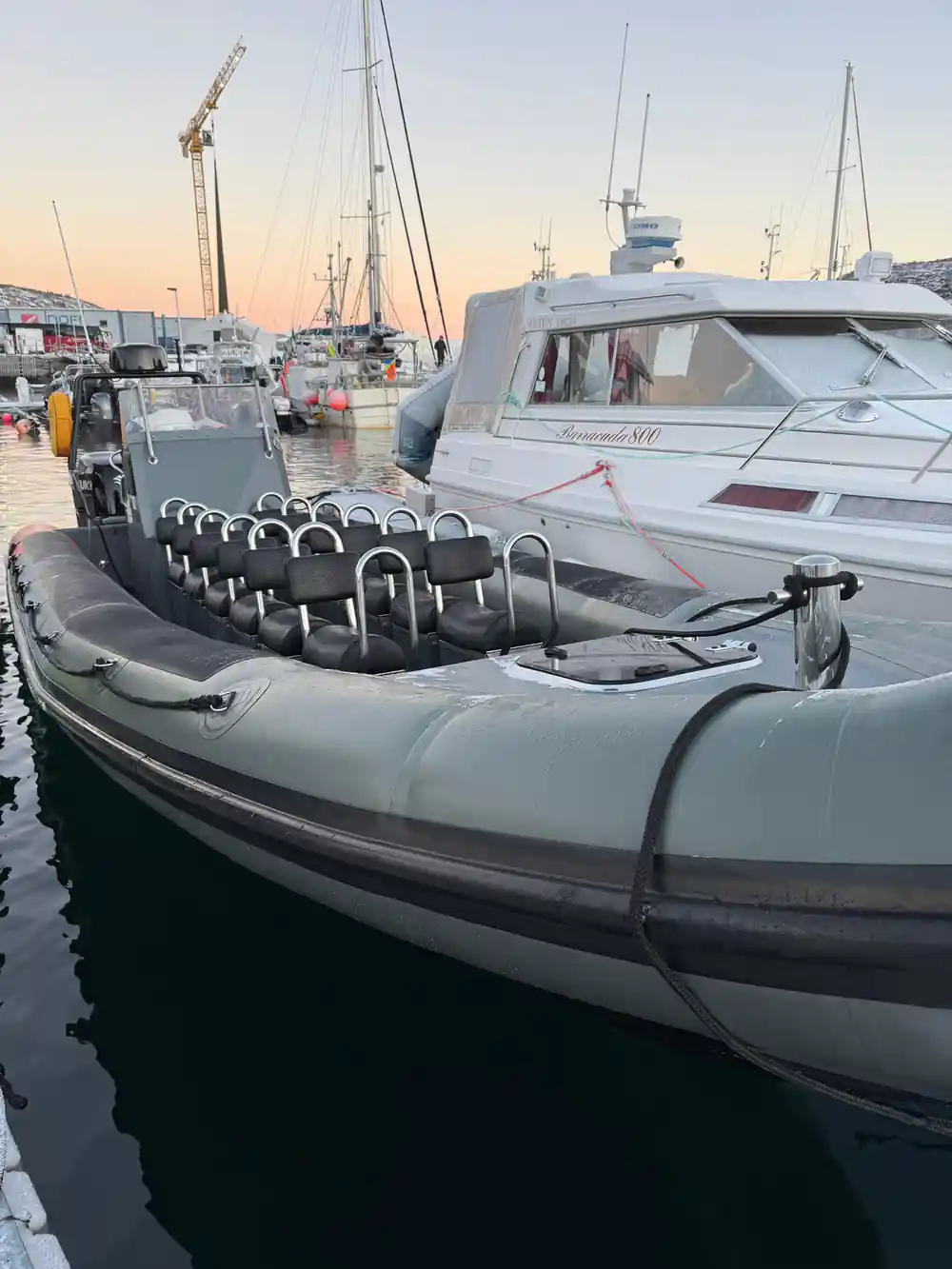
A RIB puts you inches from the water. The boat can slow quickly, turn to follow a pod and give every passenger a clear view without a wall of windows between you and the whales. It is colder and louder, and you feel every change in the sea. That is exactly what some travellers want: a raw, immediate encounter with the Arctic ocean. Spray hits your face, the engine hums through the hull and the guides watch the surface for blows. The sense of speed is part of the thrill, and so is the vulnerability.
The Magic Skjervøy tour is built around this kind of day. It runs for 12 hours, which covers the round journey from Tromsø and time on the water.[1] The price starts at US$356, an investment in a full expedition rather than a casual add-on.[1] An English-speaking instructor accompanies you, and cancellations made at least 24 hours ahead qualify for a full refund.[1] For travellers who choose this RIB, the long day is part of what makes the encounter feel earned.
Does Going Further North Improve the Odds?
The tour heads for Skjervøy, a village north of Tromsø. The shorter route from Tromsø to Skjervøy is approximately 160 kilometres and takes around four hours by car, depending on ferry connections, traffic and road conditions.[3] During winter, the fjords north of Tromsø are gathering spots for orcas and humpback whales feeding on herring.[2] That is the simple geography behind this full-day route. You are not just taking a boat ride; you are travelling to a part of the coast where winter herring, and the whales that feed on them, are part of the seasonal rhythm.
How much further north you go changes how long you are on the road, not necessarily what you see. During winter, the herring stock remains near the coast and inside fjords in northern Norway.[7] Whales follow the herring, and their position shifts from year to year. A tour that can cover more water gives the skipper more options, but the Arctic always keeps some uncertainty. Plan for a day that feels like a hunt rather than a ferry ride. You may spend long stretches watching water, but that patience is what makes a sudden blow or breach so electrifying.
from US$356
A 12-hour RIB excursion heading to the winter herring grounds includes an English-speaking instructor, with free cancellation up to 24 hours ahead.[1]
Which Boat Suits You, and Which Doesn't
Ask yourself three questions before booking. How do you handle cold wind? How long can you stay alert and patient? And do you want a social boat or a small group? A RIB is an exceptional way to see whales, but it is not a sightseeing coach. Dress in thermal layers, a windproof outer shell, a warm hat and gloves that still let you use a camera. Your eyes will sting, your cheeks will flush, and you will still be smiling. The people who love this trip tend to be curious, adaptable and happy to trade comfort for closeness.
If that sounds good, the 12-hour day is a proper Arctic expedition.[1] If it sounds exhausting, a covered boat or a shorter trip may fit better. There is no wrong answer, only a match between your expectations and the day on the water. What matters is that you choose the style you will enjoy. Whales do not run to a timetable. When comparing the best whale watching from Tromsø, let your own energy levels be the deciding factor.
What Responsible Whale Watching Means Here
Rules are in place to keep both whales and whalewatchers safe. Whale-watching vessels must not stay closer than 0.2 nautical miles (370 metres) to a vessel engaged in fishing, a seine or fixed gear.[4] This is not about the distance to the whale itself, but about giving fishing boats room to work and keeping the encounter calm. Skippers work within these rules while positioning the boat for views. It can mean waiting at a respectful distance rather than charging in, and that restraint is part of responsible wildlife tourism.
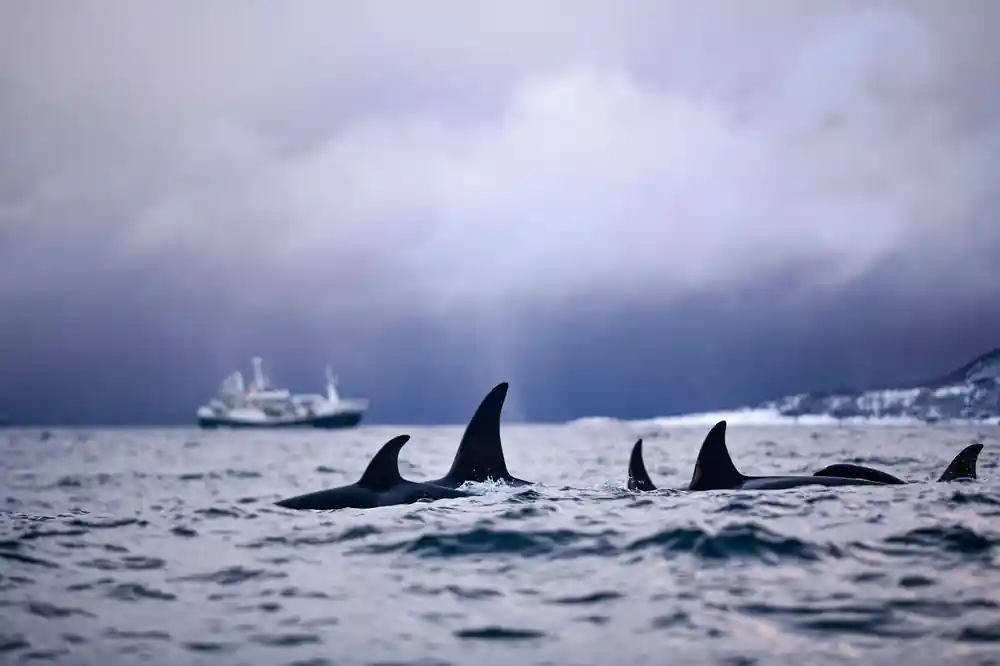
Respect also means being patient. The boat may stop and drift, engines may cut, and everyone should stay seated when the skipper asks. The reward is often a breath, a fin, or a group of orcas surfacing together near the boat. Male killer whales reach about 9 metres in length and females up to 8 metres, while adult weight varies from 4.5 to almost 7 tonnes.[9] Seeing animals that size beside a small RIB is humbling. It is also a reminder that a responsible trip puts their feeding space before our photo count.
Is the Longer Day Worth It?
The honest answer is that a 12-hour whale trip is a big commitment.[1] You get a long transfer, a RIB ride in cold air and no guarantee that every pod will cooperate. You can also spend time in the winter waters where orcas and humpback whales assemble to eat herring.[2] For many travellers, that trade is the whole point. The day is not simply a boat ride; it is a weather-worn, spray-soaked Arctic journey with the whales as the destination.
The practical details help. The tour is priced from US$356, rated 4.71 from 1,211 reviews, with free cancellation for requests made 24 hours before departure.[1] Reserve now and pay later, then decide as the forecast becomes clearer.[1] If you are asking whether whale watching in Tromsø is worth it, the answer depends on how much you want the expedition rather than the souvenir. For the right traveller, the long day is not a hurdle; it is exactly the reason to go.
Traveller ratings for whale trips
Whale tour prices compared
When to book and go
Plan this expedition
Book your place
Reserve now, pay later, and if your plans change, a full refund is available with cancellation up to 24 hours before.[1]
Get layered
Bring thermal base layers, a warm middle layer, a windproof outer shell, plus a hat, gloves, and scarf. Tromsø's average winter temperature sits around −4°C.[14]
Reach the meeting point
Arrive in Tromsø in good time. Roughly 10-20 minutes separate the airport and city centre.[15] The route north to Skjervøy takes around four hours by car.[3]
Ride to the fjords
Settle into the trip's northbound journey, then board the RIB with your instructor and follow the safety briefing.
Watch for whales
Keep your eyes on the water for blows, fins and tails. In winter, the area sees orcas and humpback whales gathering to feed on herring.[2]
Return to Tromsø
The full tour runs 12 hours, including travel and time on the water, and you should leave the evening free.[1]
Reserve your seat on the Magic Skjervøy whale expedition from Tromsø
from US$357Reserve now & pay later