If you read nothing else
- In Tromsø, polar night lasts approximately 27 November to 15 January, meaning a large portion of the whale season takes place in twilight and darkness.[1]
- The fjords north of Tromsø become a winter gathering spot for orcas and humpback whales feeding on herring.[2]
- Winter temperatures in Tromsø average around −4°C; wearing layers and having a good dry suit are more important than extreme cold.[3]
- Skjervøy is roughly 160 kilometres from Tromsø and takes about four hours by car, depending on ferries, traffic and road conditions.[4]
- The Magic Skjervøy tour costs from US$356 and includes free cancellation up to 24 hours in advance, with reserve now and pay later.[5]
- Top choice Magic Skjervøy from US$356 Duration12 hours[5]Rating4.71[5]Guide languageEnglish[5]Small groupNot stated in listingCancellationFree up to 24 hours[5] Check availability
- Skjervøy RIB from US$338 Duration12 hours[6]Rating4.78[6]Guide languageEnglish[6]Small groupNot stated in listingCancellationFree up to 24 hours[6] See this tour
- Heated Boat from US$391 Duration12 hours[7]Rating4.73[7]Guide languageEnglish[7]Small groupLimited to 12 participants[7]CancellationFree up to 24 hours[7] See this tour
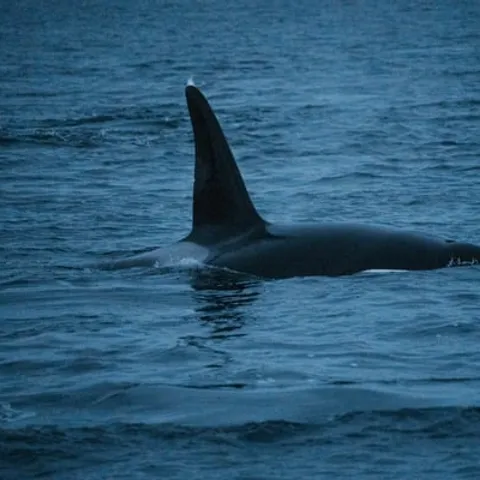
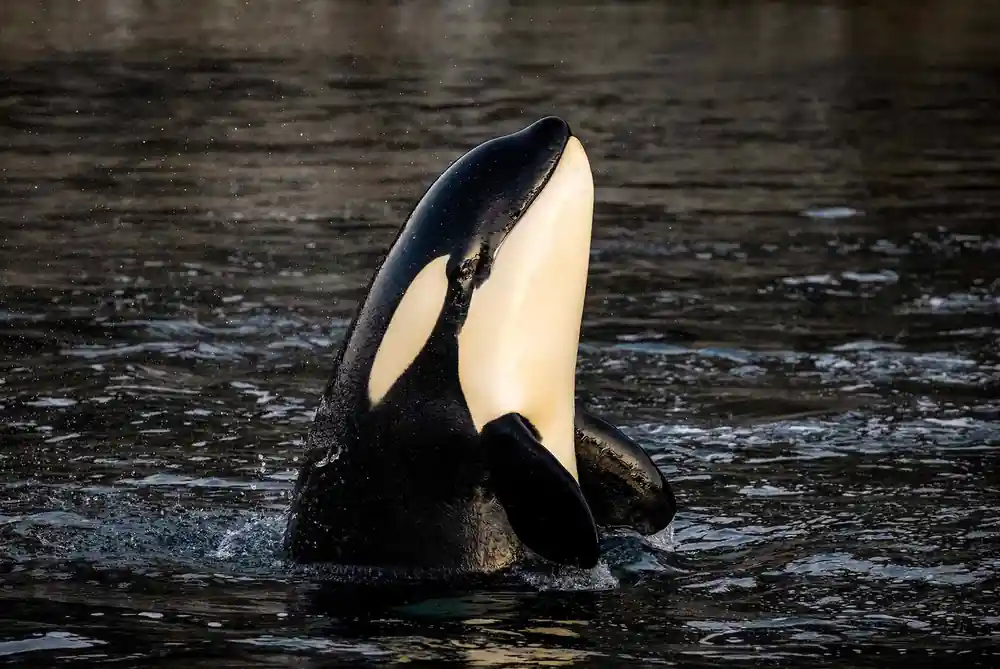
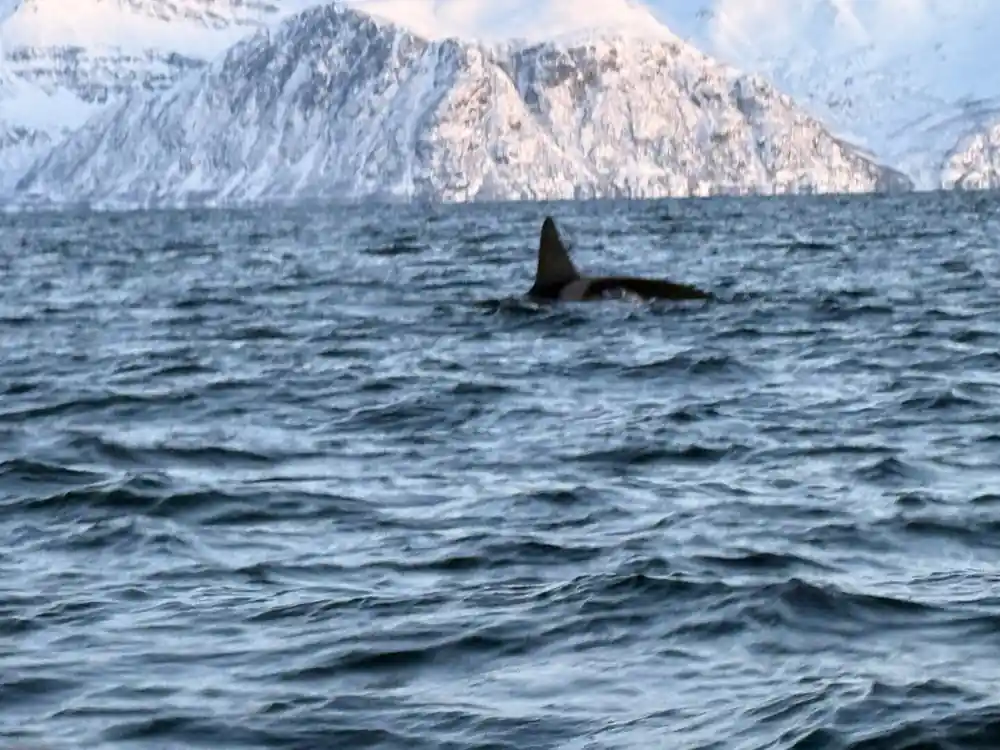
The males reach about nine metres in length and the females up to eight metres.
Go anyway, dressed and prepared for winter darkness
Booking tips
- Check the polar night dates: in Tromsø it lasts approximately from 27 November to 15 January.[1]
- Pack for around −4°C as an average winter temperature, not an extreme cold event.[3]
- The Magic Skjervøy tour is from US$356 and has free cancellation up to 24 hours in advance.[5]
- Reserve now and pay later is available on this tour.[5]
On the day
- Expect a full 12-hour day from Tromsø to Skjervøy and back.[5]
- Bring a torch or headlamp; much of the whale season sits inside the polar night period.[1]
- Listen to the English-speaking instructor for timing and boat safety.[5]
- Keep your booking reference ready for check-in and for any cancellation requests.
Whale watching in the Tromsø polar night
Whale watching from Tromsø in winter is not a bright daylight activity. Polar night in Tromsø runs from about 27 November to 15 January, so most of the core season takes place during twilight, blue hours, and darkness.[1] That is exactly when the whales are around. Each winter, the fjords north of Tromsø draw orcas and humpback whales feeding on herring.[2]
The tour from Tromsø to Magic Skjervøy is a full-day commitment of 12 hours, with an English-speaking instructor and a from-price of US$356.[5] You leave town, drive north into a landscape that gradually loses the city lights, and only later step onto the boat. The destination itself is part of the appeal: Skjervøy sits in the same Arctic waters where the herring draw the whales close to the coast.[2][8]
The whole trip is planned around the rhythm of winter. You meet in Tromsø, travel out of the city lights, and spend the middle part of the day looking for wildlife on the water. On the way back, the dark returns, and the boat and minibus become quiet and tired in a good way. For many travellers, that sense of moving through the long polar night is as memorable as the whales themselves.
The polar night at Skjervøy
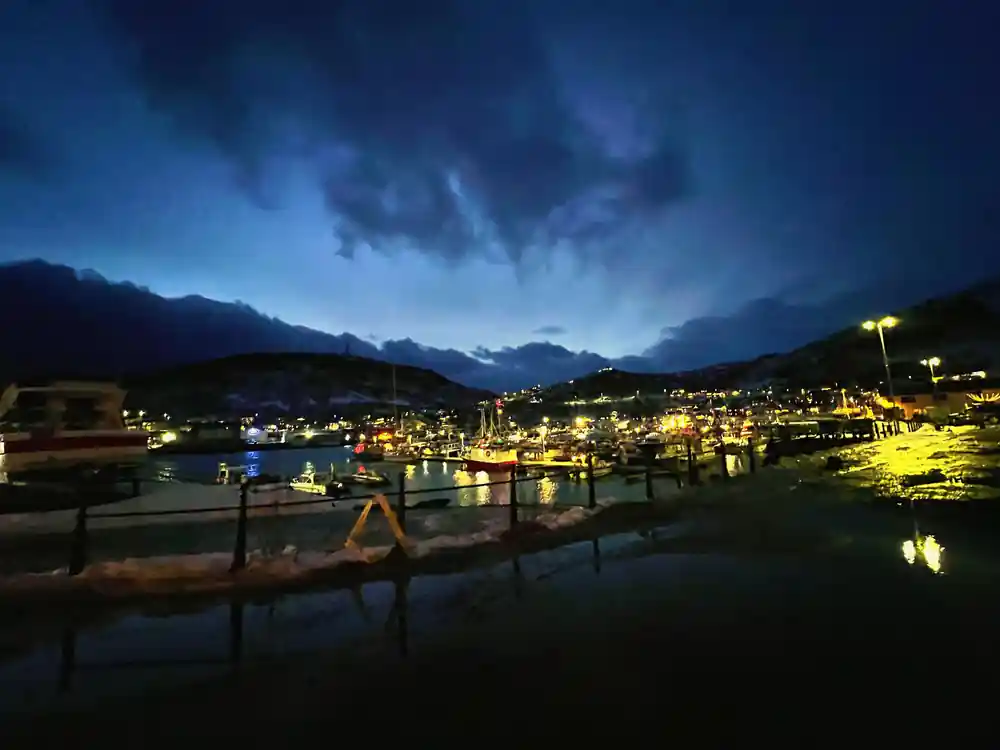
Skjervøy, like Tromsø, sits far north, so during the polar night you plan around darkness rather than around sunshine. The polar night dates for Tromsø are a good guide: approximately 27 November to 15 January.[1] The exact moment the sun returns depends on your location and the surrounding terrain, so behind a mountain ridge the darkness can feel longer than on an open fjord.[1]
This is not the deep black of a bad storm. Snow-covered ground, moonlight, boat lights and the cold blue of twilight all help you see the water. The whales do not need daylight to feed on herring, and guides use the winter light to spot blows and fins.[2] For photography, steady hands and a fast lens matter more than a golden sunset.
When you are deciding whether to go, remember that darkness is normal for everyone who lives here. The city continues its daily life, buses run, shops open and tour boats sail. The cold and the dark are part of the conditions that make this such a special place to watch whales, not reasons to stay indoors. The question is simply whether you are dressed for it.
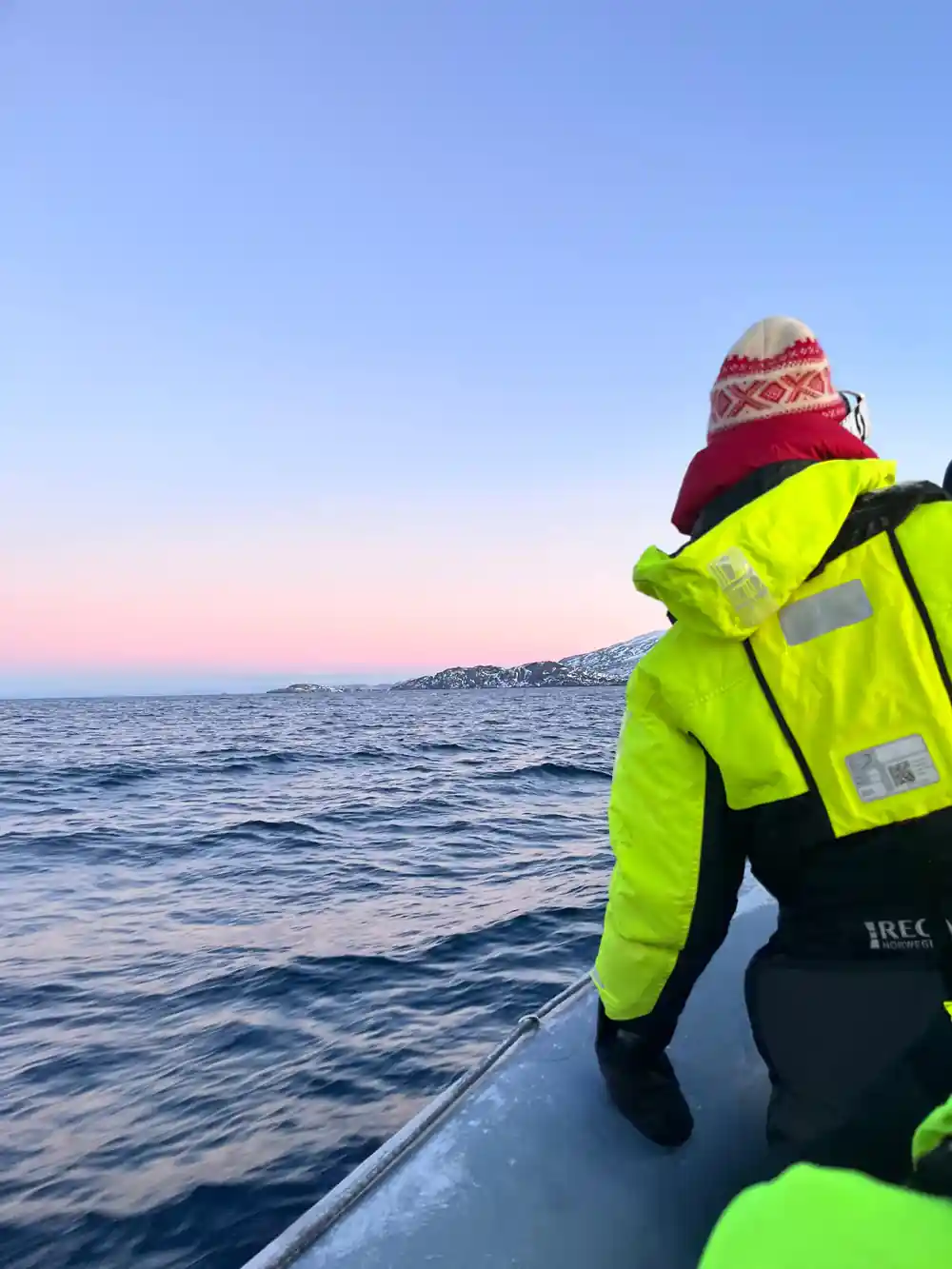
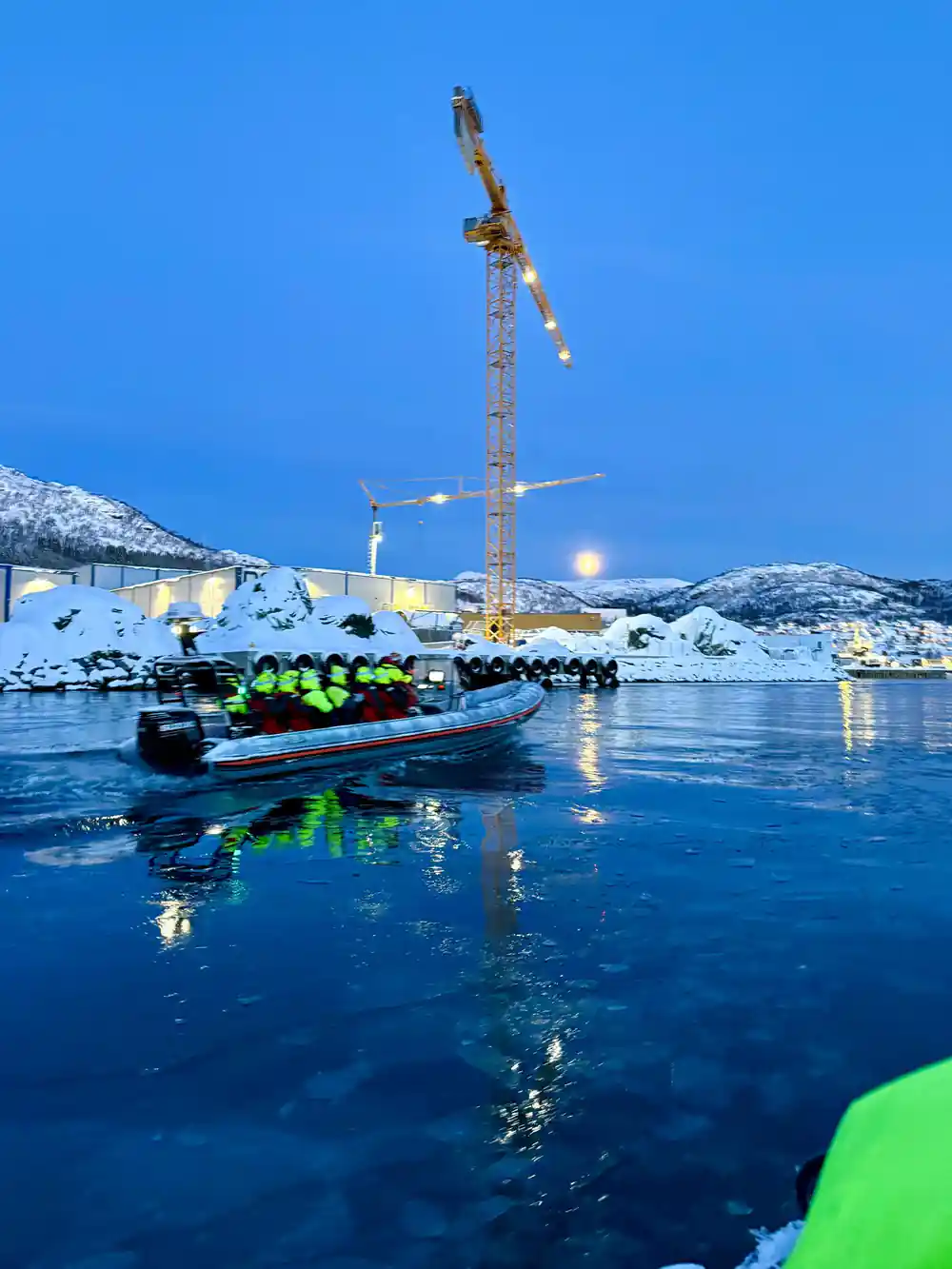
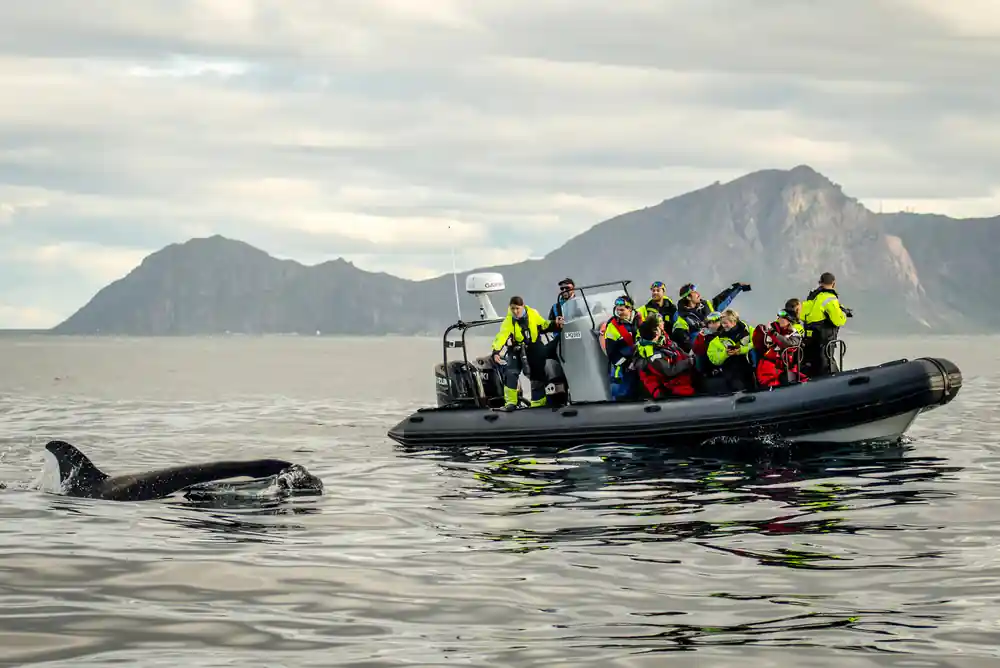
Passengers in thermal suits ride an RIB through Arctic water while an orca surfaces nearby.
What light you actually see whales by
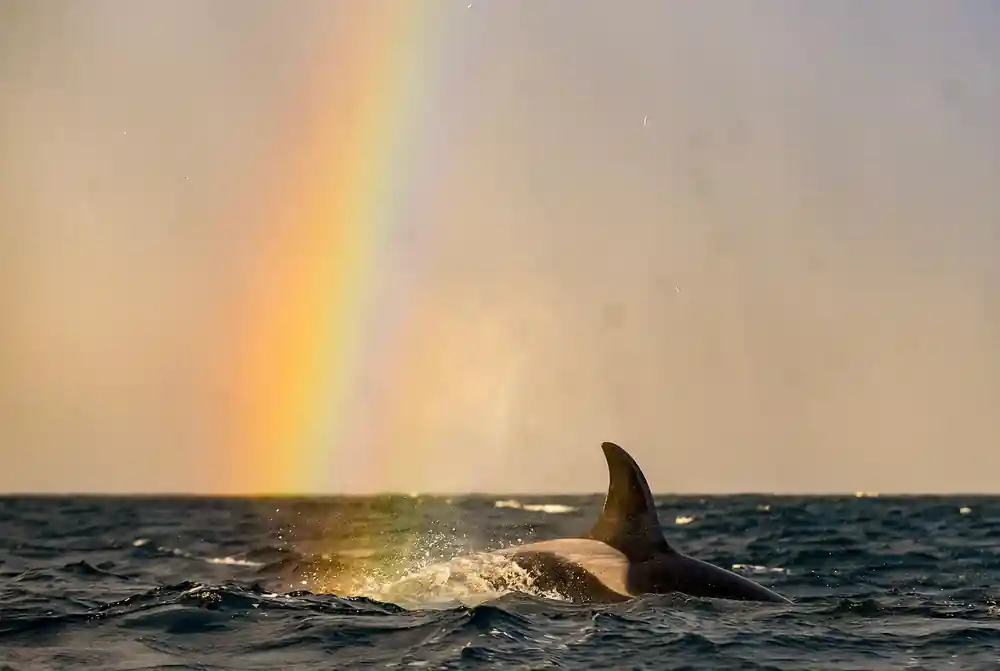
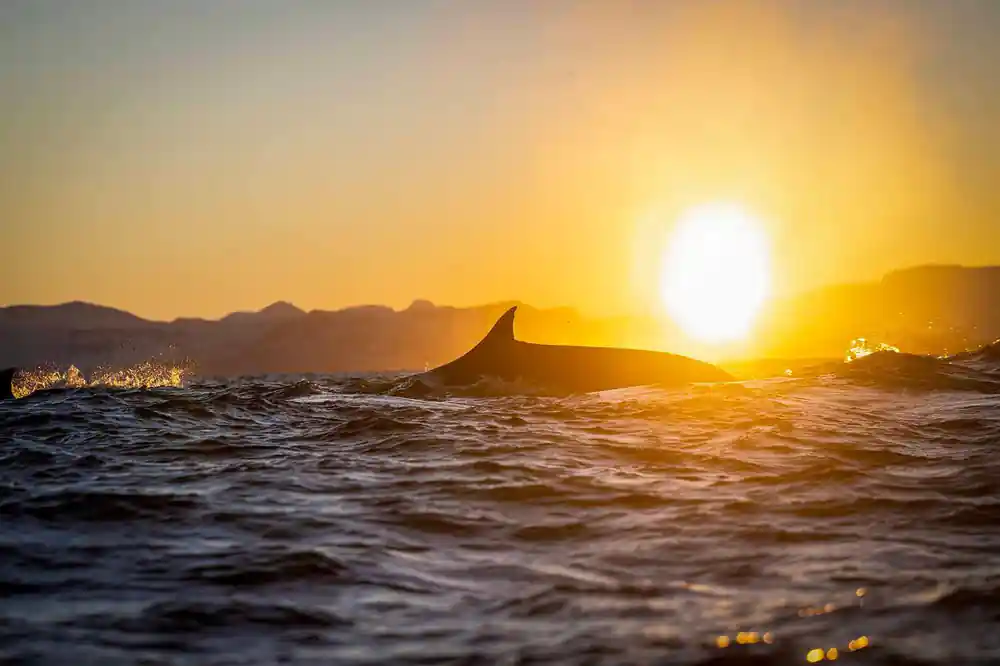
On a whale watching trip in polar night, most sightings happen in low ambient light. The whales themselves are large: male killer whales reach about 9 metres in length and females up to 8 metres, while adult weight varies from 4.5 to almost 7 tonnes.[9] Even in dim conditions, a tall dorsal fin or a humpback blow is surprisingly visible against the dark water.
Bring your own small torch for moving around the boat, but turn it off or keep it shielded when the guide is pointing. Bright white light can startle wildlife and spoil the group's night vision. The boat may keep searchlights on the water, but the moment a whale surfaces is often a sudden silhouette in the dark.
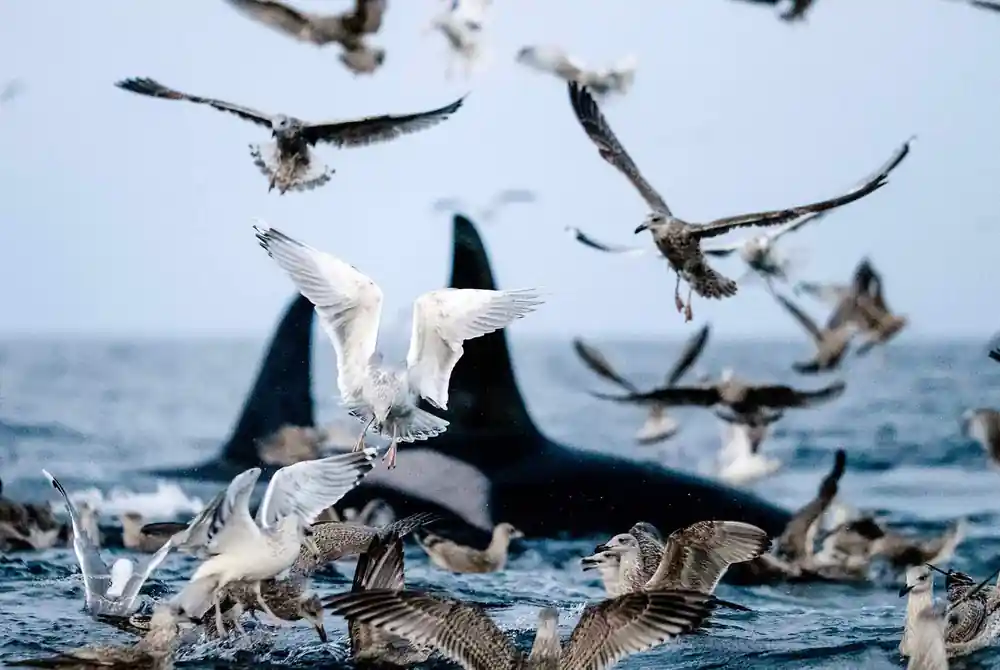
If you are new to winter wildlife watching, let the guide set the pace. The group will spend time scanning the water, listening to radio chatter and watching for gulls. Gulls often gather over the same water where herring are packed, and guides use that clue alongside their own eyes. You do not need to know the difference between a blow and a splash; the guide will call it out.
Cold on an open boat
Winter in Tromsø is cold but rarely extreme. The average winter temperature is around −4°C.[3] What changes everything is the wind and spray on an open RIB or a wet deck. The tour operators know this, and the Magic Skjervøy tour is a full 12-hour day, which means you need to stay warm for hours, not minutes.[5]
Wear a thermal base layer, a fleece, a windproof outer layer, warm socks and a hat that covers your ears. If the operator provides a thermal suit or floating suit, take it even if you feel warm on the pier. Your own body heat is the engine; the suit is what keeps that engine from being cooled by the moving air.
Hand warmers, a neck gaiter and a dry pair of gloves in a zipped pocket are small comforts that make a long day easier. If you have a camera, keep spare batteries close to your body; cold drains them quickly. None of this is complicated, but it is the difference between watching whales with enjoyment and spending half the trip thinking about being cold.
from US$356
This full-day whale watching trip goes from Tromsø to Magic Skjervøy and includes an English-speaking instructor plus free cancellation until 24 hours in advance.[5]
The sea is the first way this can stop
Weather in the Arctic is the main reason a whale watching trip can change. Boats need to stay a safe distance from fishing vessels, and the rules are precise: whale-watching vessels must not stay closer than 0.2 nautical miles, or 370 metres, to a vessel engaged in fishing, a seine or fixed gear.[10] Strong wind, poor visibility and sea state can all make a day unsafe, even when the forecast in town looks calm.
The good news is that the booking for the Magic Skjervøy tour is flexible. Reserve now, pay later, and cancel as late as 24 hours before for a full refund.[5] This means you do not have to gamble a large sum on a forecast that may change. Check the conditions the evening before, and use the free cancellation window if you need it.
The practical side of a flexible booking is simple. Reserve when you are ready, pay later, and keep an eye on the forecast in the days before departure. If the outlook is poor, use the free cancellation window and pick another evening. If the outlook is good, you set off with confidence and a clear plan.[5]
The road north is the second
Even if the fjord is calm, the drive to Skjervøy can still stop a trip. The shorter route from Tromsø to Skjervøy is approximately 160 kilometres and takes around four hours by car, depending on ferry connections, traffic and road conditions.[4] A tour that lasts 12 hours includes this road travel, so a closed mountain road or a delayed ferry can eat into your time on the water.[5]
Your best tools are an early start, patience and a tour operator who watches the road and marine forecasts. If you are driving yourself to the meeting point, leave plenty of margin on the return leg. The ride between Tromsø Airport and the city centre lasts about 10-20 minutes, something to keep in mind when you fly in and head straight out on the trip.[11]
A good plan for the day starts the night before. Sleep, eat a proper breakfast, and have your layers ready by the door. The road to Skjervøy passes through dramatic coastal scenery, so the drive itself is part of the trip even if the whales stay shy. It also helps to remember that you are not alone: other travellers on the same tour are sharing the road and the same weather.
If the trip is cancelled
Tour cancellations are rare, but they happen, and the policy for the Magic Skjervøy tour gives you clear options. With a full refund available for cancellations made up to 24 hours ahead, deciding is simpler when the forecast looks bad.[5] If the operator cancels closer to departure, you should be offered a new date or a refund under the same booking terms.
Do not let the polar night put you off. The herring moves into the fjords in September and October, and orcas and humpback whales gather there in winter to feed on herring.[2][8] A bit of darkness and cold is part of the experience, and with warm clothes and a flexible booking, you can still have a superb day on the water north of Tromsø.
Whale watching in polar night will not give you the same clear blue skies as a summer fjord cruise, but that is not its point. The point is the animals. In the winter darkness, with snow on the mountains and the sea moving quietly against the boat, the appearance of a killer whale or a humpback feels almost impossible and then suddenly real. That is the memory you keep.
Whale watching tour durations
Compare whale watching prices
From-prices in US dollars. Child prices are not stated in these listings.[5][6][7][15]
When to book
Plan for winter darkness
Check the polar night window
Use the polar night dates from late November to mid-January as your guide to low light on the water.[1]
Book with flexibility
For the Magic Skjervøy tour, reserve now and pay later; cancellation is free until 24 hours before departure.[5]
Pack for the boat
For the moving boat, dress in layers for an average winter temperature around −4°C and include a windproof outer layer.[3]
Plan the road day
Remember that Tromsø to Skjervøy is roughly 160 kilometres and around four hours by car, so give yourself road and ferry time.[4]
Know the cancellation rules
If the forecast looks bad, decide within the 24-hour free cancellation window so you can rebook with confidence.[5]
Ready to see whales in the polar night? Book the Magic Skjervøy tour from Tromsø.
from US$357Reserve now & pay later