If you read nothing else
- The Magic Skjervøy trip runs 12 hours door-to-door from Tromsø.[1]
- Starting at US$356, you get pay-later reservations and free cancellation until 24 hours before.[1]
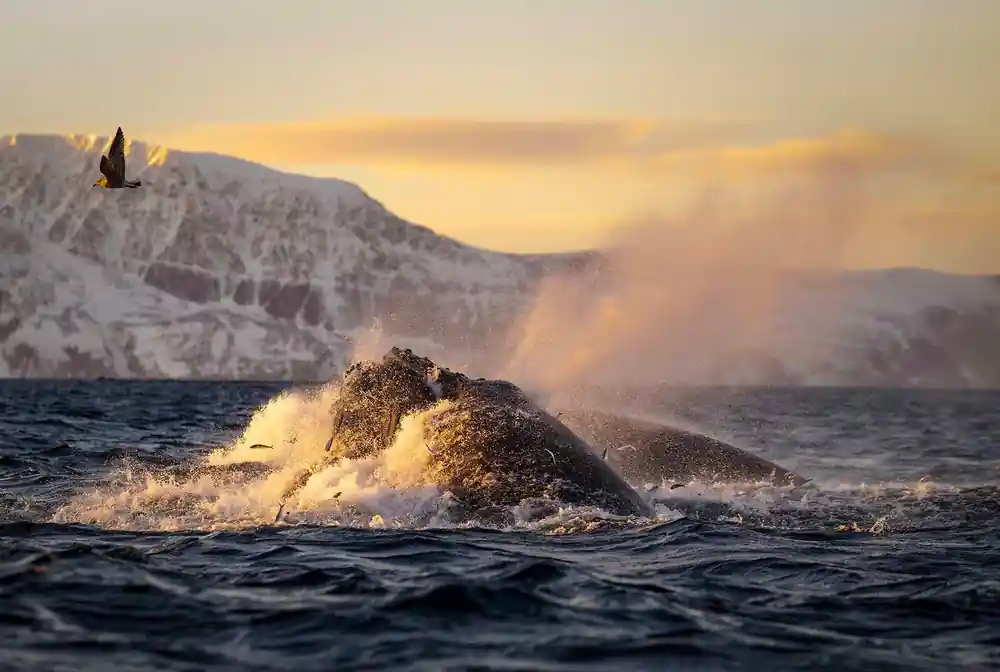
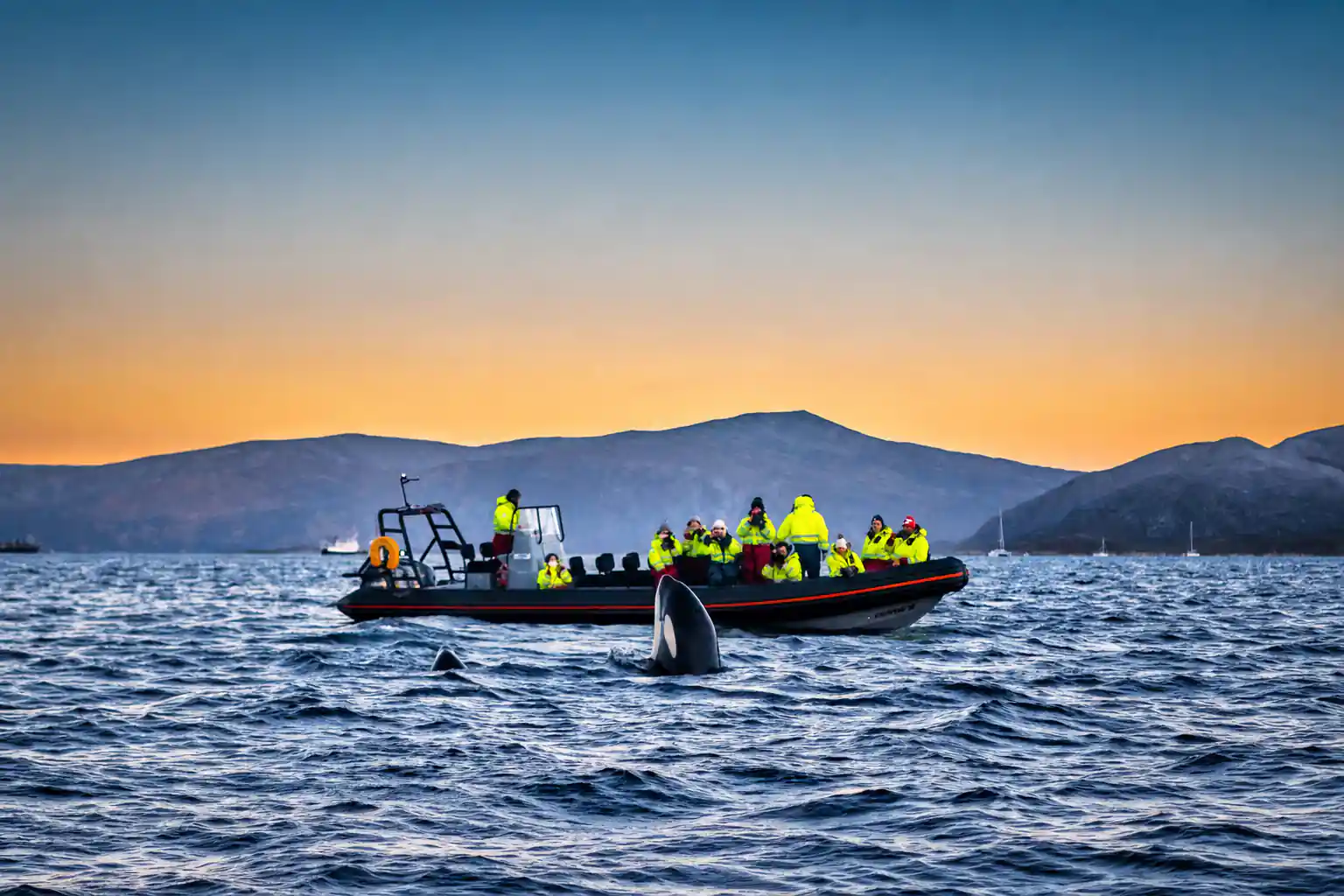
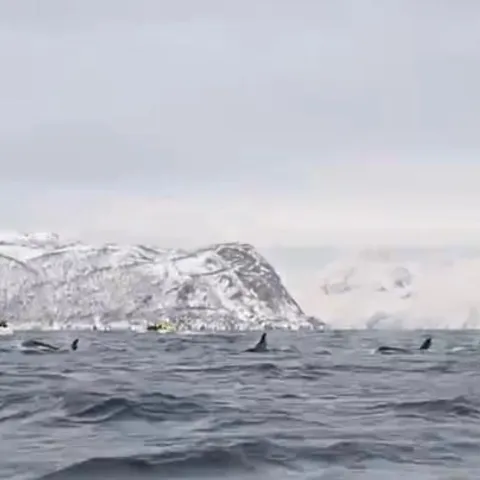
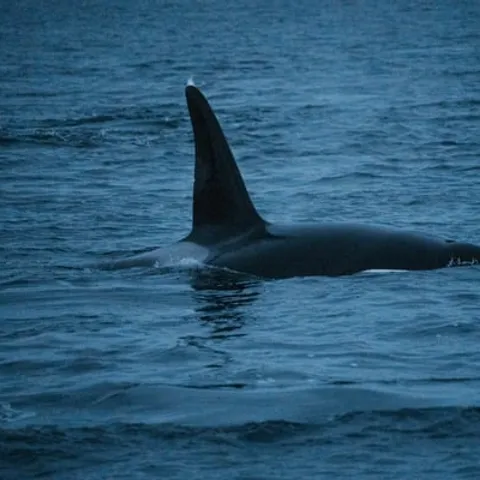
- In winter, the area sees orcas and humpback whales gathering to feed on herring.[2]
- Average winter temperatures in Tromsø hover around −4°C, making a warm hat, gloves and layered clothing essential.[3]
- Rated 4.71 from 1,211 reviews, with an English-speaking instructor.[1]
- Top choice Magic Skjervøy Day from US$356 Duration12 hours[1]Rating4.71 from 1,211 reviews[1]LanguageEnglish instructor[1]CancellationFree up to 24 hours[1] Check availability
- Skjervøy RIB Tour from US$338 Duration12 hours[4]Rating4.78 from 1,281 reviews[4]LanguageEnglish-speaking guide[4]CancellationFree up to 24 hours[4] See this tour
- Heated Boat Trip from US$391 Duration12 hours[5]Rating4.73 from 261 reviews[5]LanguageEnglish-speaking guide[5]CancellationFree up to 24 hours[5] See this tour
The Polar Night lasts approximately from 27 November to 15 January, while the exact date when the returning sun becomes visible depends on your location and the surrounding terrain.
A long, cold, brilliant Arctic whale day
Your layers
- Wool or synthetic base layer, never cotton
- Fleece or insulated mid layer you can remove
- Windproof and waterproof outer layer
- Warm hat, neck gaiter, insulated gloves
On the boat
- Full-day tour from Tromsø
- Free cancellation
- English-speaking instructor
- Phone in a dry bag
The Shape of the Day
The Magic Skjervøy day is a long one: 12 hours door-to-door from Tromsø.[1] You will be up early, moving through winter-dark streets while the city sleeps, and you will not be back until evening. The route heads north towards the waters around Skjervøy, where the winter whale action happens. In winter, the area sees orcas and humpback whales gathering to feed on herring.[2] There is no guarantee on any trip, but the timing is built around the whales' feeding season. Expect a vehicle leg, a harbour check-in, and a boat ride that takes you out into open fjord water. The day is a proper expedition, not a harbour cruise, and the reward is watching wild animals in a landscape of snow-covered peaks.
During September/October, Norwegian spring-spawning herring heads northeast to principal wintering grounds off the coast and within the fjords of northern Norway.[6] The whales follow those movements, so the season tracks the fish. The tour is rated 4.71 from 1,211 reviews, and you can cancel free up to 24 hours in advance.[1] If you want flexibility, reserve now and pay later.[1] Book knowing that wildlife is wild, but the structure of the day is well tested. The 12-hour format means you see both the approach and the open sea, and the crew share tips on where to look.[1]
From the moment you leave Tromsø, the landscape begins to change. The roads cling to fjord edges, the mountains get bigger, and the settlements thin out. By the time you reach the boarding point, you are already deep in Arctic scenery. That sense of remoteness is part of the experience, and it is why people make this trip.
What They Hand You Before You Board
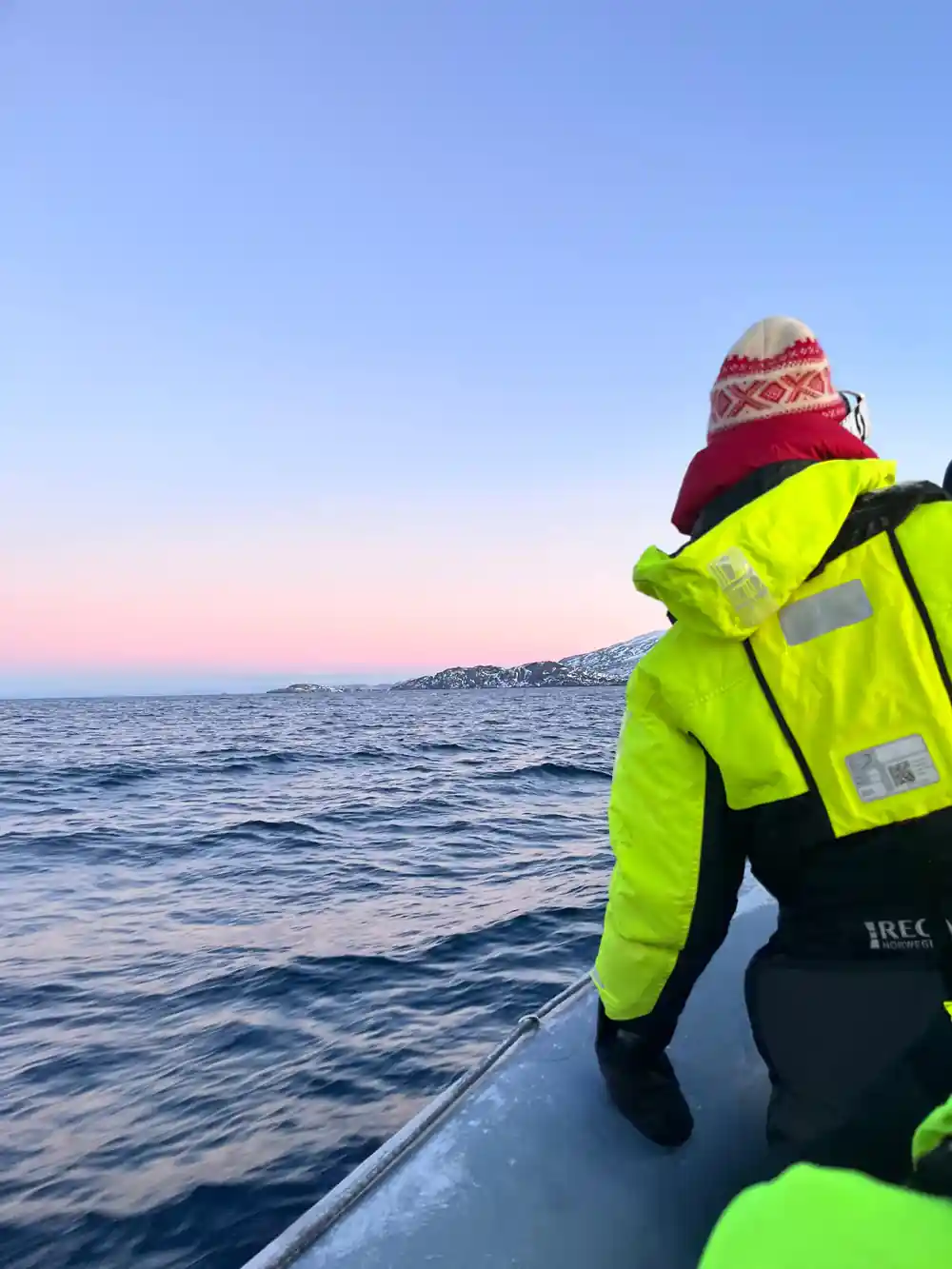
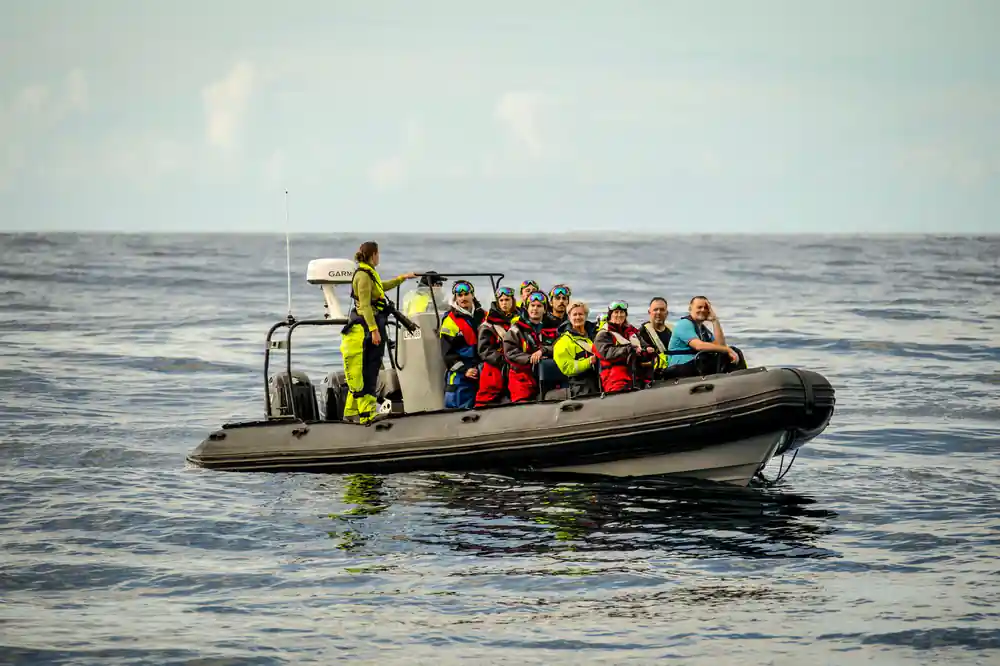
At the boarding point, the crew will get you organised before the boat leaves. If your operator provides an outer suit, let them help with the fit: you want it loose enough to hold warm air, with the cuffs and collar sealed against spray. The day is led by an English-speaking instructor.[1] Suits are bulky, so do not fight the fitting process. Ask questions about the exit procedure and where the safety equipment sits before you push off. A few minutes of preparation makes the first wave far less stressful.
What you wear underneath is your responsibility. A thin wool or synthetic base layer, a fleece and a windproof outer layer work well. Keep your phone in a dry bag and put any medication in an easy-to-reach pocket. The tour runs for 12 hours, so make every layer comfortable for sitting in a vehicle and standing on deck.[1] If you get warm inside, you need to be able to remove a layer without taking off your whole system. Zips and buttons should be easy to operate with gloves on.
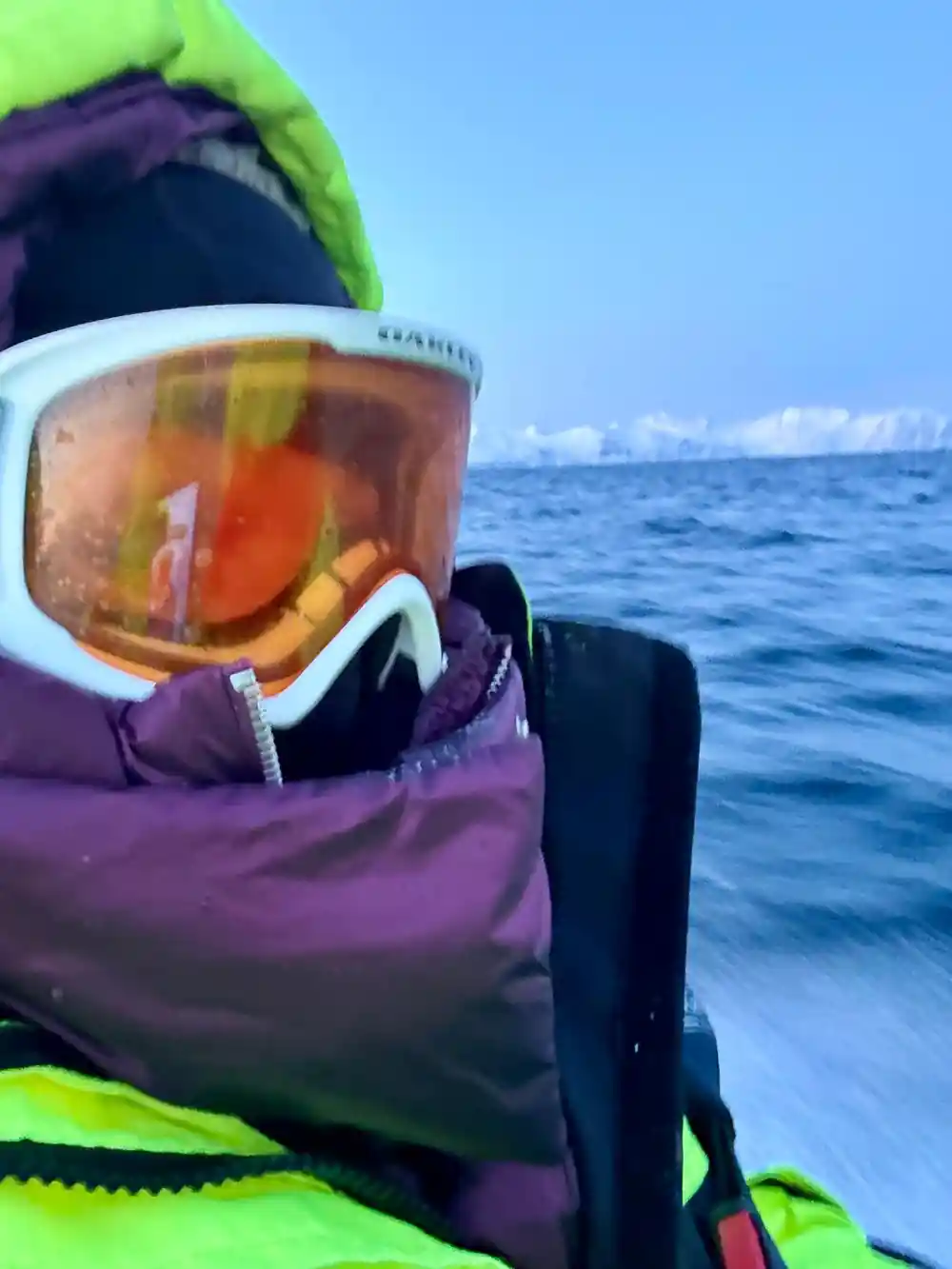
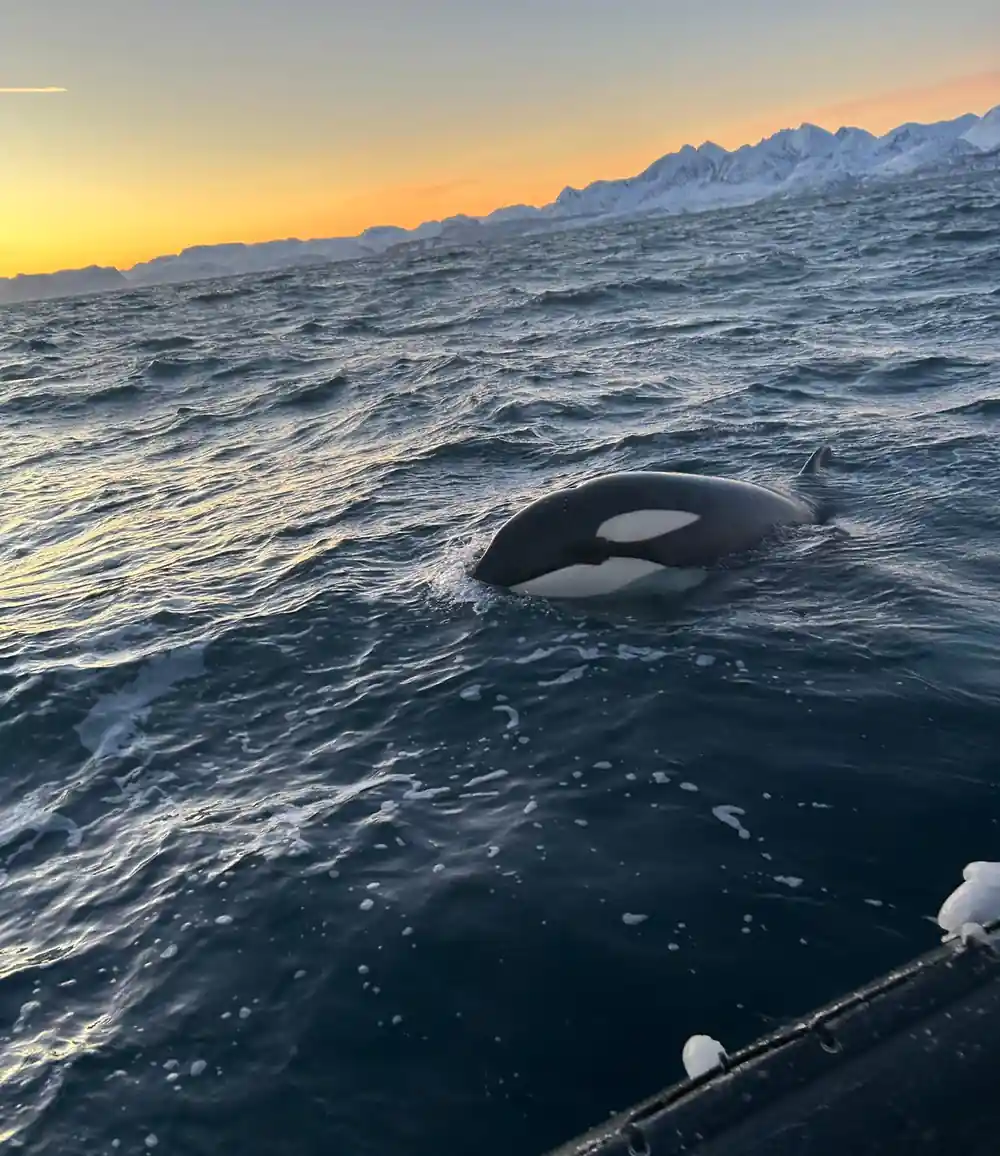
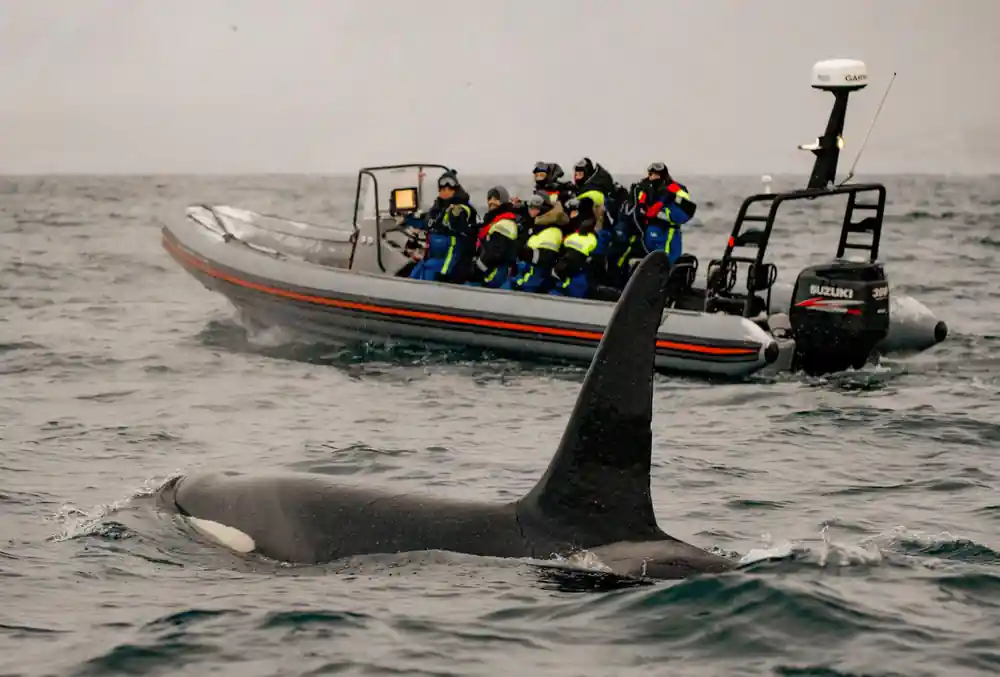
Orcas surface beside a boat full of passengers in thermal suits
What Actually Goes Underneath the Suit
Start with a base layer that wicks moisture. Avoid cotton, because wet cotton stays cold and heavy. Add a mid layer that keeps its loft, wool or fleece. On top, a thin insulated jacket gives you flexibility inside and outside. You will move between sheltered spaces and open water, so being able to shed layers easily matters. The goal is not to be as warm as possible all the time; it is to be warm at every stage without overheating before you board.
For your legs, thermal leggings under soft-shell trousers are a good combination. Thick wool socks and waterproof boots finish the set. Tromsø's average winter temperature sits around −4°C.[3] On the boat, wind chill makes it feel lower, so the outer suit's job is to block spray and wind while your layers manage warmth. If your feet get cold, check your socks are not too tight. A slightly bigger boot with a wool sock will keep circulation happier than a snug fit.
Do not forget a small dry bag inside your own bag. It is useful for wet gloves, camera batteries and any rubbish you create on the boat. If you are prone to cold feet, bring a second pair of socks and swap them during the vehicle leg. Little comforts make a 12-hour day feel far shorter.[1]
The Gaps the Suit Does Not Cover
The outer suit covers your torso and legs, but your face, hands and feet still feel the cold. A warm hat that fits under a hood, insulated gloves with good grip, and a neck gaiter or buff protect the exposed bits. If you wear glasses, keep them in a hard case when you are not using them; salt spray smears lenses. Take a small pack of tissues or lens cloths. Hands go numb quickly on a fast boat, so test your camera and zips before you put your gloves on.
The crew will tell you where to sit if you want less spray. If you bring your own thick gloves, make sure they let you work a phone camera. Boats must keep their distance from fishing activity: whale-watching vessels must not stay closer than 0.2 nautical miles (370 metres) to a vessel engaged in fishing, a seine or fixed gear.[7] That rule is about safety and respect, and it means the boat may pause at a viewing distance rather than nudge in for a closer look.
from US$356
Book the 12-hour Magic Skjervøy whale watching day from Tromsø, rated 4.71 out of 1,211 reviews, and free cancellation is available until 24 hours before.[1]
How Cold It Actually Feels
The air is the main challenge, not the water. Tromsø's average winter temperature sits around −4°C.[3] The polar night lasts approximately from 27 November to 15 January.[8] The water temperature Skjervoy is not something you will test on the boat, but spray and wind are what make you cold. On a clear day the winter sun is low and sharp, and on an overcast day the light stays flat. Either way, the cold comes through any gap at the neck or wrists. If you are prone to cold fingers, chemical hand warmers inside mitts make a real difference.
Between late August and early April, northern lights can appear in the Tromsø region when skies are dark and clear enough.[9] On a whale watching day you might be back before full dark in late autumn, but winter light is short and grey. If the sky clears, colours can appear surprisingly early in the day. Tuck your chin into your collar when the boat picks up speed. Keep your camera battery warm in an inside pocket and bring a small power bank; cold drains batteries quickly.
Pay attention to the wind when the boat is at speed. A balaclava or neck gaiter pulled up high protects more warmth than a thicker jacket. Some travellers like a thin fleece liner under waterproof gloves. Tuck any loose straps away so nothing flaps in the wind.
Bring a Spare Set for Afterwards
After hours on the water, you will want dry clothes. A spare base layer, warm socks and a towel can be left in a bag at the starting point if your operator offers a bag drop. Changing out of damp layers before the return makes the last hours of the 12-hour day much better.[1] Even if you stay dry, the smell of salt spray and the effort of balancing on a moving deck make fresh clothes feel like a luxury. Pack them somewhere you will remember, not buried at the bottom of a bag.
If you are fitting this into a short trip, plan 10-20 minutes for transfers between Tromsø Airport and the city centre.[10] The shorter route from Tromsø to Skjervøy is approximately 160 kilometres and takes around four hours by car, depending on ferry connections, traffic and road conditions.[11] Knowing the distance helps you pace your day. If you are driving yourself, leave much more time in winter; roads can be icy and ferries run on schedules.
Seasickness on a Small, Fast Boat
Whale watching Tromso sea sick is a fair fear, because a small, fast boat moves a lot in open water. Motion sickness medication works best when taken before the boat leaves, so pack it somewhere you can reach. Look at the horizon, keep your head up, and sit toward the centre where the motion is less. Eat lightly beforehand; a heavy breakfast sits badly, but an empty stomach can make nausea worse. Choose plain, salty snacks and water over coffee or rich food.
Tell the crew if you feel unwell; they have seen it many times and will help you find a steadier spot. The tour lasts 12 hours, and the boat leg is only part of that, so there are calm stretches in the transfers.[1] Fresh air, slow breathing and a dry bag can turn a rough start into a good day. Reserve with free cancellation until 24 hours beforehand, giving you a safety net.[1] With the right preparation, the day becomes a story you tell for years, not an ordeal you survive.
Whale watching trip lengths
Compare whale watching prices
US dollar from-prices from GetYourGuide listings.[1][13][15]
When to go
How to prepare
Book smart
Choose a date where cancellation stays free until 24 hours before, then reserve now and pay later.[1]
Layer from skin out
Wear wool or synthetic base layers, a fleece, and a windproof outer layer. Avoid cotton.
Pack a spare set
Leave dry clothes, socks and a towel where you can grab them after the boat.
Eat light
Have a normal breakfast, but not a heavy one. Bring plain snacks and water.
Take motion sickness medicine
Take it before boarding and keep your eyes on the horizon.
Protect your phone
Use a dry bag or waterproof case; salt spray is the real threat.
Ready to pack for the Magic Skjervøy whale watching day?
from US$357Reserve now & pay later