If you read nothing else
- A 12-hour whale watching day trip from Tromsø to Magic Skjervøy with an English-speaking instructor.[1]
- In winter, the area sees orcas and humpback whales gathering to feed on herring.[2]
- The shorter route from Tromsø to Skjervøy is about 160 km and around four hours by car.[3]
- From US$356 with reserve-now-pay-later booking and free cancellation up to 24 hours in advance.[1]
- Rated 4.71 from 1,211 reviews on GetYourGuide.[1]
- Top choice Magic Skjervøy Whale Watch from US$356 Duration12 hours[1]Rating4.71 from 1,211 reviews[1]LanguageEnglish instructor[1]CancellationFree up to 24 hours[1] Check availability
- Skjervøy RIB Tour from US$338 Duration12 hours[4]Rating4.78 from 1,281 reviews[4]LanguageEnglish live guide[4]CancellationFree up to 24 hours[4] See this tour
- Skjervøy RIB Boat Tour from US$391 Duration12 hours[5]Rating4.56 from 307 reviews[5]LanguageEnglish live guide[5]CancellationFree up to 24 hours[5] See this tour
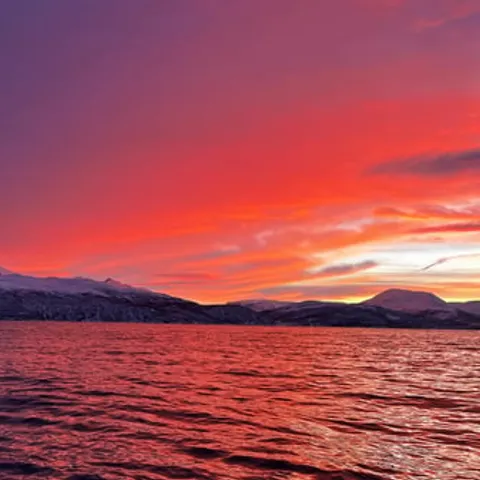
The shorter route from Tromsø to Skjervøy is approximately 160 kilometres and takes around four hours, depending on ferry connections, traffic and road conditions.
A full day for the real Arctic whale watching
Travel there
Why This Day Starts Before Dawn
Whale watching time in Tromso is not a quick harbour cruise. The whales spend the winter in the fjords north of the city, gathering to feed on herring.[2] To be there while the light is right, you leave early and treat the whole day as part of the adventure. This is the kind of trip that rewards people who are willing to commit.
The tour from Tromso to Magic Skjervøy is listed as a 12-hour day.[1] That sounds long, but the destination is a working fishing town on the edge of the winter feeding grounds. For most travellers, this is a proper expedition: drive north, board the boat, watch, warm up, then drive back through a landscape that keeps changing.
The reward is a winter landscape that feels both wild and calm. Snow-covered islands, narrow sounds and low Arctic light make the journey part of the experience. Winter in Tromso averages about −4°C; the cold feels real but is bearable if you dress properly.[6]
The Drive North to Skjervoy
The shorter route from Tromso to Skjervøy is approximately 160 kilometres and takes around four hours by car, depending on ferry connections, traffic and road conditions.[3] This is a road trip through classic northern Norway: fjord bridges, island crossings and long views over snow-covered water. You share the road with trucks, fishing boats in the channels and the occasional reindeer.
A long excursion has to account for the drive in both directions, which is why the full day runs to 12 hours.[1] The distance also explains why a short whale watching Tromso tour is hard to find; the whales are not sitting in the city harbour. They are where the food is, and the food is up the coast.
If you are weighing this against other Tromso activities, think of it as an expedition rather than an add-on. You leave the city behind, cross into a quieter world of fishing villages and open fjords, and only then reach the water where the whales feed. The drive is part of the story, not just a hurdle.
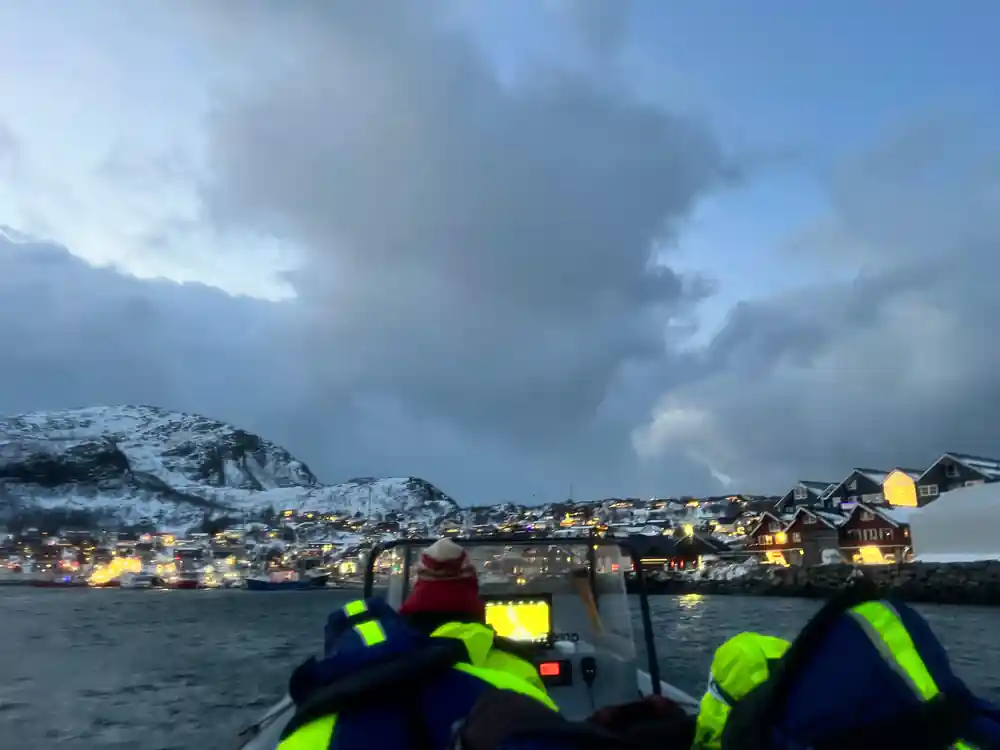
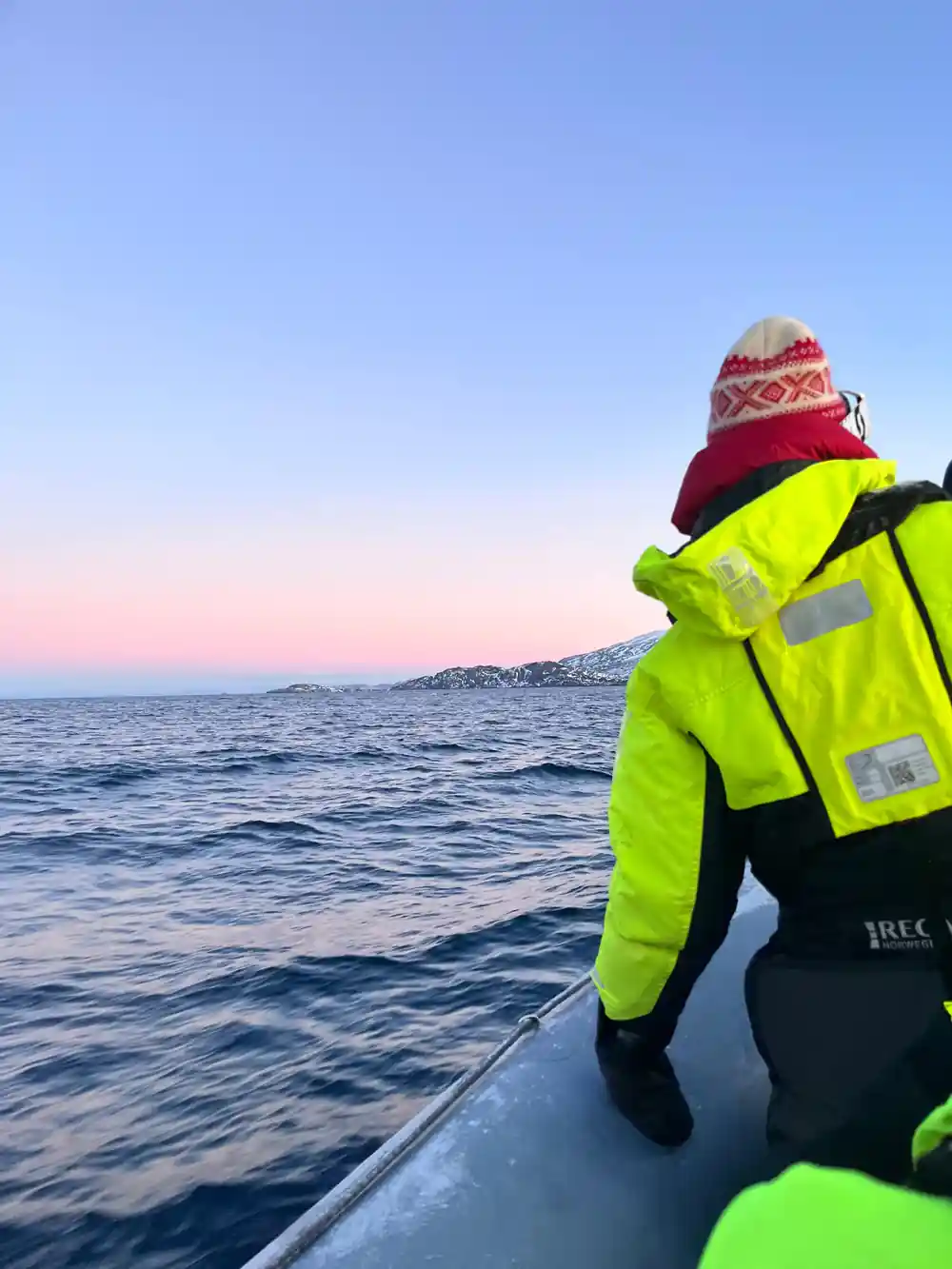
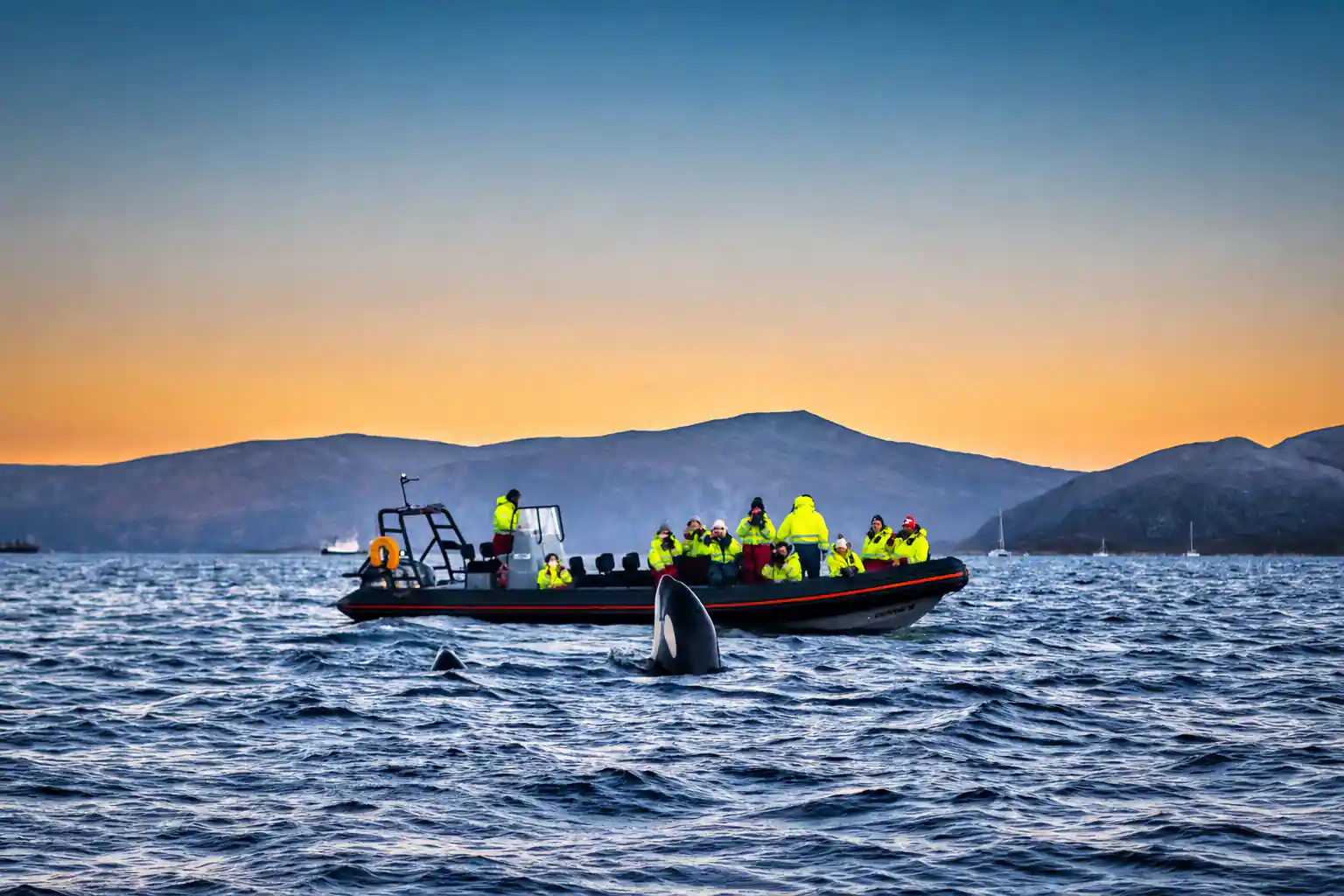
Passengers in thermal suits watch for blows from a RIB in the winter fjords.
Arrival at Skjervoy and Kitting Up
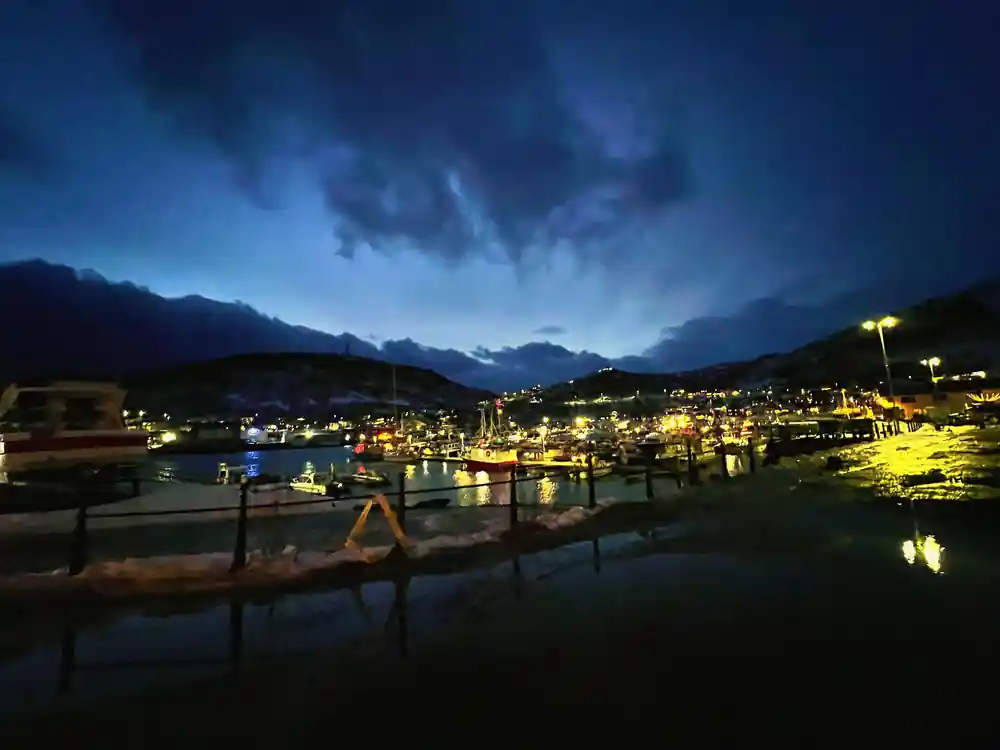
Skjervøy is a working harbour town, not a tourist set piece. Boats lie along the quay, snow sits on the rooftops and the air smells of salt and cold. It is the kind of place where a whale-watching trip feels grounded in the community that has lived beside these waters for generations.
Before you board, you want to be properly dressed. Layers are the key: a thermal base, a warm mid layer and a windproof outer shell, plus a hat, gloves and a scarf. Tromso's winter average sits near −4°C, but it can feel colder out on the water.[6]
The booked tour has an English-speaking instructor, so you will get clear guidance on how the day runs and what happens on the boat.[1] Take time to check your gear, adjust your hood and keep a dry layer somewhere accessible. Comfort on the water starts before the engine starts.
Time With the Whales
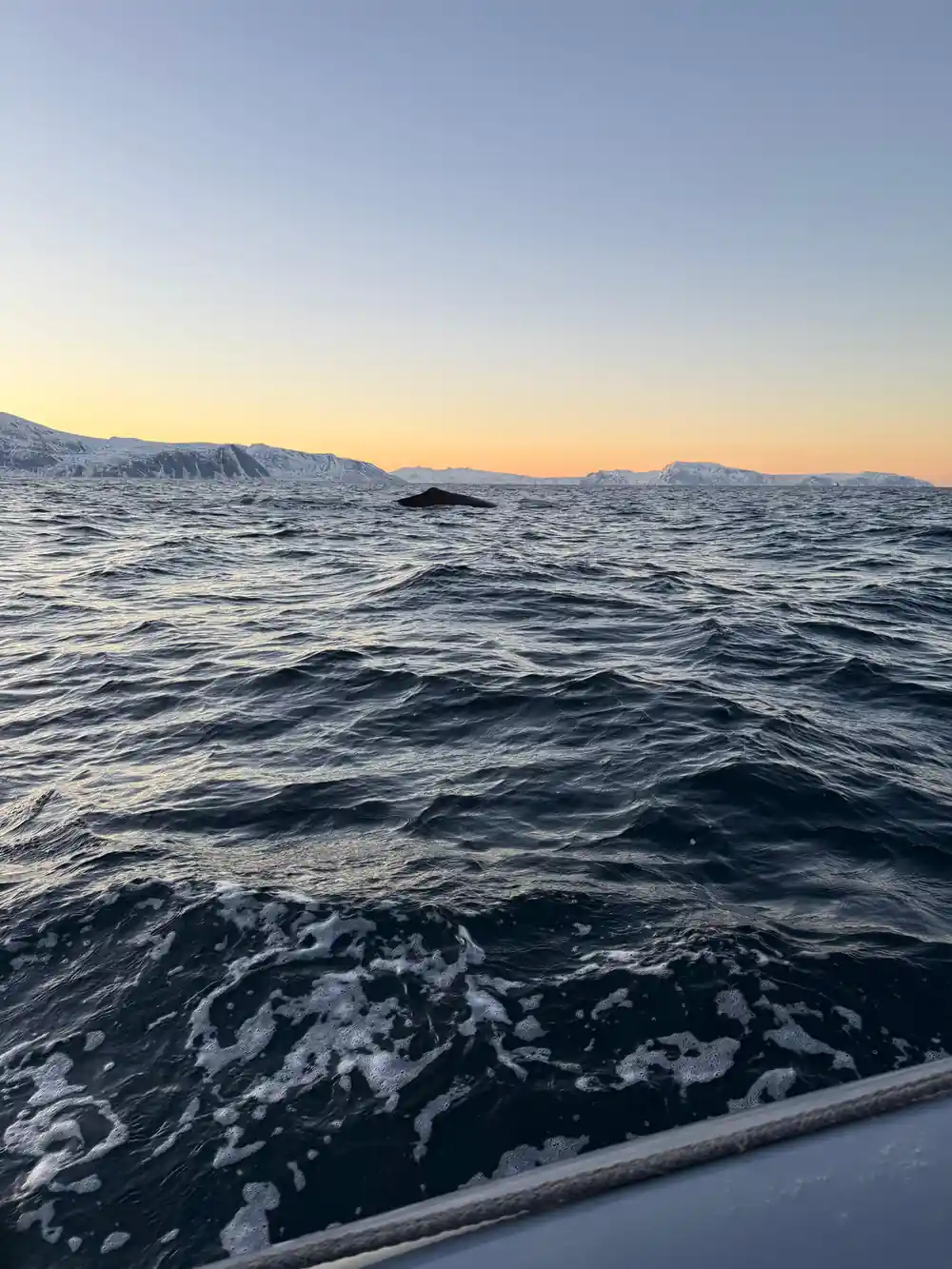
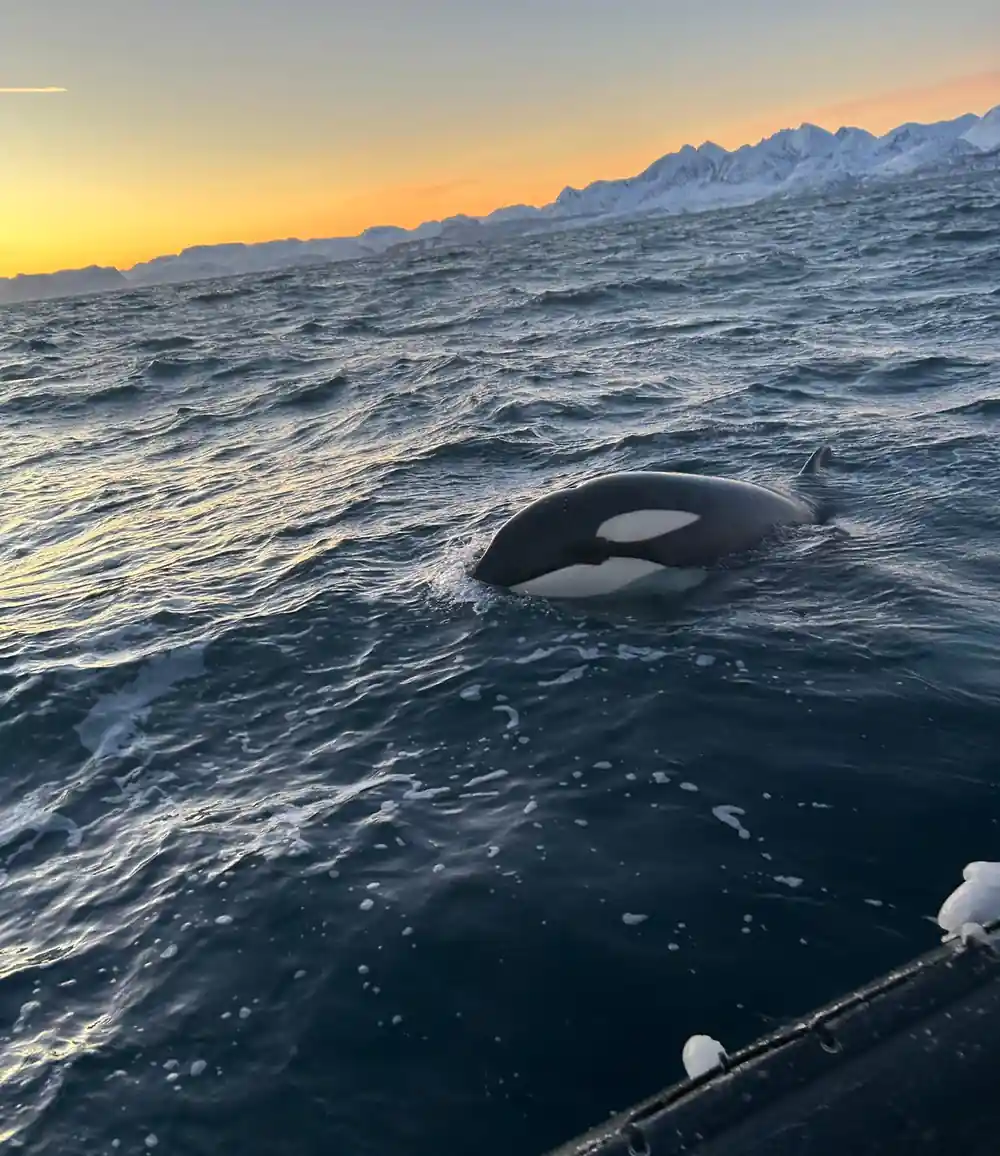
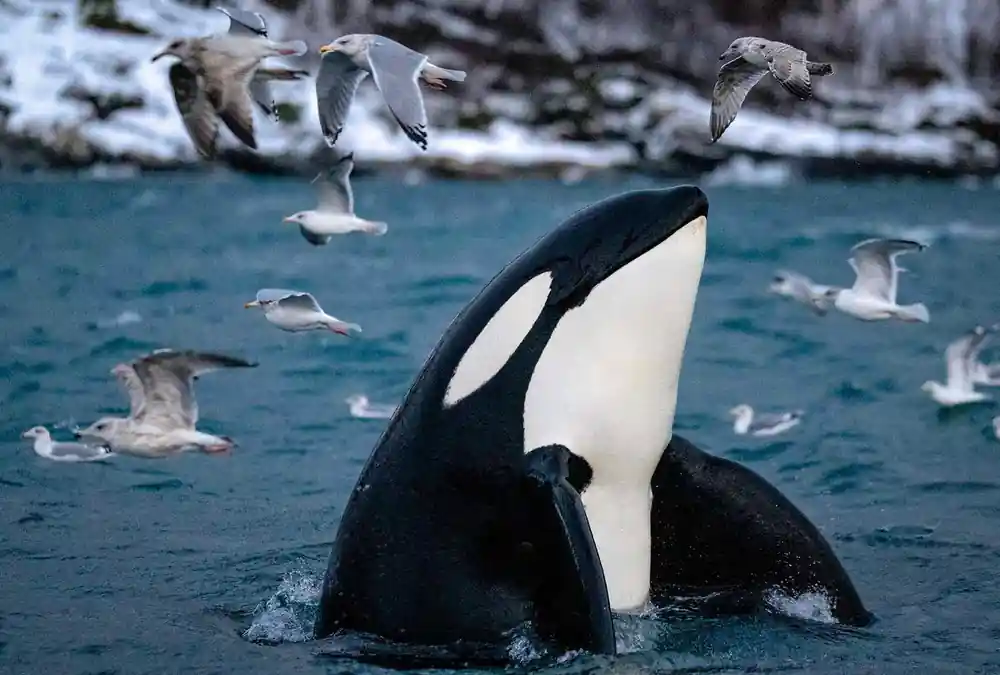
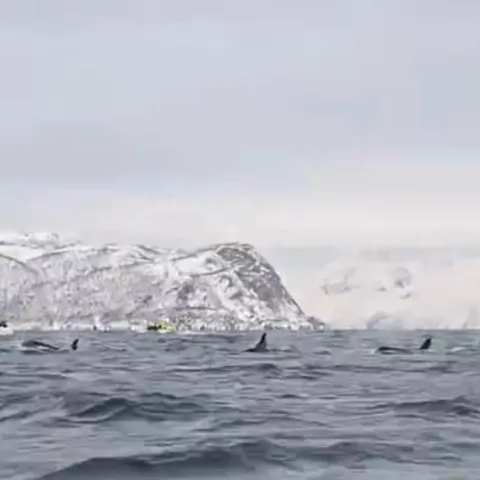
Out on the water, you are looking for blows, dorsal fins and dark shapes moving against the current. In winter, the area sees orcas and humpback whales gathering to feed on herring.[2] They are not performing; they are feeding, which makes every sighting feel like a glimpse of real Arctic life.
The herring arrive first. Norwegian spring-spawning herring migrates northeast in September/October to main wintering areas along the coast and fjords of northern Norway.[10] Whales come to the same waters because the food is there, and a patient skipper works the channels where the action is.
Killer whales are powerful animals. Males reach about 9 metres in length and females up to 8 metres, with adult weight varying from 4.5 to almost 7 tonnes.[11] Norwegian rules require whale-watching vessels to keep 0.2 nautical miles, about 370 metres, from fishing gear.[8] That keeps the whales, the fishers and the watchers safe.
from US$356
A full-day whale watching tour from Tromso to Magic Skjervøy with an English-speaking instructor and free cancellation.[1]
The Clubhouse: Warm, Fed and Dry Again
Between the boat and the road home, a warm base makes all the difference. On a long winter trip, the rhythm is simple: ride out, watch, then get out of the wind and let the body remember what warmth feels like. A hot drink and a dry room turn a good sighting into a comfortable memory. The exact shape of that warm-up varies, but the principle is universal: get out of the wind, deal with the cold and take a moment to let the day settle.
This is where the practical side of a 12-hour day comes together.[1] A dry return matters because the cold stays with you, and the trip is long enough that small comforts count. Ask your guide about the plan for the return so you know what to expect.
Use the pause to talk about what you saw, warm your fingers and prepare for the drive back. The cold will feel sharp again when you step outside, but the memory of the whales tends to carry the mood all the way to Tromso.
The Drive Back and What Twelve Hours Means
The drive back follows the same road, but the light will have changed. From about 27 November to 15 January, during polar night the sun never comes up, and daylight is a long twilight.[7] Shadows stretch over the snow and the fjords take on a blue, almost silver tone. If you travel earlier or later in winter, the daylight will be different, but the practical advice stays the same.
Twelve hours sounds like a lot, and it is.[1] But it is also the difference between a rushed look and a proper Arctic experience. A whale watching Tromso half day would struggle to include the drive, the boat time and the return, which is why the full-day format exists.
The best plan is to treat the tour as the main event of your day. Sleep well the night before, allow time after the tour for a meal and do not try to pack a second adventure into the same evening. The 12-hour day carries its own reward.[1]
The Trade at the Centre of This Day
This entire whale watching season rests on one fish. In September/October, Norwegian spring-spawning herring moves northeast to wintering grounds along northern Norway's coast and in its fjords.[10] The whales follow the food, and the boats follow the whales. It is a simple food chain written across the map of northern Norway.
That is also why the rules matter. Whale-watching vessels must not stay closer than 0.2 nautical miles, or 370 metres, to a vessel engaged in fishing, a seine or fixed gear.[8] The day sits at the meeting point of wildlife, fishing and tourism, and every part of it depends on the herring being there.
For visitors, the result is a rare chance to see orcas and humpbacks in a working Norwegian landscape.[2] It is not a theme park, and that is exactly the point. If you want the real thing, give it the day it deserves.
From prices for whale watching tours from Tromso
Compare whale watching tour prices
From-prices in USD from GetYourGuide listings:[1],[4],[5],[12],[13].
When to go whale watching
How to Plan the Day
Book early
Reserve now and pay later, with free cancellation up to 24 hours in advance.[1]
Dress for the Arctic
When average winter temperatures are around −4°C, wear layers plus a warm hat and gloves.[6]
Ride north
The route to Skjervøy is about 160 km and can take around four hours.[3]
Watch for whales
In winter, orcas and humpbacks gather in these fjords to feed on herring.[2]
Warm up and return
The full tour is 12 hours, so build in time to warm up before the drive back.[1]
Stay for the lights
If the sky clears after the excursion, the northern lights might show themselves between late August and early April.[9]
Make the journey to Magic Skjervøy and meet the winter whales
from US$357Reserve now & pay later