If you read nothing else
- The tour runs 12 hours from Tromsø, is guided in English and costs from US$356.[1]
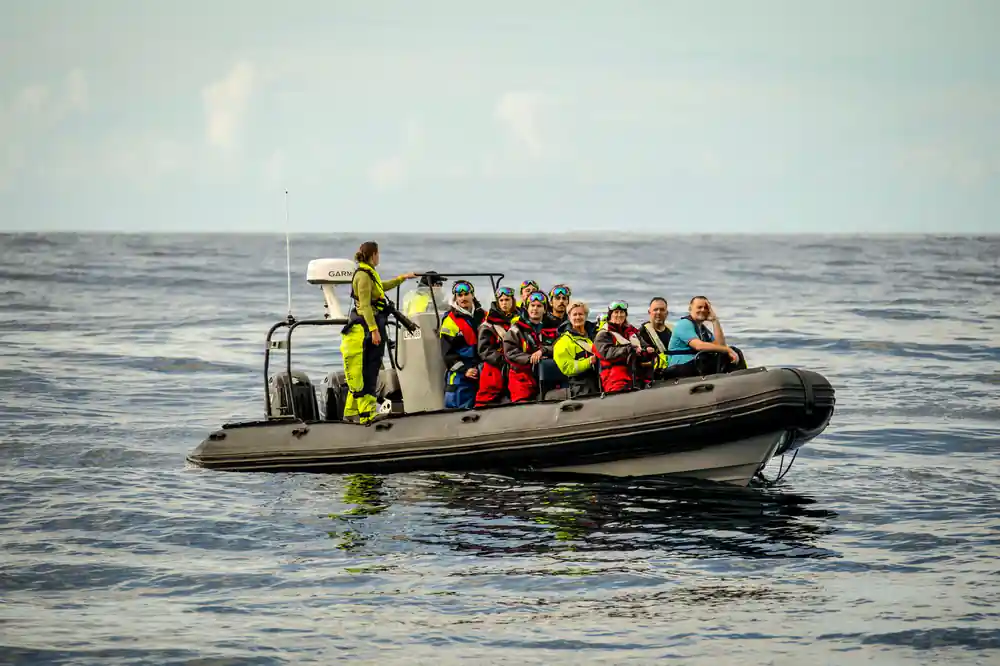
- An open RIB sits low in the water, with bench seating and handholds, rather than a warm cabin.
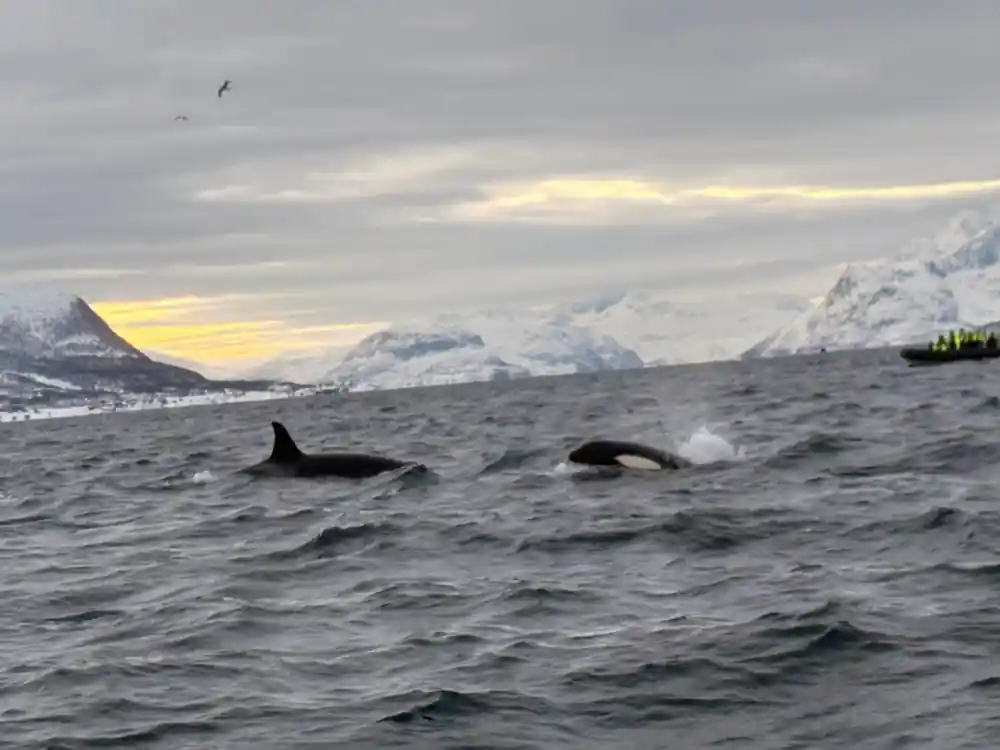
- During winter, killer whales and humpbacks congregate in this region to eat herring.[2]
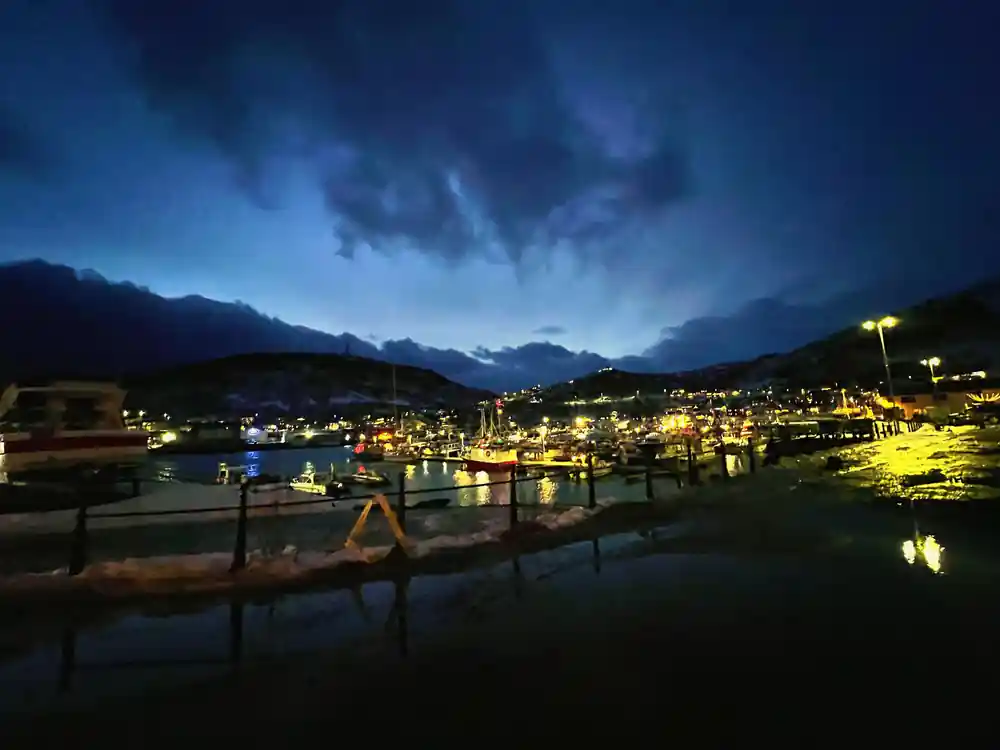
- From about 27 November to 15 January, Tromsø experiences polar night.[3]
- The shorter route from Tromsø to Skjervøy is approximately 160 kilometres and takes around four hours by car.[4]
- Top choice Magic Skjervøy from Tromsø from US$356 Duration12 hours[1]Rating4.71 from 1,211 reviews[1]CancellationFree cancellation up to 24 hours in advance[1] Check availability
- Skjervøy RIB Whale Watch from US$338 Duration12 hours[5]Rating4.78 from 1,281 reviews[5]CancellationFree cancellation up to 24 hours in advance[5] See this tour
- Skjervøy RIB Boat Day from US$391 Duration12 hours[6]Rating4.56 from 307 reviews[6]CancellationFree cancellation up to 24 hours in advance[6] See this tour
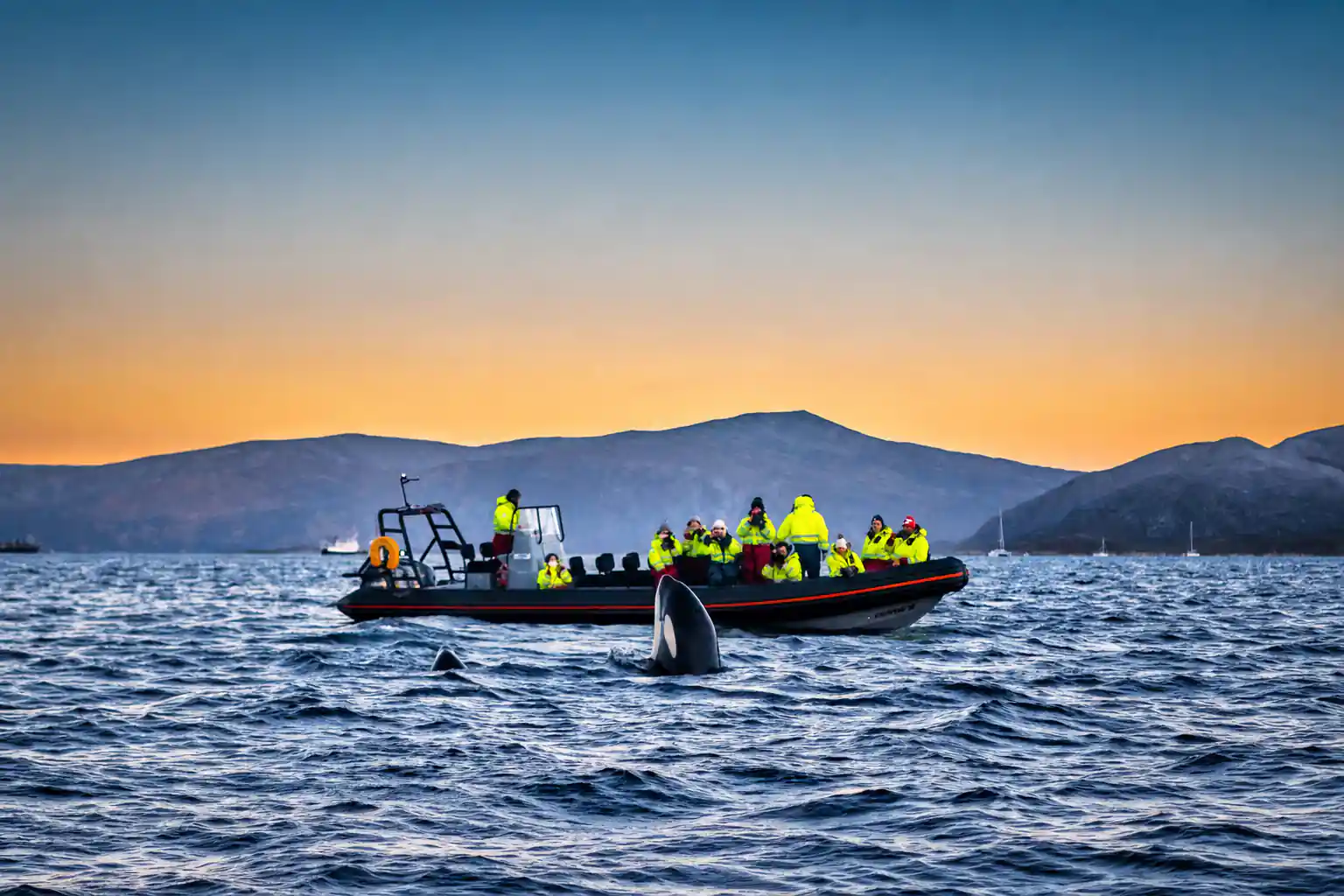
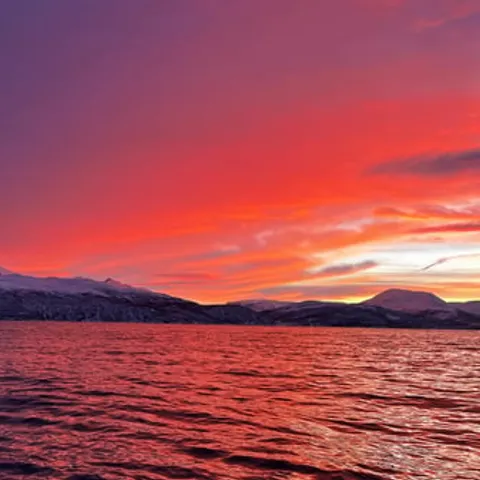
Midnight sun in Tromsø usually lasts from around 20 May to 22 July.
Verdict: A long, exposed, unforgettable Skjervøy RIB day
Booking tips
What a Rigid-Inflatable Actually Is
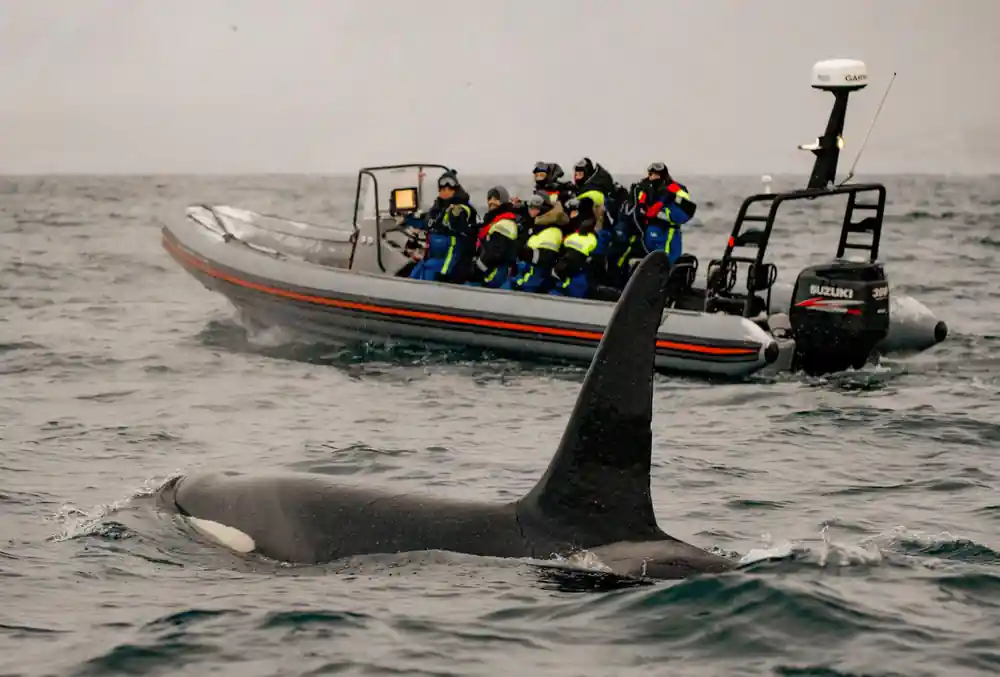
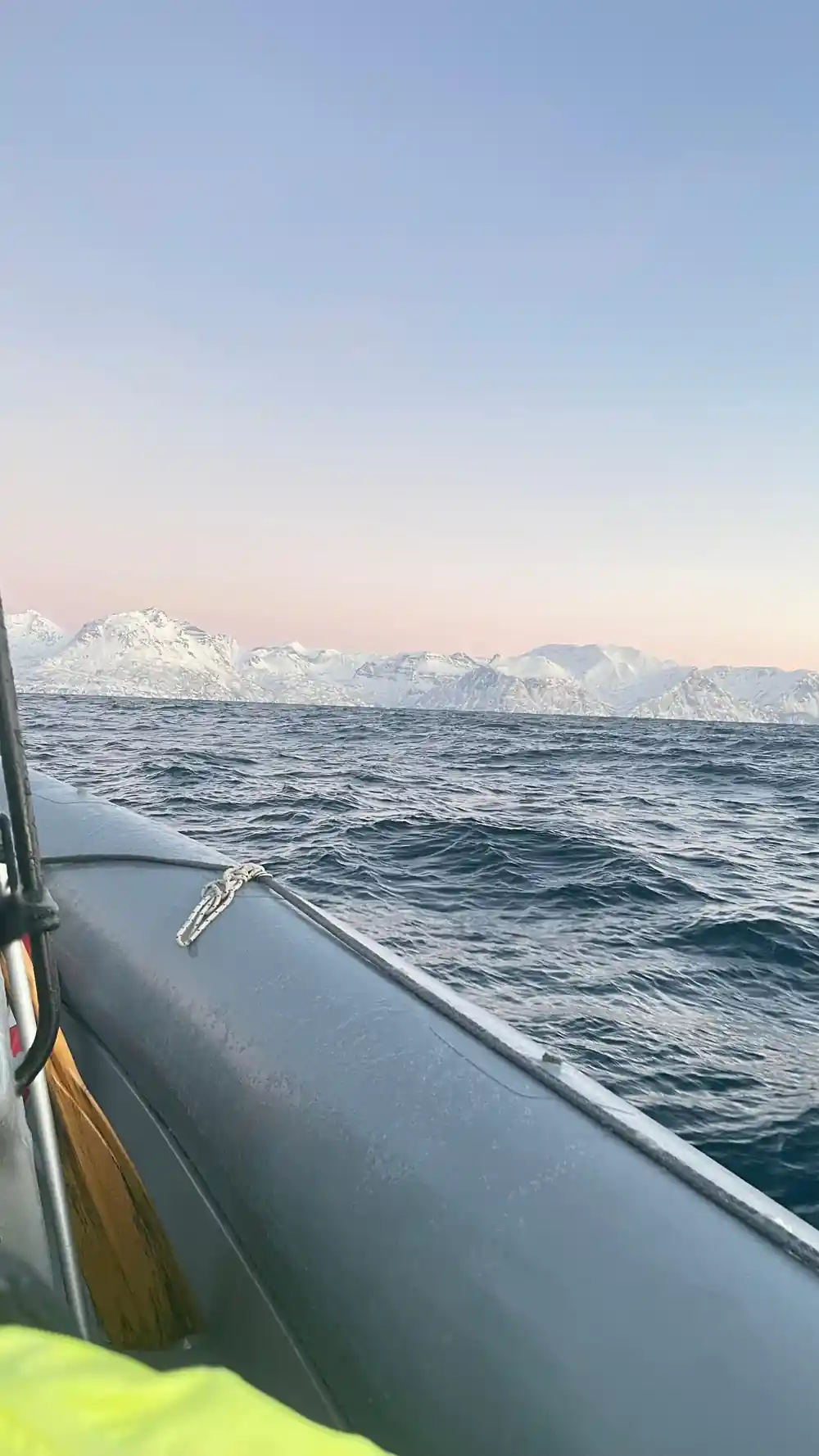
A rigid-inflatable boat, or RIB, is the workhorse of Arctic whale watching. It has a solid hull and a flexible collar that keeps it buoyant, so it sits low and open in the water. This is not a sightseeing ferry with windows and a bar. You are outside, on benches, with handholds, wind and salt spray. The collar absorbs the slap of the waves, the hull cuts through the chop, and the whole thing feels more like a marine motorbike than a ship. That is exactly what makes it exciting.
The tour we recommend is From Tromso: Whale Watching in Magic Skjervoy. It is the Skjervoy rib whale watching trip, and it runs for 12 hours.[1] An English-speaking instructor leads the day.[1] You are not boarding a huge vessel; you are joining a small-boat operation designed for a handful of passengers. The booking is priced from US$356, with reserve now and pay later available.[1] If you are comparing a Skjervoy rib whale watching tour with a bigger boat, this is the version built around small-boat closeness.
Small, Open and Built for the Job
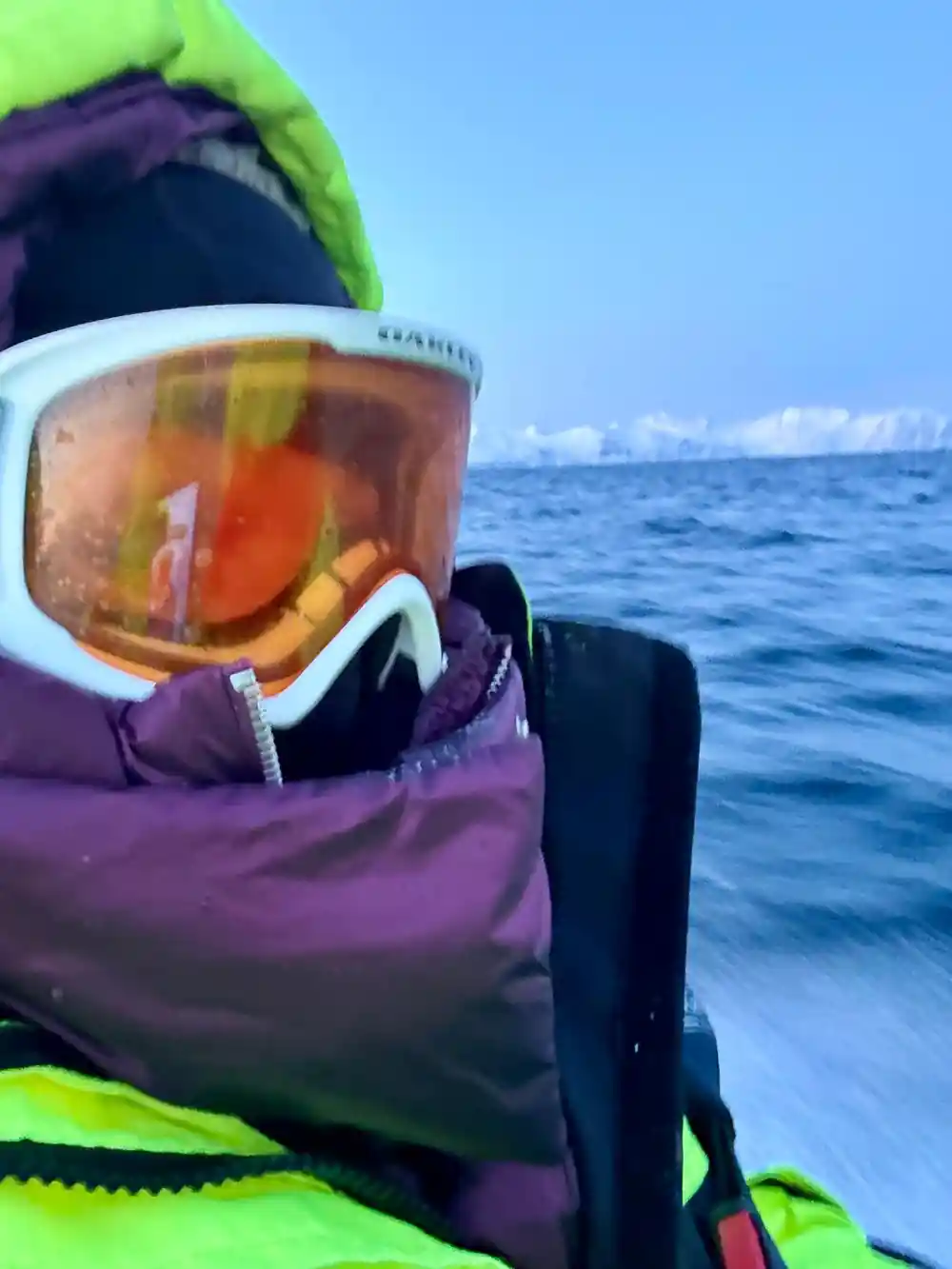
A RIB has no cabin to hide in. You sit low, with the water right beside you. That makes every whale sighting feel immediate, and it also means you need to be ready for the weather. Tromsø's average winter temperature sits around −4°C.[7] The wind and spray multiply the cold, so a warm hat, a buff and waterproof gloves are not extras, they are the essentials. If you have ever stood on a boat dock in midwinter and wished you had another layer, bring even more of it.
The trip is based in Tromsø and heads toward Skjervøy. To give you a sense of the distance, the shorter route from Tromsø to Skjervøy is approximately 160 kilometres and takes around four hours by car, depending on ferry connections, traffic and road conditions.[4] That road mileage gives you an idea of how much of the day is travel, even before you add the boat time. A whale-watching day is a long one, whatever the vessel. Come with a good book or a power bank, and do not plan a late dinner.
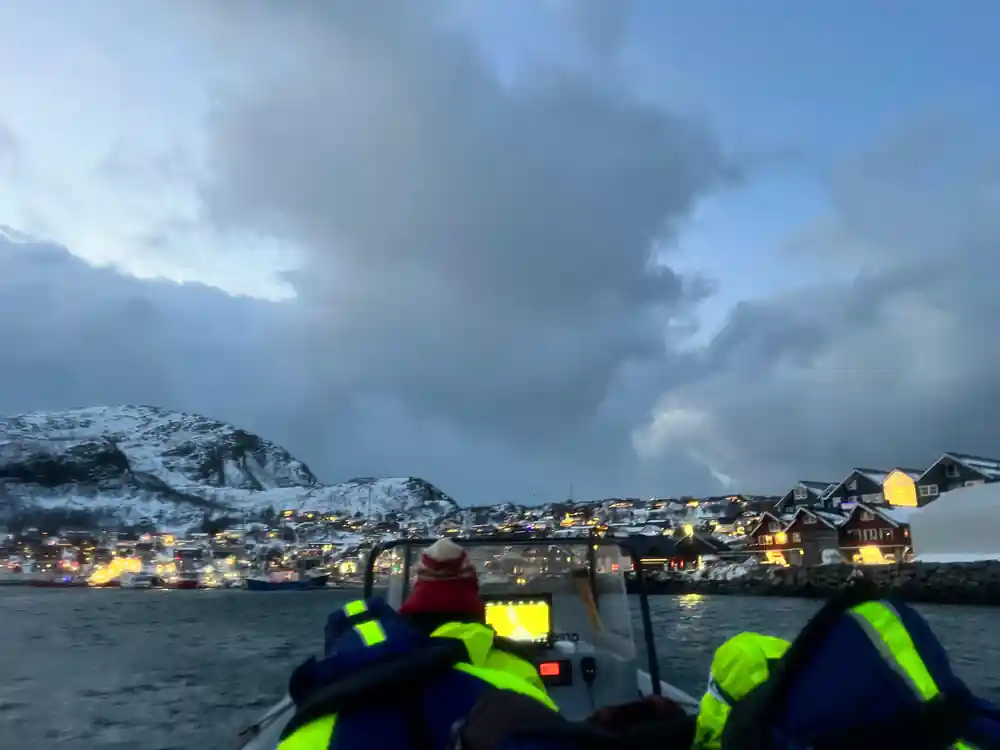
Thermal-suited passengers hold on tight as a RIB scans the winter fjord.
Where You Sit and How You Hold On
Seating on a RIB is simple. You sit along the side tubes or on a bench, with your feet on the floor and one hand on the strap in front of you. When the boat accelerates, the bows lift and the wind grows loud. You hold on, lean with the turn and keep your camera strap around your neck. There is no table, no cabin and no floor to wander around on, which is exactly why everyone on board ends up talking to each other. The crew will shift people around to balance the boat, so be ready to move when asked.
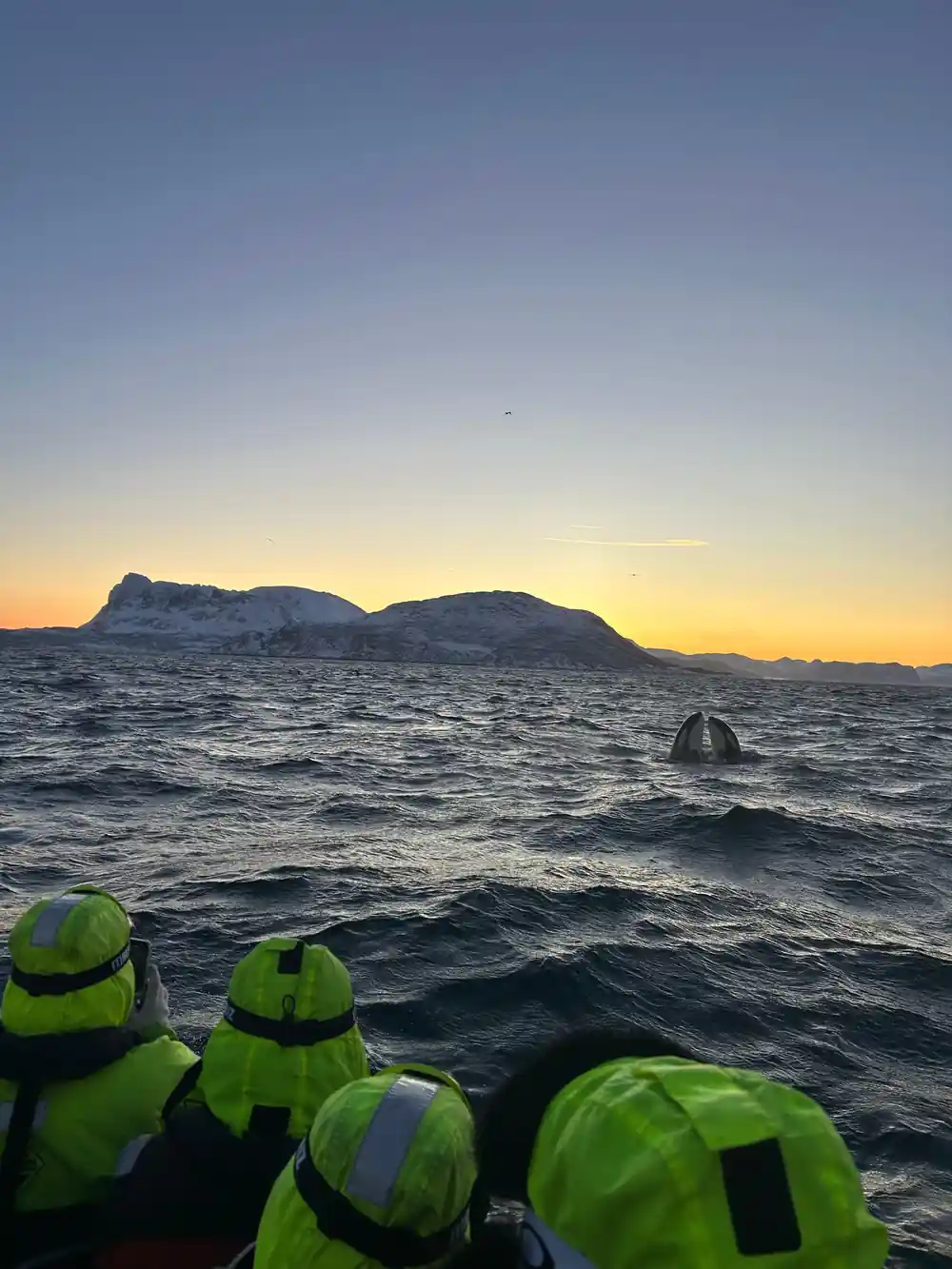
The crew will tell you where to sit for weight balance. Do not stand up while the boat is moving. When the engines cut and the whales are near, you can stand carefully and watch. It feels personal in a way a big catamaran cannot match. At water level, a whale's back is huge, and a flash of white from a fin is startlingly close. No glass, no railings, no commentary through a speaker. Just the sound of the sea and the instructor's voice telling you where to look.
How Fast It Feels
Speed on a RIB is not about a dashboard number. It is about how the wind and water scream past. Spray flies up over the collar, and the boat slaps from wave to wave. Hold on and enjoy it, but keep your camera under your jacket until the boat slows. The sensation is closer to a fairground ride than to a cruise. It is also the fastest way to cover the long stretches of open water that stand between you and the whale grounds, and it explains why a RIB can make a distant fjord feel within reach.
The tour runs 12 hours.[1] That is enough time for a long transfer, time at the whale grounds, and the return. Remember that the route involves road and sea time, so pack snacks and patience. If you are prone to seasickness, think about your usual remedies before the engines start. The open ride can be bouncy, and the darker months bring polar night light, which lasts approximately from 27 November to 15 January.[3]
from US$356
A full 12-hour RIB-style day from Tromsø to the Skjervøy grounds, with free cancellation up to 24 hours in advance.[1]
No Cabin, No Shelter, and What Happens After
There is no heated lounge on a small RIB. You are outside for the whole trip, so the best way to stay warm is to dress as if the boat will break down. Thermal base layers, a fleece, a windproof outer shell, a warm hat and waterproof gloves make the difference. Some operators hand out thermal suits, but you should still bring your own layers and a dry change of socks. The memory of a cold, wet ride fades fast; the memory of watching a whale breathe beside the boat does not.
Winter in Tromsø is cold but not Siberian. Tromsø's average winter temperature sits around −4°C.[7] The wind on an open boat is the bigger challenge. The polar night runs approximately between 27 November and 15 January, leaving much of this season dark.[3] That means the whales are not the only thing to plan around. You will want a headlamp for early morning pickups, a warm place to wait, and realistic expectations about photography in low light. The animals are there, but the light may be thin.
The RIB Difference
In winter, the area sees orcas and humpback whales gathering to feed on herring.[2] Norwegian spring-spawning herring migrates northeast in September/October to main wintering areas along the coast and fjords of northern Norway.[9] The food-driven rhythm of the season draws whale watchers north. It also means the whales are moving, not performing. A day on the water is a search, not a show. The guides watch for blows, for birds on the surface and for the dark shapes that slide beneath the boat. Patience is part of the experience.
On a small boat, you are at water level. You hear the blow, smell the fish and see the dark shape glide under the bow. The crew of a Skjervoy rib boat will keep the boat positioned while the whales decide where to go next. There is no glass between you and the animals, and no loud commentary. Just the cold air, the quiet engines and the sudden rush when a tail goes up. That is the moment people talk about for years. The Skjervoy rib boat version of whale watching is worth the cold.
The Trade-off: Closer, Colder, Rougher
The trade-off is honest. You get closeness but you also get cold, wind and a very long day. Prices start from US$356 for the tour booked from this site.[1] Planning feels less stressful when you can cancel as late as 24 hours beforehand for a full refund.[1] That flexibility matters when weather and whale movements are never guaranteed. If the forecast looks rough, you can make a judgement call without losing money. If the sea looks good, the memory will last far longer than the chill.
So if you want a Skjervoy rib whale watching tour with the spray in your face and no glass between you and the sea, this is it. Dress well, keep your expectations flexible, and let the whales set the pace. The small-boat day is the one you remember. It is not the most comfortable way to see the Arctic, and it is not trying to be. It is a day built for people who want to feel the water, hear the whales breathe and come back cold, tired and very glad they went.
How long a Tromsø day can be
Skjervoy RIB tour prices compared
Adult from-prices in US dollars[1][5][6][13].
When to go Skjervoy RIB whale watching
Plan your Skjervoy RIB day
Book the tour
Reserve now and pay later is offered, so you can lock in your place before your travel dates are final.[1]
Get to Tromsø
The trip from Tromsø Airport into the city centre lasts roughly 10-20 minutes, allowing a brief rest before the long day.[8]
Dress in layers
Tromsø's average winter temperature is close to −4°C, and an open boat's wind pierces ordinary coats.[7]
Set expectations
You can cancel the tour, which lasts 12 hours, at no charge up to 24 hours before the start should the forecast alter your plans.[1]
Watch and listen
Follow the instructor’s seating directions and keep your camera ready when engines cut near whales.
Ready to spend a day at whale level on a Skjervøy rib boat?
from US$357Reserve now & pay later